
The U.S. dropshipping market is booming. In 2024 the U.S. dropshipping sector reached about $95.3 billion in revenue and is projected to hit $424.3 billion by 2030 (a ~23.8% CAGR). Overall U.S. e-commerce is also growing fast: experts forecast U.S. online sales of ~$1.2 trillion in 2026 (up 8.7% YoY). More Americans are shopping online than ever – by 2024 there were an estimated 273.5 million online shoppers in the U.S. (5.6% more than a year earlier). Crucially, modern U.S. consumers expect fast, inexpensive fulfillment. According to industry research, 42% of shoppers demand a 2-day shipping option on every order, and free shipping remains the top reason people buy online. In short, American entrepreneurs and B2C/B2B sellers need domestic or U.S.-warehouse dropship suppliers to meet these expectations.
Several key categories dominate the U.S. dropship landscape. In North America, fashion and apparel lead by revenue (supported by countless clothing, jewelry, and accessories suppliers). Electronics and gadgets are also huge – about 30% of North American dropshipped goods are electronics-related – reflecting the popularity of phones, tech accessories, and home electronics. Beauty & personal care (skincare, cosmetics, supplements) is another top niche; industry projections expect beauty/personal-care e‑commerce to top $672 billion globally by 2026. Home goods and décor (furniture, kitchenware, home improvement) are likewise major, with home & garden online sales over $130 billion and rising as DIY renovations surge. In short, clothing, electronics, beauty and home products are “high-demand” dropship niches this year, matching what U.S. consumers buy most online.
Several broad trends shape buyer behavior in 2026. Customers are more mobile, socially engaged, and quality-conscious than ever. Millennials and Gen Z drive much of the online growth – for example, roughly 38.4% of U.S. online shoppers are under 35. Shoppers rely heavily on reviews (online reviews are 12× more trusted than manufacturer descriptions) and expect smooth UX. They spend only about 15 seconds on a page before moving on, so professional product pages and fast checkout are vital. Importantly for U.S. suppliers, American buyers overwhelmingly prefer fast, domestic shipping and easy returns. Retail surveys show that free shipping is the #1 reason consumers choose to shop online, and many now expect 2-day delivery as a baseline. In this context, American or U.S.-warehouse dropshippers can dramatically improve customer satisfaction – orders often arrive in just a few days instead of weeks, and returns can be handled domestically.
.png)
US market size trends (2021–2026)
Market Outlook: Growth, Consumers, and Niches
-
Market Size & Growth: U.S. dropshipping has joined the mainstream of e-commerce. By Grand View Research estimates, the U.S. dropshipping market was about $95.3B in 2023, and is forecast to hit $424.3B by 2030 (CAGR ~23.8%). North America as a whole accounted for 35.8% of global drop‑shipping revenue in 2023. These projections mirror global forecasts (global dropshipping ~$464B by 2026). As online retail grows, more merchants adopt dropship models – industry sources indicate 27% of online retailers now use dropshipping in some capacity.
-
Online Shoppers: There are hundreds of millions of U.S. e‑customers to reach. In 2024, about 273.5 million Americans shopped online. That’s roughly 82% of the population, and the number continues to rise each year. Younger demographics lead the way: in 2026 an estimated 227 million Americans will shop online (with 38.4% under age 35). U.S. shoppers spend over $1 trillion annually on e-commerce, so the potential market for drop-shipped products is huge.
.png)
Sales channel distribution (2026)
-
Popular Niches: Dropship entrepreneurs report that fashion/apparel is the largest revenue category in U.S. dropshipping. Globally, fashion dropshipping sales are projected at $802B by 2026. Electronics (gadgets, accessories, smart home devices) also account for roughly 30% of North American dropshipped products. Beauty and personal care is huge too: global beauty ecommerce is expected to reach $672B by 2026. Home and garden goods round out the list (e.g. furniture, décor, appliances), on track to about $130B globally. In practice, leading dropship catalogs include all these categories: trendy clothing and jewelry, tech gadgets, skincare and cosmetics, plus home decor and kitchen accessories. Market studies emphasize that clothing, beauty, and home remain among the top online spending categories.
.png)
Product Category Market Share (2026)
-
Buyer Expectations: As noted above, fulfillment speed is critical in 2026. In a U.S. survey, 42% of shoppers said every online order should offer 2-day delivery. Free shipping is still the top driver of online sales. Additionally, content and trust matter: roughly 73% of consumers say they expect to do most of their shopping online in coming years, and online reviews or community feedback heavily influence purchases. Sellers should therefore focus on reliability and branding as much as niche selection. Quality product images, clear descriptions, and real customer reviews help convert browsers into buyers.
Why U.S. Dropship Suppliers Matter (B2C & B2B Benefits)
Speed & Convenience: The single biggest advantage of U.S.-based or U.S.-warehouse suppliers is faster shipping. When inventory sits in a U.S. warehouse, most customers get their orders in 3–6 business days (often even 1–3 days) – a huge improvement over international transit. For example, CJdropshipping (a major supplier) reports that with its U.S. warehouses (New Jersey and California) orders can ship in under a week. In contrast, sourcing directly from Asia often takes 2–4 weeks by standard mail. According to industry guides, U.S. warehousing can cut transit to “as little as 1–8 days”. In practice, this speed reduces cart abandonment and increases repeat business, as buyers get Amazon-like delivery times.
Easier Returns: Similarly, domestic suppliers simplify returns and exchanges. When a U.S. merchant or customer needs to return an item, sending it back to a local warehouse is much cheaper and faster than returning to Asia. CJdropshipping’s guide explains that having products ship from within the U.S. “means far easier returns and refunds” – buyers won’t have to pay international shipping to send back a defective item. In short, U.S. suppliers turn returns into a normal domestic process, which improves customer satisfaction and avoids costly headaches for sellers.
Quality Control: U.S. and European suppliers often have stricter quality standards and closer oversight than some overseas sources. For example, Spocket (a platform for U.S./EU suppliers) emphasizes quality control – many products are pre-vetted for reliability. Some U.S. suppliers even allow ordering product samples to verify fit and quality before selling. By working with known U.S. brands and warehouses, sellers can reduce the risk of grossly misdescribed or faulty products.
B2C and B2B Focus: American suppliers can serve both consumer (B2C) and business (B2B) models. For B2C dropshipping, fast shipping and single-item ordering are key – major platforms like Spocket, CJdropshipping, and Zendrop cater to small-order automation with U.S. 3PL fulfillment. For B2B sellers (e.g. retailers, office supply stores, wholesalers), U.S. suppliers often offer bulk discounts and net-terms for larger purchases. In fact, directories like SaleHoo list thousands of U.S. wholesalers (8,000+ suppliers) that support dropship or bulk orders. Thus, an electronics reseller or a gift shop owner can find U.S. sources via platforms like Syncee or SaleHoo to stock products drop-shipped by case loads.
Branding & Trust: Finally, Americans tend to trust “Made in USA” or at least domestic fulfillment more. A U.S. origin story can be a selling point, especially for patriotic or niche brands. Even if products come from overseas, advertising a “Fast U.S. shipping” brand can boost conversions. Likewise, custom branding is more feasible with U.S. partners (see Private Labeling below).
Best American Dropshipping Suppliers
1. CJdropshipping
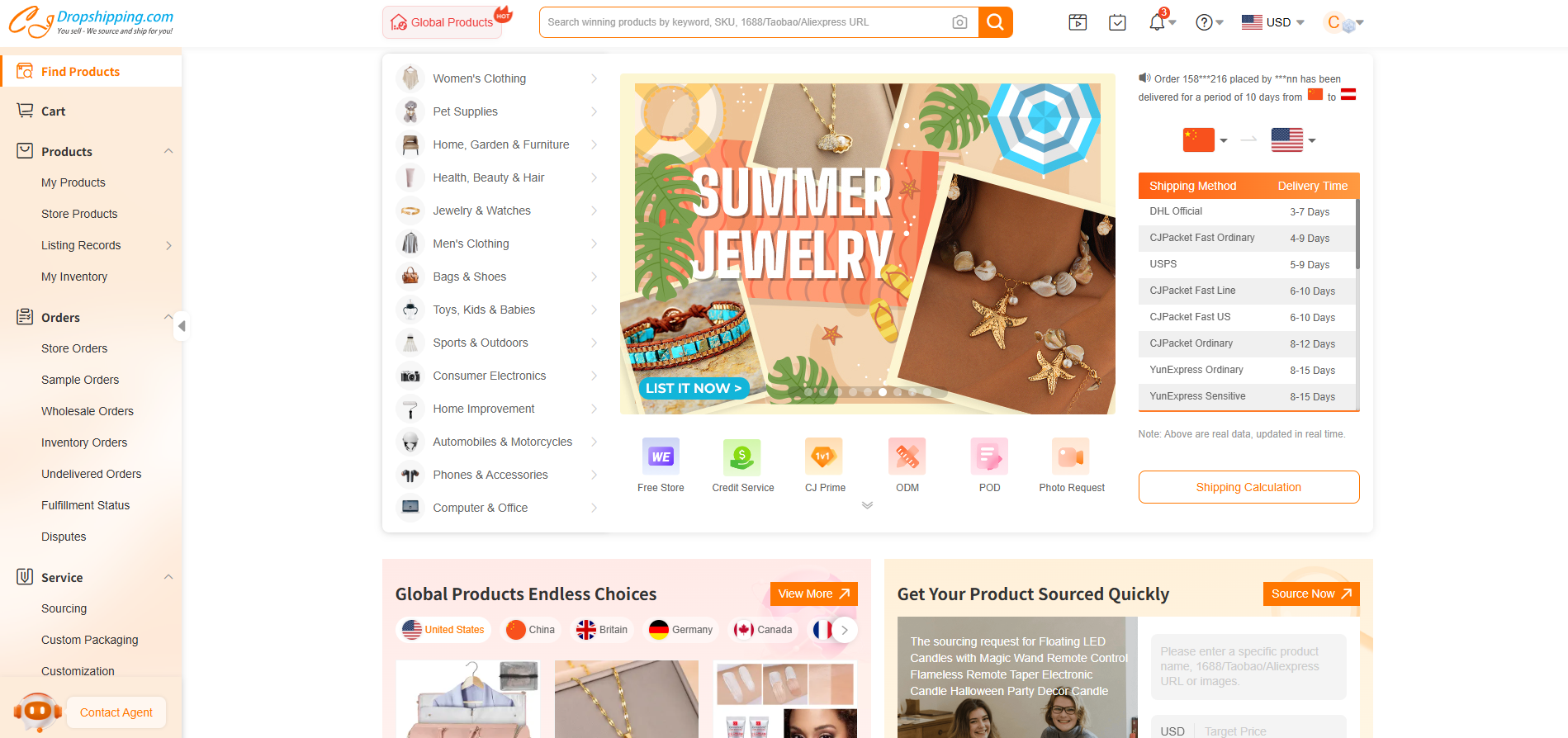
Detailed Description:
CJdropshipping is a full-service dropshipping provider headquartered in China that offers everything from product sourcing and order fulfillment to warehousing and custom branding. It acts as an intermediary between Western storefronts (Shopify, WooCommerce, eBay, etc.) and Chinese manufacturers, with warehouses also in the U.S., Europe, and Australia. Sellers can browse CJ’s extensive catalog (3000K+ SKUs), order samples, request product photos, and even have packaging tailored to their brand. Its native app/plugin syncs orders in real time, automatically forwarding purchase details to CJ’s team for pick, pack, and ship. Because many items ship directly from China, prices are often lower than Western-based suppliers.
-
Country: China
-
Website: https://cjdropshipping.com
-
Pros:
-
Very large product catalog (300,000+ SKUs) with direct factory prices.
-
Multi-regional warehouses (China, U.S., EU, Australia) enable faster shipping when stock is available locally.
-
Robust in-house order management app that integrates with major e-commerce platforms.
-
Extensive customization options (white-label packaging, inserts, photography services).
-
No monthly subscription required for basic sourcing—pay only for products and shipping.
-
-
Cons:
-
Items not stocked in local warehouses often ship 7–15 days from China to Western customers.
-
Customer support sometimes responds within 7–24 hours, which can delay urgent issues.
-
Additional fees apply if you use branding/photography/customization services (on top of product costs).
-
-
User Recommendation:
Best for store owners who want ultra-low cost per unit and can tolerate occasional longer shipping times. Ideal if you plan to order samples, actively manage quality checks, and optimize for margin over speed.
2. Spocket
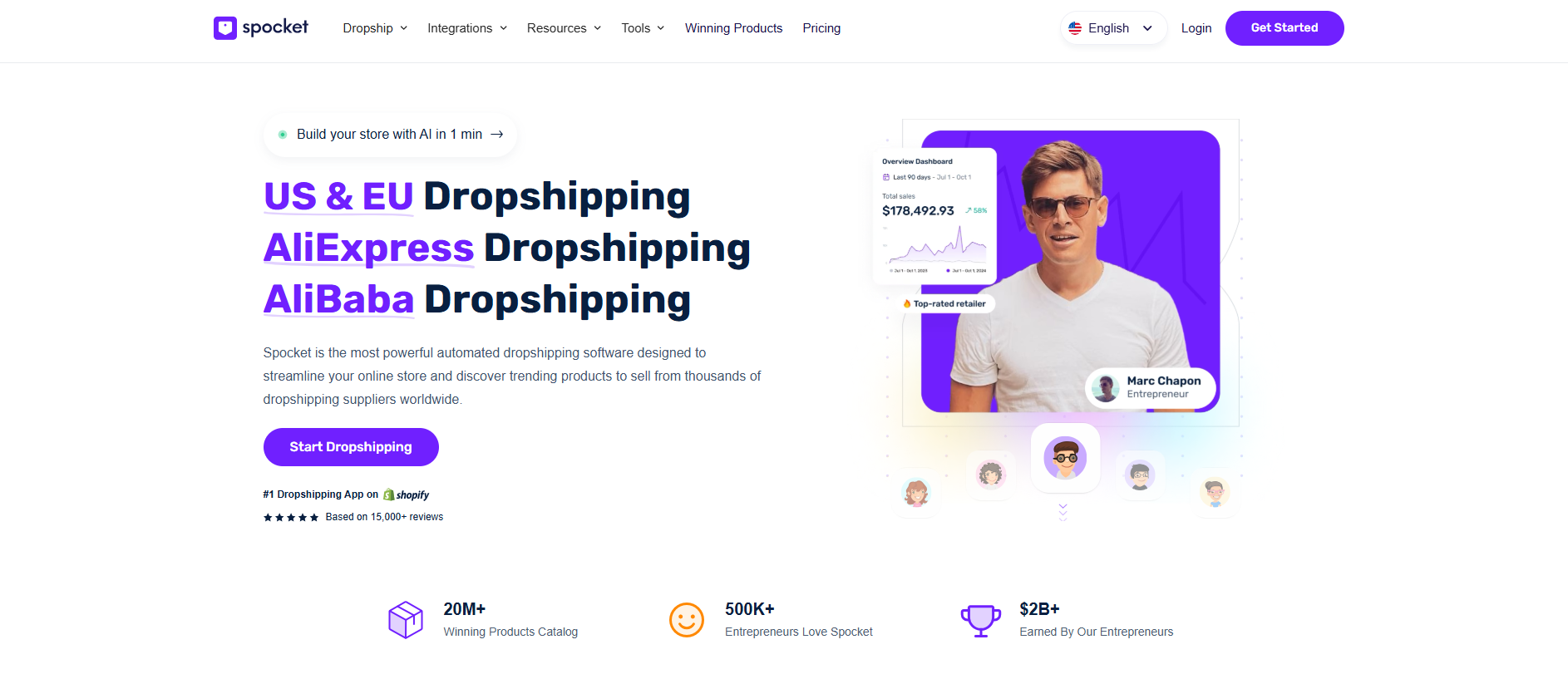
Detailed Description:
Spocket is a dropshipping marketplace focused on connecting merchants primarily with U.S. and European suppliers. Companies headquartered in San Francisco vet each supplier, ensuring generally reliable product quality and shipping times. The Spocket app/plugin integrates with Shopify, WooCommerce, BigCommerce, and Wix. Suppliers on Spocket typically offer fast domestic shipping (2–7 days), branded invoicing, and occasional low-quantity samples on request. Because most products come from North America or Europe, product costs tend to be higher than those on China-focused platforms, but merchants benefit from a lower risk of long transit times or surprise customs delays. Spocket also offers real-time inventory synchronization, so your storefront will automatically update stock levels to avoid overselling.
-
Country: United States (Headquarters: San Francisco, CA)
-
Website: https://spocket.co
-
Pros:
-
Over 60% of suppliers are located in the U.S. or EU, enabling 2–7 day shipping to Western customers.
-
Vetted, “curated” supplier network ensures more consistent product quality.
-
Branded invoicing (seller’s logo) is available, plus the option to purchase low-cost samples before listing.
-
Automated inventory and price sync prevent overselling and reduce manual management.
-
One-click order forwarding directly from Shopify, WooCommerce, or BigCommerce.
-
-
Cons:
-
Product costs are higher (Western manufacturing and shipping premiums), which can squeeze margins.
-
Niche variety is narrower compared to marketplaces sourcing directly from China (smaller catalog).
-
Free plan only allows a handful of product imports—must pay at least $29/month (“Starter”) to access more suppliers.
-
Most suppliers do not provide private-label or custom packaging beyond branded invoices.
-
-
User Recommendation:
Ideal for merchants prioritizing reliable, fast delivery to North American and European customers. Recommended if you operate a Shopify or WooCommerce store and can afford slightly higher product costs in exchange for consistent quality and shipping. Less ideal if you need hyper-competitive unit costs or a very broad catalog of highly specialized items.
3. Syncee
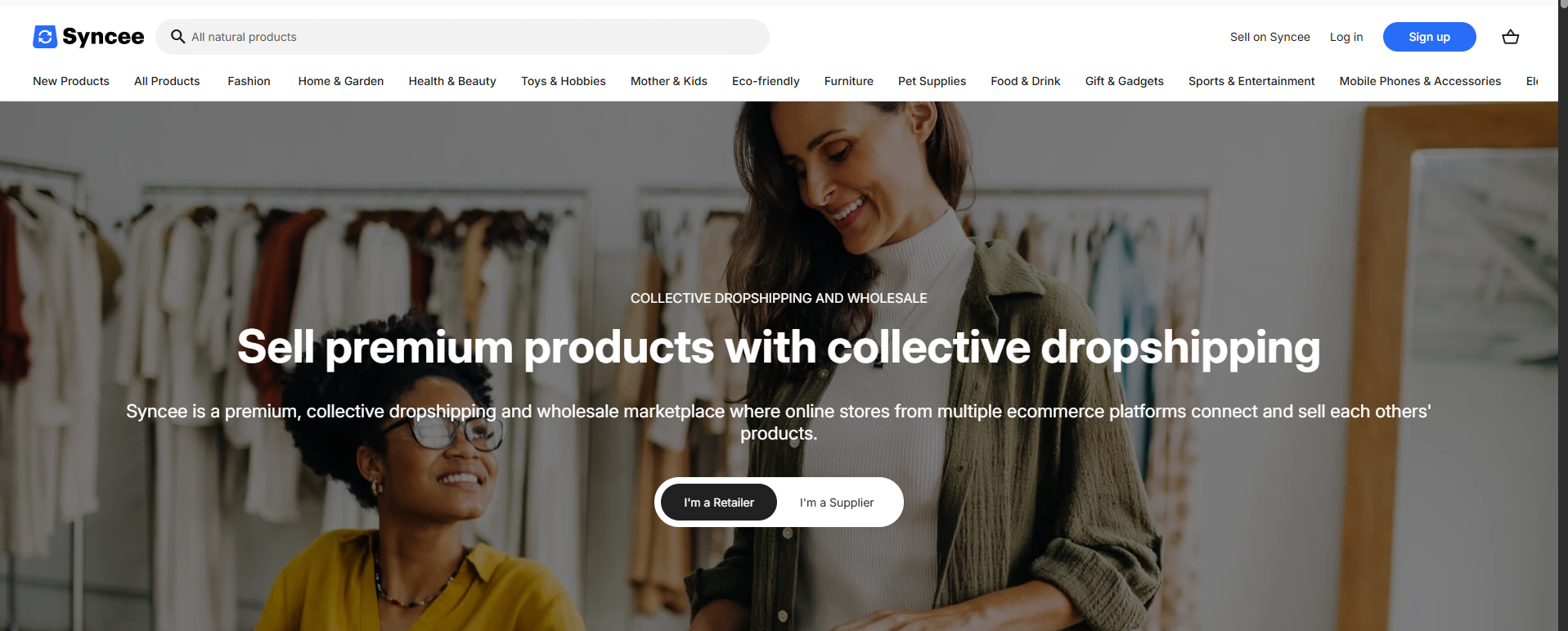
Detailed Description:
Syncee is a dropshipping automation and marketplace tool headquartered in Hungary. Rather than handling fulfillment itself, Syncee aggregates thousands of third-party suppliers from around the world (U.S., EU, China, Australia, and beyond) into a centralized dashboard. Through Syncee’s interface, merchants can browse catalogs by category, region, or supplier rating; import items in bulk via CSV or XML feeds; and set up automated pricing and stock synchronization. Syncee integrates natively with Shopify, WooCommerce, BigCommerce, Wix, and Magento. Because Syncee does not stock or ship products directly, merchants must vet each supplier individually (via ratings, reviews, or ordering samples). The platform’s strength lies in its flexibility—if you want to combine Chinese-priced electronics with U.S.-based home décor and Australian pet supplies, Syncee can accommodate a multi-source approach from a single control panel.
-
Country: Hungary (Headquarters: Budapest)
-
Website: https://syncee.co
-
Pros:
-
Access to a truly global supplier network (U.S., EU, China, Australia, etc.) in a single marketplace.
-
Automated product feed management keeps prices and stock levels up to date without manual intervention.
-
Flexible plan tiers (free up to 25 products; paid starts around $29/month for unlimited products with advanced filters).
-
Integrates with Shopify, WooCommerce, BigCommerce, Wix, and more for one-click import.
-
Built-in supplier ratings and filtering by location reduce guesswork when choosing vendors.
-
-
Cons:
-
Syncee does not own warehouses—fulfillment and quality control are entirely the merchant’s responsibility.
-
Supplier consistency varies widely; you may need to order samples to verify each one.
-
Higher-tier plans required for real-time updates, multiple supplier feeds, and advanced filtering (not fully usable on free tier).
-
No white-label or custom packaging support; you generally resell whatever packaging the supplier provides.
-
-
User Recommendation:
Suited for merchants who want to diversify sourcing across multiple regions (not just China or the U.S.) and need strong automation to manage large catalogs. Requires time to vet suppliers individually. Best if you already have some experience managing dropship relationships and want a centralized feed-management system rather than going direct to each supplier.
4. AutoDS
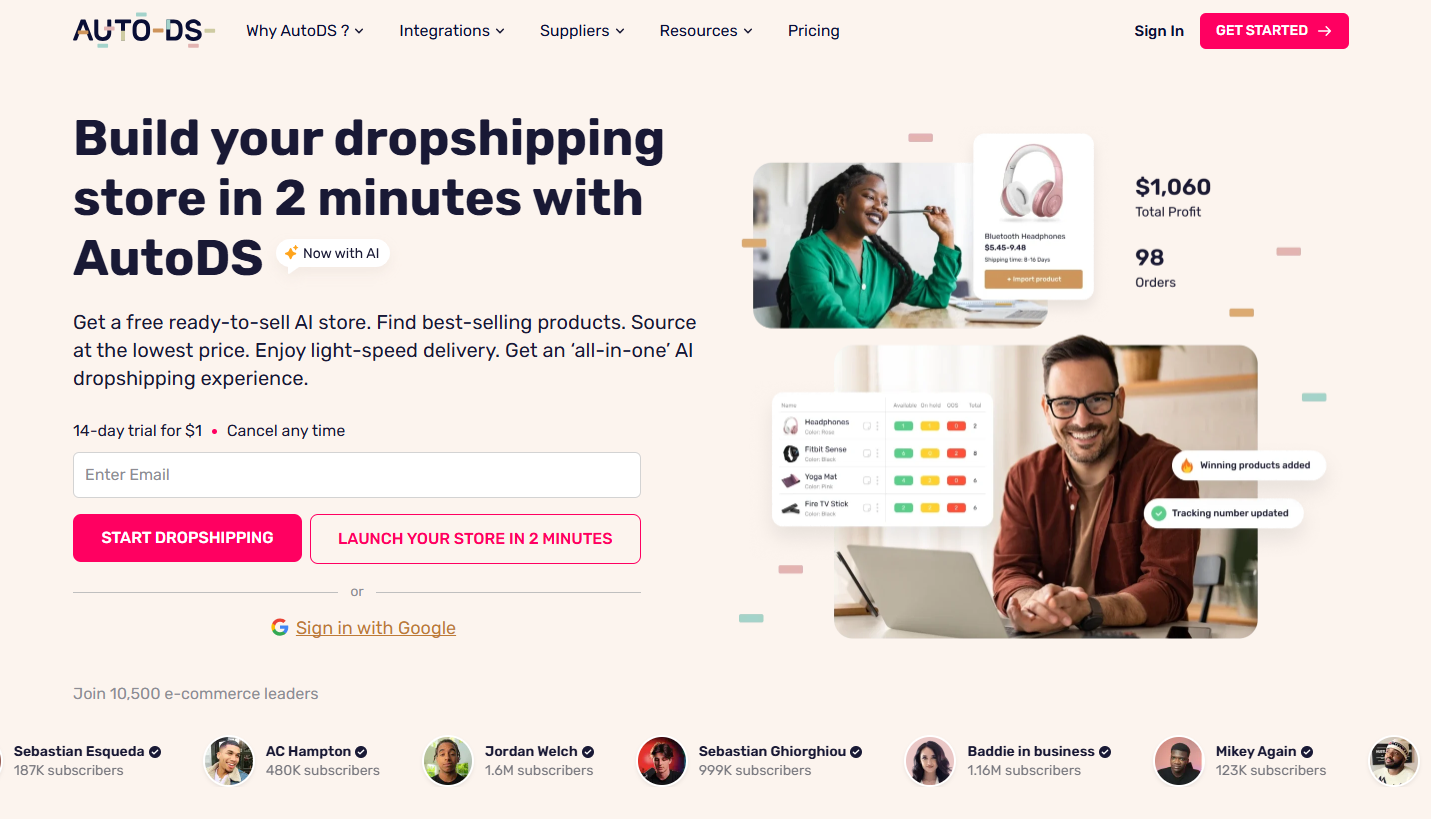
Detailed Description:
AutoDS is an all-in-one dropshipping automation platform based in Israel. Its core focus is on automating almost every aspect of an AliExpress-centric or eBay-centric dropshipping business: product research, price and stock monitoring, order fulfillment, tracking updates, and even customer messaging. AutoDS integrates directly with Shopify, eBay, Amazon, and Walmart, enabling a “one-dashboard” approach for inventory management across multiple channels. The “winning product” finder helps sellers locate high-margin items on AliExpress. AutoDS automatically adjusts your storefront’s marked-up prices based on preconfigured rules, and can place orders for you with a single click. Because it relies heavily on AliExpress suppliers, you can access a massive catalog of China-priced goods, but end customers will typically wait 10–20 days for delivery unless you also source from eBay or ePacket-eligible warehouses.
-
Country: Israel (Headquarters: Tel Aviv)
-
Website: https://autods.com
-
Pros:
-
Comprehensive end-to-end automation: product research tools, dynamic pricing, stock monitoring, and auto-fulfillment.
-
Built-in AliExpress integration with a “winning products” finder and hot-selling item analytics.
-
Real-time price and stock updates ensure your store never oversells.
-
One-click order placement pushes orders to AliExpress (or eBay) suppliers automatically.
-
Dashboard includes sales analytics, profit calculators, and low-stock alerts for data-driven decision making.
-
-
Cons:
-
Most features are tailored to AliExpress/eBay; if your business is focused on U.S. domestic suppliers, many tools go underutilized.
-
Platform complexity means a steeper learning curve; beginners may find the interface overwhelming at first.
-
Free tier is limited to one store and 20 products; “Growth” plan (~$49.99/month) or above is required for advanced automation.
-
Shipping times for most products still rely on Chinese warehouses (unless you find ePacket or local warehouse options), which can be 10–20 days.
-
-
User Recommendation:
Recommended for intermediate to advanced dropshippers whose core model revolves around AliExpress or eBay sourcing and who want to scale quickly with automation. If you plan to mix in U.S. domestic suppliers, you’ll lose some automation benefits. Not ideal if you need guaranteed fast shipping to Western customers on every SKU.
5. Zendrop
Detailed Description:
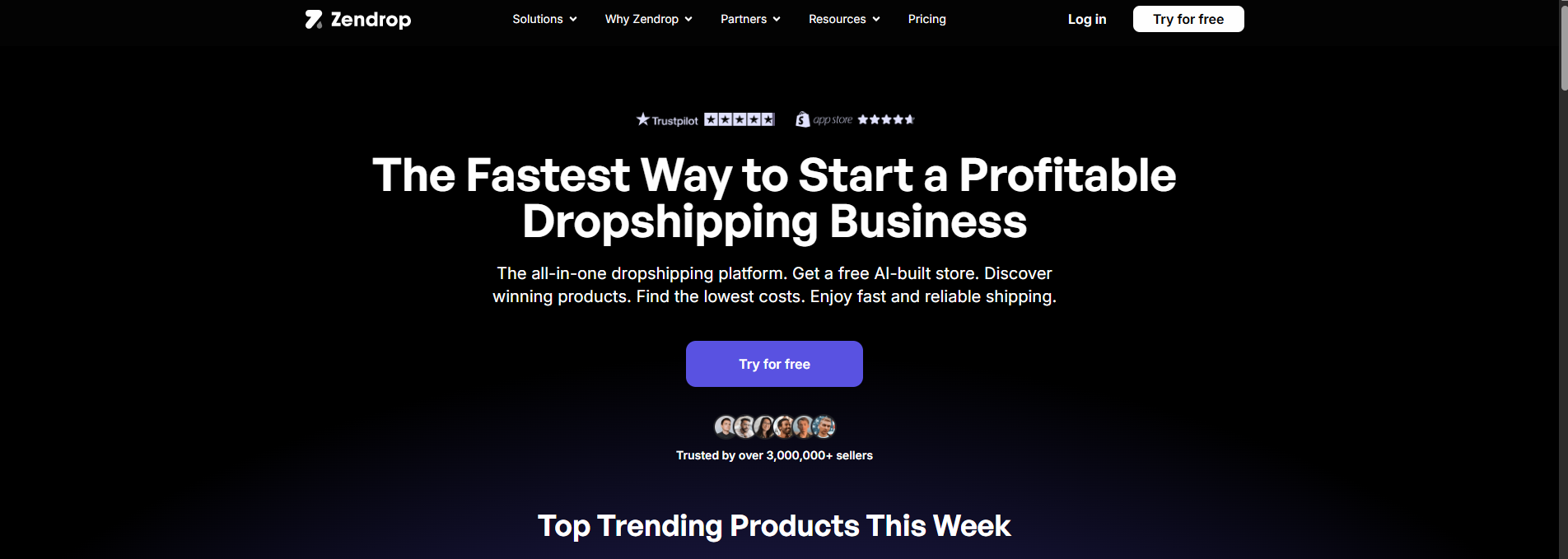
Zendrop is a U.S.-based dropshipping platform designed to combine low production costs (via China) with faster shipping (via U.S.-based warehouses). Headquartered in Miami, Zendrop directly negotiates with Chinese factories for lower prices, then syncs select SKUs into its U.S. inventory network. Merchants install Zendrop’s Shopify or WooCommerce plugin to import products, sync inventory in real time, and auto-fulfill orders with a single click. Unique to Zendrop is its built-in branded packaging and insert options, even for China-sourced goods. Additionally, new users receive free sample credits to evaluate product quality before listing. Zendrop’s dashboard also provides supplier ratings (Quality Score, Shipping Score) so that merchants can hand-pick only the best vendors.
-
Country: United States (Headquarters: Miami, FL)
-
Website: https://zendrop.com
-
Pros:
-
Hybrid fulfillment (China + U.S. warehouses) allows merchants to choose between low cost or fast shipping per SKU.
-
Branded packaging, custom inserts, and unbranded shipping options are available—even for China-sourced items.
-
Free sample credits let you order product samples at reduced or zero cost.
-
Real-time inventory and price updates prevent overselling.
-
Automated order sync with Shopify, WooCommerce, Wix, and BigCommerce.
-
-
Cons:
-
Must subscribe to at least the “Pro” plan (~$49/month) to unlock unlimited product imports, branding, and discounted shipping rates.
-
U.S. warehouse SKUs carry higher base costs than direct-from-China, reducing profit margins.
-
Catalog is not as extensive or niche as AliExpress or CJ; you may not find extremely specialized products.
-
Occasionally, items flagged as “in U.S. warehouse” are out of stock, then ship from China with 5–7 day transit, causing intermittent delays.
-
-
User Recommendation:
Best for merchants who want a blend of low-cost goods (via China) and fast shipping (via U.S. hubs), plus the ability to brand packaging. Ideal for mid-sized Shopify/WooCommerce stores targeting U.S. customers who still want competitive pricing. Less suited if you require purely domestic fulfillment with no international leg or if you need an extremely broad, niche catalog.
6. Printful
Detailed Description:
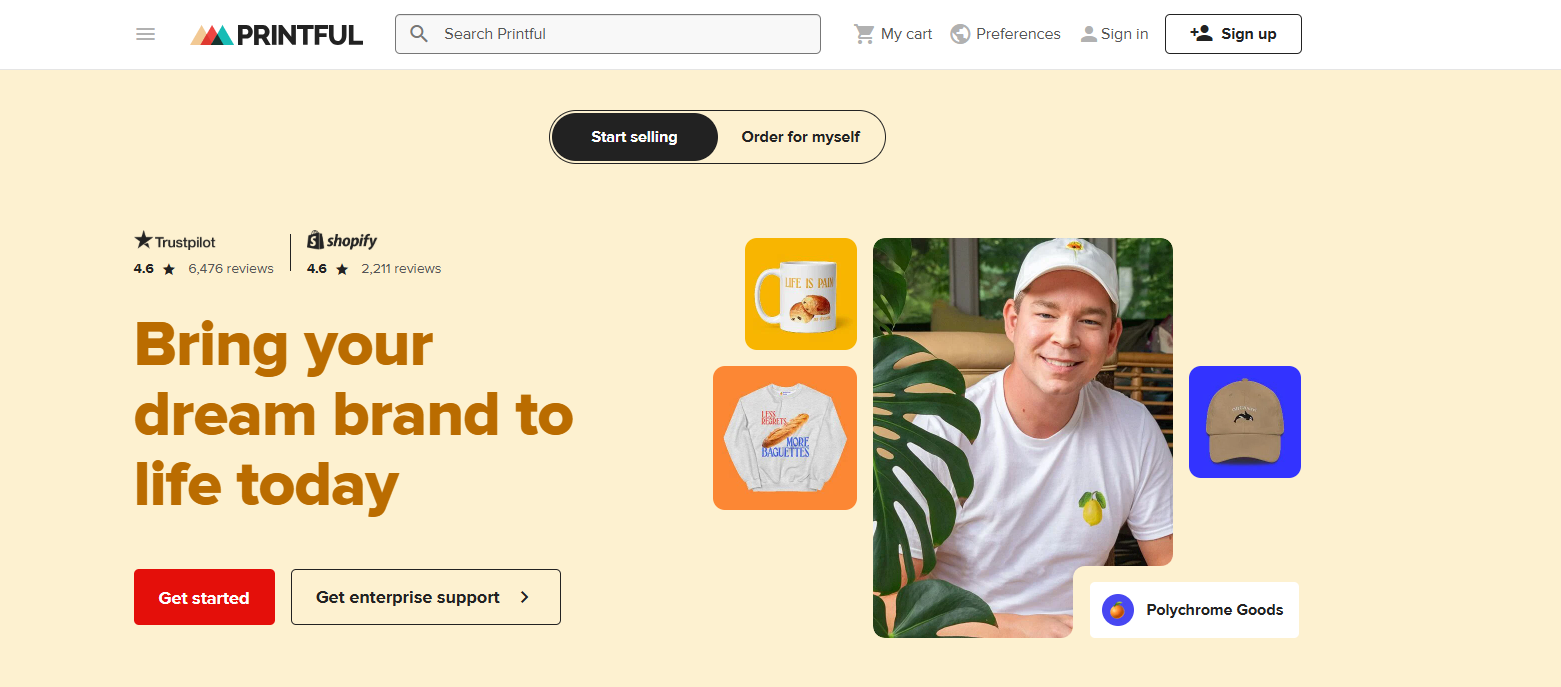
Printful is a leading print-on-demand (POD) and fulfillment provider headquartered in Charlotte, North Carolina, with additional production facilities in Latvia and Mexico. Merchants create custom designs—apparel (t-shirts, hoodies), accessories (caps, phone cases), home décor (pillows, wall art), and more—directly on Printful’s platform. Integration is seamless with Shopify, Etsy, WooCommerce, eBay, and Amazon, exporting high-resolution mockups and automatically importing orders for printing. Because there is no upfront inventory, you pay production and shipping costs only when an end customer places an order. Printful invests heavily in quality control, offering DTG (direct-to-garment), embroidery, sublimation, and cut-and-sew services. They also provide branding options—custom labels, pack-ins, inside hang tags, and branded packing slips—letting merchants create a cohesive brand experience.
-
Country: United States (Headquarters: Charlotte, NC; production also in Latvia & Mexico)
-
Website: https://printful.com
-
Pros:
-
True POD model: no upfront inventory, no risk of dead stock.
-
High-quality printing/embroidery with multiple production methods (DTG, sublimation, cut-and-sew).
-
Global fulfillment centers (U.S., EU, Mexico) enable 3–7 business day delivery in major markets.
-
Extensive branding options (custom neck labels, packaging inserts, pack-ins).
-
Built-in design generator, mockup generator, and optional paid design services.
-
-
Cons:
-
Base product and production costs are higher than some POD competitors (e.g., Printify, Gooten), squeezing margins.
-
Production time can lengthen to 5–10 business days during peak seasons (holidays, sales events).
-
You cannot import your own custom blank products; limited strictly to Printful’s catalog.
-
Integration to less common platforms may require manual CSV uploads rather than a true plugin.
-
-
User Recommendation:
Ideal for entrepreneurs who prioritize premium print quality and brand consistency on apparel, home décor, and accessories without holding inventory. Best if you value high-quality DTG or embroidery and are willing to accept slightly longer production times and higher base costs. Less suited for pure commodity POD where cost-per-unit must be rock-bottom.
7. SaleHoo
Detailed Description:
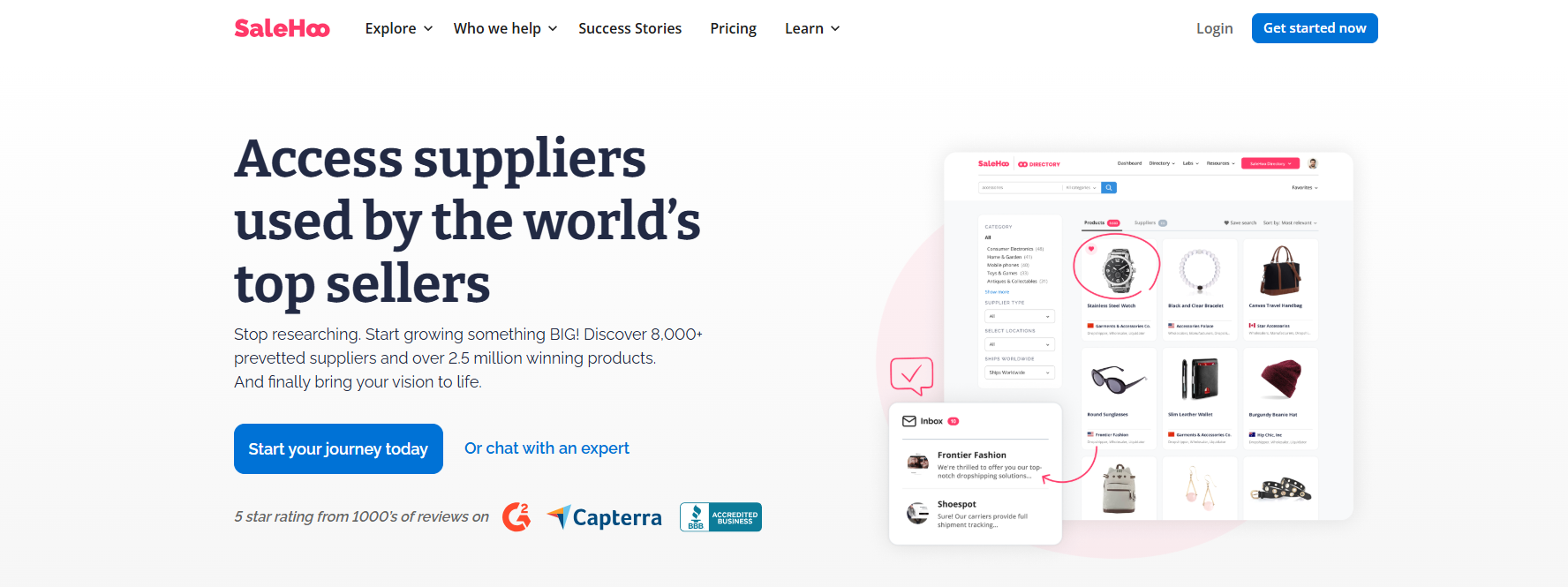
SaleHoo is a supplier directory and market research platform based in Auckland, New Zealand. It does not handle fulfillment directly—instead, it vets and aggregates over 8,000 verified dropship and wholesale suppliers across the globe (North America, Europe, Asia, Oceania, etc.). SaleHoo also offers a “Market Research Lab” that helps sellers identify trending products with high demand and low competition. After finding a supplier, merchants contact them directly to place orders and handle shipping. SaleHoo offers a one-time payment option (around $127) for lifetime access to its directory, plus a smaller monthly plan if you prefer. Educational resources include video tutorials, webinars, and a 24/7 support team dedicated to guiding new entrepreneurs through supplier vetting, negotiation tactics, and store setup.
-
Country: New Zealand (Headquarters: Auckland)
-
Website: https://salehoo.com
-
Pros:
-
Over 8,000 vetted suppliers (dropship and wholesale) with business verification to reduce fraud risk.
-
“Market Research Lab” tools integrate Google Trends and eBay/Amazon sales data to identify winning products.
-
Lifetime access option (one-time fee) makes long-term costs predictable and often lower than ongoing subscriptions.
-
Educational resources: webinars, case studies, step-by-step guides, and 24/7 email/chat support.
-
Suppliers from every region, including niche or hard-to-find categories that larger marketplaces may overlook.
-
-
Cons:
-
No direct order fulfillment: you must manually place orders and track shipments with each supplier.
-
No native integration with Shopify or WooCommerce for automated order sync or inventory updates.
-
Supplier terms (MOQs, shipping costs, returns) vary and require manual negotiation and ongoing vetting.
-
Some supplier listings can be outdated if businesses close or change policies—periodic cleanup is required.
-
-
User Recommendation:
Perfect for beginners who need a trusted directory to find and vet suppliers, plus market research insights. Best if you have time to manage communications, negotiate pricing, and manually place orders. Ideal for those wanting to avoid monthly fees and pay once for lifetime access. Not recommended if you require fully automated order processing or if you lack the bandwidth to manage multiple supplier relationships individually.
8. Doba
Detailed Description:
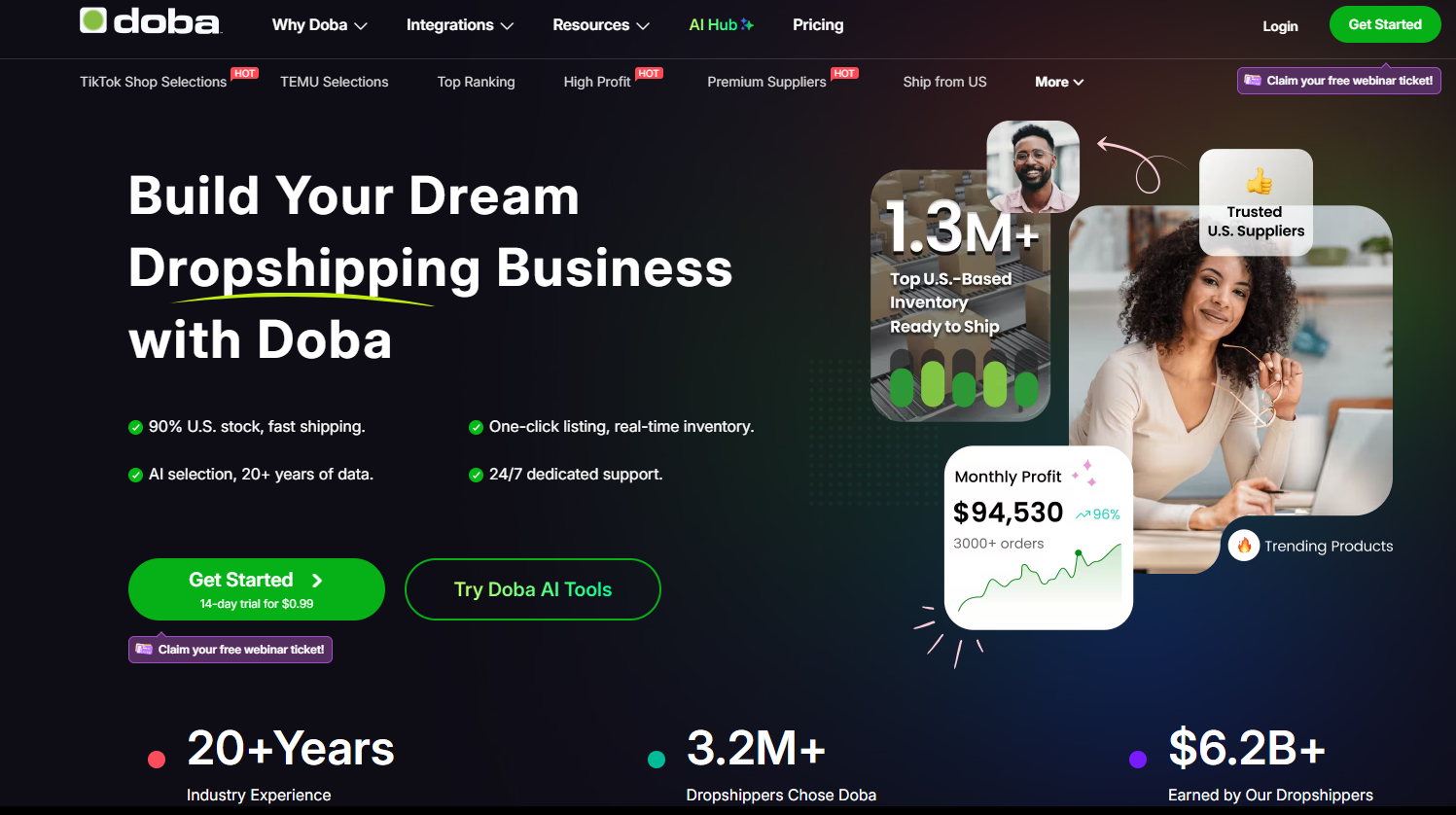
Doba is a U.S.-based all-in-one dropshipping platform headquartered in Lehi, Utah. It aggregates thousands of suppliers—both U.S.-based and international—into a single dashboard, enabling merchants to browse, list, and order products from multiple vendors without contacting each supplier directly. When a customer orders, the merchant places one consolidated order through Doba, which automatically splits and routes the correct item to each supplier. Doba handles invoicing, supplier communications, and shipping updates. Its platform integrates seamlessly with Shopify, Amazon, eBay, WooCommerce, and BigCommerce. Doba also provides real-time inventory and price synchronization, so product listings remain accurate. Although Doba’s markup (typically 20–30% above wholesale) can compress margins, its turnkey approach is valuable for those who want to minimize operational complexity.
-
Country: United States (Headquarters: Lehi, Utah)
-
Website: https://doba.com
-
Pros:
-
One platform to source, list, and order from thousands of suppliers—no need to contact each vendor separately.
-
Real-time inventory and price sync ensure you never oversell or list outdated costs.
-
Integrated order routing: a single purchase from Doba triggers split orders to multiple suppliers automatically.
-
Direct plugins for Shopify, Amazon, eBay, WooCommerce, and BigCommerce for easy product imports.
-
Bulk data feeds (CSV/XML) let you import large catalogs—including images and descriptions—with minimal effort.
-
-
Cons:
-
Monthly subscription costs start at $29/month for Basic (1 store, 300 products); higher tiers can become expensive for large catalogs.
-
Supplier markups (20–30% above wholesale) reduce profit margins compared to sourcing directly from a factory.
-
Most suppliers do not offer private-label or white-label options—products are generic or carry supplier branding.
-
Supplier reliability varies: while many are U.S.-based, some smaller vendors have longer handling times or inconsistent quality.
-
-
User Recommendation:
Ideal for merchants who want a plug-and-play dropshipping solution without juggling multiple vendor relationships. Recommended if you lack time or staff to manage separate supplier accounts and need everything consolidated under one subscription. Less suitable if maximizing margins is critical (due to Doba’s markups) or if you need full control over branding/packaging.
Choosing the Right Platform
When deciding among these eight platforms, consider:
-
Fulfillment Speed & Cost Priorities
-
If lowest product cost is your priority and you can tolerate shipping from China, choose CJdropshipping or AutoDS (AliExpress-based).
-
If fast domestic shipping (2–7 days) to the U.S./EU is essential, go with Spocket (Western suppliers) or Zendrop (U.S. warehouses + China).
-
If branding and print-on-demand matter, Printful is the go-to for high-quality POD products and custom labels.
-
-
Degree of Automation Needed
-
Full Automation (Research → Listing → Fulfillment): AutoDS (AliExpress/eBay focus) and Zendrop (Shopify/WooCommerce).
-
Inventory & Price Sync Only: Syncee aggregates multiple suppliers but does not handle fulfillment—best if you want a centralized feed manager.
-
All-in-One Supplier & Fulfillment: Doba offers consolidated ordering from thousands of vendors under a single interface (but with markups).
-
-
Supplier Vetting & Research
-
If you’re new to dropshipping and need a directory with guaranteed-vetted suppliers plus research tools, CJdropshipping is unmatched.
-
If you want broad global sourcing without manual uploads, use CJdropshipping to browse suppliers by region, category, or rating.
-
-
Budget & Pricing Structure
-
No Monthly Fee (Pay-As-You-Go): CJdropshipping charges only for products/shipping.
-
Lifetime Access Option: SaleHoo’s one-time payment (~$127) grants permanent access to its directory.
-
Tiered Monthly Subscriptions: Spocket, Zendrop, Doba, AutoDS, and Syncee all require ongoing fees that scale with the number of products or features.
-
-
Platform Integrations
-
Shopify/WooCommerce/BigCommerce: All except CJdropshipping have direct plugins.
-
Marketplace Sellers (eBay/Amazon): AutoDS and Doba focus heavily on multichannel integration, making them preferable if you list on these marketplaces.
-
Use the above breakdown to match each platform’s strengths to your specific business model—whether that means prioritizing speed, margin, branding, automation, or supplier diversity.
Top American Dropshipping Platforms Compared
Below we compare leading U.S.-oriented dropshipping platforms and supplier networks, focusing on pricing, warehousing, integrations, and key features. This includes global platforms with U.S. fulfillment (like CJdropshipping), curated U.S. marketplaces (Spocket, Zendrop), automation tools (AutoDS, Syncee), POD suppliers (Printful), and directories (SaleHoo, Doba). Each is targeted at slightly different needs (B2C convenience vs B2B scale, fashion vs electronics, etc.).
| Platform | Pricing & Plans | U.S. Warehousing & Shipping | Integrations & Reach | Key Features |
|---|---|---|---|---|
| CJdropshipping | Free to use (no monthly fee); pay per order (product + shipping); branding services extra. | Yes – multiple U.S. warehouses (New Jersey, CA). Many stocked items ship in 3–6 days. | Integrates with Shopify, WooCommerce, eBay, Amazon, etc. | Very large catalog (fashion, electronics, beauty, home goods). 1-click imports, automated fulfillment, real-time inventory. Offers add-on services like free product sourcing, POD customization, and custom packaging/branding for a fee. |
| Spocket | Freemium: free plan (limited products); Pro ~$39.99/mo, Empire ~$79/mo for unlimited products. | Emphasis on U.S./EU suppliers. Many items ship 2–5 days within the U.S.. | Shopify, WooCommerce, BigCommerce, Wix, Squarespace, etc.. Available via Shopify App. | Curated, vetted suppliers (mostly US/EU). Built-in retail margins (30–60% off MSRP). Sample ordering available for testing. Synced inventory & auto-fulfillment. Allows white-label invoices (branded slips). Responsive support. |
| Syncee | Free plan (browse 8M+ products, no imports). Paid plans: Basic ~$39.99/mo, Pro ~$59.99, Business ~$99.99. | No own warehouses – it’s a marketplace aggregator. Includes many premium U.S. and Canadian suppliers (fast-shipping certified products). | Shopify, WooCommerce, BigCommerce, Wix, Etsy, eBay, etc. (Syncee Marketplace) | Dropshipping & wholesale supplier network (12,000+ brands). Focus on “premium” US/CA/EU suppliers with guaranteed shipping times. Features product imports, auto-sync, and retailer approval workflow. Free support. |
| AutoDS | Plans from ~$26.90/mo (billed annually) for all features. Higher plans up to ~$100+ for more products. No extra fees. | No physical warehouses – integrates major retailers and suppliers (Walmart, Home Depot, Costco, etc). | Shopify, eBay, Amazon, WooCommerce, Wix, TikTok Shop, etc.. | All-in-one automation platform: 800M+ product marketplace, AI tools, price/stock monitoring, auto-ordering. Supports bulk upload of products and orders. “Fulfilled by AutoDS” service for faster shipping. Good for scaling with minimal manual tasks. |
| Zendrop | Free plan; paid (estimated) $19.99–$99.99/month for higher tiers (pricing on website). | Yes – U.S. 3PL fulfillment available (“Amazon-like speeds”). Can also source from fast-shipping global suppliers. | Shopify, WooCommerce, Wix, Shopify, etc. (Shopify app and others). | Emphasizes U.S. warehousing and POD. Over 1M products with trending product tools. Built-in product research and automated fulfillment. Provides 24/7 support and dedicated managers. Focus on high-touch service and US-sourced inventory. |
| Printful (POD) | Free to use (no subscription). You pay base price per item when sold (e.g. $12–$15 for a shirt). | Yes – U.S. facilities in NC & California (and globally), shipping 3–7 days US. | Shopify, WooCommerce, Etsy, Amazon, eBay, Squarespace, etc.. | Print-on-demand for branded merch. Offers thousands of customizable apparel and home items. High-quality printing. Fully white-label: your designs on all products, with your logo on packaging. Excellent for building a brand with custom products. |
| SaleHoo | $67/year membership (gives access to directory); SaleHoo Dropship app and education also available. | No own warehouses (supplier directory). Many listed U.S./UK/CA suppliers. | Not a store platform; it’s a directory. Integrates via its own tools. | Supplier directory & community – 8,000+ vetted wholesalers and dropshippers. Primarily helps B2B/bulk sourcing. Includes market research tools. Good for finding U.S. suppliers across niches. |
| Doba | Free trial; then ~$29–$99/mo depending on tier (est. data). | Many U.S. suppliers (160+ vendors aggregated). US shipping generally 3–7 days. | Shopify via plugin/API; any platform via CSV/feeds. No native app. | Aggregator of U.S. & global suppliers. Real-time tracking and inventory updates. Alerts on stock/price changes. No branding – orders ship under supplier names. Good for variety but pay attention to fees. |
| Other Notables | Modalyst, Oberlo (discontinued), Dropified, Importify, etc. Various (often $29–$49/mo). | Some U.S. suppliers (ModaSourced on Modalyst, etc.) | Shopify/Woo integrations common. | Each niche: ModaHSM (fashion), Printify (POD), HyperSKU (electronics), etc. Most require subscriptions. |
Each platform has trade-offs. For example, AutoDS is built for full automation across many suppliers, making it great for scaling (first tier only $26.90/mo, all features included), but it depends on the stores it sources from (including large retailers). Syncee and Spocket focus on pre-vetted U.S. & EU suppliers – they cost a subscription, but they guarantee fast shipping and quality control. CJdropshipping is free to start and offers low prices like AliExpress, with the bonus of U.S. warehouses and branded packaging options. Zendrop and Printful stand out by offering US warehousing and/or custom printing to support branding (see below). Meanwhile, directories like SaleHoo and Doba give access to many suppliers but involve membership fees and more manual setup.
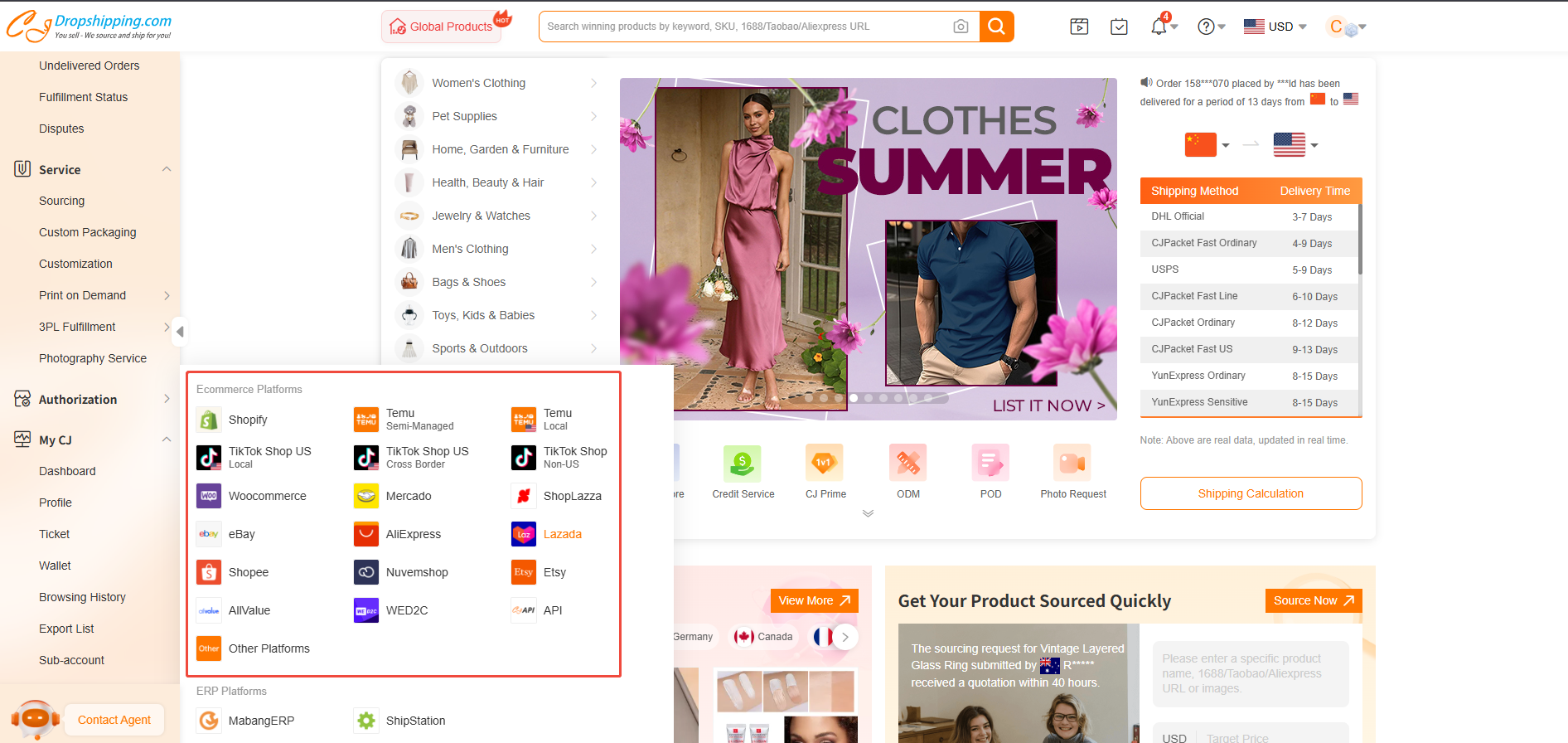
CJdropshipping’s platform dashboard
CJ’s interface lets you filter products (fashion jewelry here) by U.S. stock and see delivery times. CJ maintains warehouses in New Jersey and California for 3–6 day U.S. delivery. Its app integrates with Shopify/WooCommerce to auto-fulfill orders. (All photos above from CJdropshipping.com, used with permission.)
Private Labeling & Branding with U.S. Suppliers
Building your own brand is often a top goal. U.S.-focused suppliers often offer ways to white-label or custom-brand products:
-
Print-on-Demand (POD): Platforms like Printful and Printify shine here. They let you upload your artwork or logo onto products (t-shirts, mugs, phone cases, etc.), then print and ship each order under your brand. Printful is U.S.-based with multiple domestic print centers, so U.S. customers get branded merch in about 3–7 days. No inventory is needed – each item is produced on demand, fully branded with your designs. This is ideal if you want a unique product line or company swag.
-
Custom Packaging & Invoices: Some dropship networks allow your branding on packing slips or boxes. For example, Spocket lets you include a branded invoice (it prints your store name/logo on receipts). CJdropshipping offers custom packaging as a paid service: you can add your logo or design to boxes and packing slips. This means customers never see the supplier’s name – your brand looks like the source. Other suppliers like Zendrop and Trendsi (for apparel) offer similar custom-label options on premium plans. In contrast, most basic drop ship suppliers (e.g. generic AliExpress sellers) ship blank, so U.S. options that permit branding can help you stand out.
-
Private-Label Arrangements: If you grow large enough, you might negotiate a private-label deal. The SaleHoo case of Cloudsharks illustrates this: Cloudsharks began by dropshipping shark-themed slides, then transitioned to products manufactured with their own brand tags. Now their site shows “Cloudsharks” tags on all items, giving a cohesive brand image. They likely worked with suppliers to factory-print their logo. A similar story is Articture (home goods), which scaled by switching from drop-ship to wholesale supply via SaleHoo, eventually adding private labels to products. Actionable tip: Whenever possible, order sample units and ask suppliers about label insertion or custom packaging for bulk orders. Branding builds loyalty.
Ensuring Reliability: Vetting and Speed
Not all suppliers are equal. When choosing a U.S. dropship partner, consider:
-
Reputation & Reviews: Check platform ratings and third-party reviews. For instance, CJdropshipping’s Shopify app has high ratings and is widely recommended for vetted U.S. vendors. Spocket has a large user base but mixed support reviews. Directories like SaleHoo verify their listed suppliers to minimize scams. Reading user forums and asking for supplier feedback can prevent pitfalls.
-
Sample Orders: Always order one or two products to yourself first. This lets you confirm the actual product quality, packaging, and true delivery time. If the sample takes 3 days from a U.S. warehouse as promised, you gain confidence. If it’s late or wrong, consider a different supplier. As one dropshipping guru advises, if you “can’t verify quality via samples, your customers will discover it the hard way.”
-
Inventory & Ship Time Guarantees: Prefer suppliers with real-time stock feeds and estimated delivery dates. Many U.S. platforms show live inventory levels (e.g. CJdropshipping’s site has live stock info). Spocket and Zendrop explicitly let you filter for “Ships from USA” and see shipping estimates. A clear transit estimate (2-5 days, etc.) is a good sign of reliability.
-
Quality Control Services: Some suppliers offer inspection services. CJdropshipping, for example, can perform video inspections or quality checks on request (for a fee). Spocket’s models imply suppliers are pre-vetted, and it offers sample orders at cost. Such measures boost consistency.
-
Fulfillment Reliability: Platforms often tout their order-tracking. For example, Doba emphasizes real-time tracking and shipping alerts. Zendrop controls fulfillment from factory to door, resolving issues quickly. Any supplier that routes returns to U.S. addresses (instead of back overseas) inherently boosts reliability.
In short, fast shipping and consistent quality are the ultimate tests. The platforms above emphasize these. Spocket notes that U.S./EU suppliers mean “fast shipping and generally better product quality control.”. Zendrop’s marketing claims it is the “most trusted supplier with fast, reliable service” because it controls the entire process from factory to customer. Utilize these strengths: a satisfied customer who receives exactly what was promised in 3 days will reward you with repeat business and good reviews.
Real-World Examples
-
Home Goods Brand (Articture): A high-traffic home decor store that started by dropshipping later used SaleHoo’s directory to find U.S. wholesalers as it scaled. According to SaleHoo’s case study, Articture leveraged the 8,000+ suppliers in the SaleHoo Directory to transition some products to a wholesale/brand model. They even used SaleHoo’s Dropship tool to find a key product (“Light of Life” lamp) that was initially dropshipped. Articture then professionally photographed and eventually private‑labeled that product (adding their logo on it). This showcases how a dropship store can scale up by switching to wholesale as it grows, improving margins and brand consistency.
-
Fashion Apparel Brand (Cloudsharks): Cloudsharks began as a novelty e-commerce store selling one main product (shark-shaped slides) via dropshipping. It grew to 73K visitors/month. Notably, Cloudsharks’ live site shows that all products now carry branded tags with the Cloudsharks name. This implies they arranged for private-label manufacturing once sales volume justified it. The Cloudsharks example underscores the power of branding – they took a common product, added custom design and branding, and built a loyal following. It also illustrates a pathway: start with dropshipped trending items (to test market fit), then move to custom-branded wholesale once proven.
-
Multi-Channel Entrepreneur: Many store owners combine platforms. For instance, an entrepreneur might run a Shopify store with CJdropshipping and Spocket, while also listing on Amazon or eBay. They might use AutoDS to automate listings across Shopify and eBay, ensuring inventory sync. In practice, sellers often use U.S. warehouses for Facebook/Instagram ads (due to faster delivery) but keep some products on AliExpress for lower cost if buyers are price-sensitive. By mixing and matching, entrepreneurs in 2026 get the best of all worlds.
These cases show actionable lessons: test products first, then invest in branding (labels, packaging) for winners; use U.S. suppliers to gain operational advantages; and leverage directories or automation tools to expand efficiently.
Strategies for Working with U.S. Suppliers
Whether B2C or B2B, here are some practical tips to improve margins, speed, and brand value:
-
Combine US and Global Sourcing: Don’t rely on a single supplier. Keep a mix of U.S. and overseas sources. For hot products, stock some inventory or use US warehouses (via CJdropshipping, Zendrop, etc.) to avoid stockouts and delays. For slower-moving items, AliExpress or overseas might be acceptable. This diversification ensures you never run out of stock and can always offer a shipping option to suit the customer’s needs.
-
Negotiate Shipping & Pricing: As your volumes grow, negotiate better deals. If using CJdropshipping, ask their agent about bulk shipping discounts or reduced branding fees. If multiple orders per week go through a U.S. warehouse, negotiate a lower per-item handling fee. Even on platforms with fixed pricing, proactively contacting suppliers can yield premium pricing on larger orders. Also, build shipping costs smartly into product pricing or consider free shipping thresholds (e.g. free ship on orders over $50) to maintain margins.
-
Optimize Store Efficiency: Use integrated inventory tools (like AutoDS, Syncee, or Shopify’s built-in sync) to avoid overselling. Enable back-in-stock notifications. Ensure your store’s policies (shipping times, return instructions) match what the supplier provides to avoid buyer confusion. Fast fulfillment must be paired with clear communication.
-
Build Your Brand: Incorporate custom packaging, thank-you notes, or small free samples with orders when possible (CJdropshipping can print custom notes and packaging). Develop a strong, consistent brand voice on social media – U.S. consumers value authenticity. For example, Cloudsharks found that branded tags and a distinctive story made their products memorable. Invest profits in professional photography and marketing for best-selling items to make them stand out (as the Articture case shows).
-
Focus on Customer Service: If using B2C models, providing fast and friendly service can justify slightly higher prices. Use U.S. virtual phone numbers and addresses to look local. Address returns and complaints quickly. Highlight your U.S. speed/shipping on product pages as a selling point. Over-delivering on service can improve your margins by enabling repeat sales.
-
Monitor Trends & Data: Use tools like Google Trends or platform analytics to identify rising product categories. For instance, if home fitness gear is trending, find a U.S. supplier through Spocket or CBD to stock it quickly. The dropshipping guides above all emphasize staying agile – be ready to pivot between fashion, electronics, or beauty as consumer demand shifts.
Overall, treat U.S. suppliers as strategic partners. Communicate with them about expected volumes and branding needs. As you grow, you may even work with a dedicated account manager (for example, Zendrop and CJ offer account support once you scale). Combining these strategies will improve your margins (by negotiating and cutting costly expedited shipping), reduce shipping time (by using domestic stock), and strengthen your brand (through custom packaging and branding options).
Pricing & Feature Comparison
The table above summarizes key differences. To highlight a few points:
-
Pricing: CJdropshipping is unique in having no subscription – you simply pay product cost plus shipping each time. In contrast, apps like Spocket or Syncee require monthly fees ($40–$100+/month) but give unlimited orders and imports once subscribed. AutoDS uses a tiered subscription ($26.90+ for full automation). Printful has no monthly fee (you pay per fulfilled product only).
-
U.S. Warehouses: CJ has multiple U.S. warehouses (NJ, CA), Zendrop offers U.S. 3PL fulfillment, and Printful has fulfillment centers in NC/CA. Spocket and Syncee partners are in the U.S./EU, but stock is held on those suppliers’ own premises. Doba lists many U.S. vendors. AutoDS itself doesn’t hold stock but connects you to domestic retailers. In general, if “Fast Delivery” is your priority, look for platforms with explicit U.S. warehousing.
-
Integrations: All major platforms connect to Shopify and WooCommerce. Many (Spocket, Syncee, AutoDS, Printful, Zendrop) also support BigCommerce, Wix, Etsy, Amazon, eBay and more. Choose a supplier that integrates seamlessly with your chosen storefront so orders and inventory update automatically.
-
Support & Reliability: Spocket and Zendrop tout 24/7 support and responsive service. CJ offers 24/7 chat, though some users find the response inconsistent. Because U.S. operations can be scaled (in different time zones, etc.), most top U.S. suppliers have support teams available during extended hours. Always check reviews for customer service quality.
By comparing these features and pricing, you can pick the best partner(s) for your needs. For example, a beginner on Shopify might start with Spocket or Zendrop (free trial, U.S. goods) to test the waters. An established store may combine CJdropshipping (for broad product range, low cost) with AutoDS (for automation across eBay/Amazon). Fashion retailers might use Trendsi or Modalyst for apparel, while print-on-demand sellers will obviously integrate Printful/Printify.
FAQ
Q: Do U.S. dropship suppliers have minimum order requirements (MOQs)?
Not usually for dropshipping. Most American dropship-friendly suppliers allow single-item orders, since that is the nature of dropshipping. Platforms like CJdropshipping and Spocket let you order one unit at a time. However, some wholesale vendors (found via SaleHoo or Doba) may require minimums (e.g. 10, 50 or more units) if you’re buying “wholesale” instead of one-off dropshipping. Always check the supplier’s policy. In general, one-off “dropship” orders are common in U.S. networks, but bulk MOQs typically apply only if you switch to wholesale.
Q: How does sales tax work with dropshipping in the U.S.?
Sales tax for dropshipping can be tricky. If your store has nexus (tax presence) in a state, you must collect sales tax on orders shipped to customers in that state, even if the supplier is in another state. Also, if a supplier ships from a state where you have no nexus, they might collect tax as the retailer of record. In practice, many U.S. dropshippers use tax automation software (Avalara, TaxJar, etc.) to handle multi-state tax rules. According to tax experts, dropshipping can “complicate the already confusing area of sales tax compliance”, so it’s wise to consult an accountant. In short: assume you must collect tax on customer sales where required, and coordinate resale certificates with your U.S. suppliers.
Q: What about returns?
With U.S. suppliers, returns are generally easier. Because products can be returned to a domestic address, refund processing is quicker and cheaper. CJdropshipping notes that U.S. fulfillment makes returns much smoother compared to overseas suppliers. Still, each supplier has its own return policy (some may charge a restocking fee). Always understand the return procedure beforehand. For example, Printful handles returns for defective prints (often at their cost), while other platforms might require you to handle returns at your customer’s expense. Make sure to state your store’s return policy clearly, so U.S. customers know what to expect.
Q: Which store platforms and tools integrate with U.S. suppliers?
Virtually all leading e-commerce platforms support these suppliers. Shopify and WooCommerce have direct apps for CJdropshipping, Spocket, Syncee, Zendrop, etc. BigCommerce and Wix also support most of them. Even marketplaces like eBay and Amazon can be linked via tools like AutoDS or Dropified. For example, AutoDS lists integrations with Shopify, eBay, Amazon, Etsy, and more. Spocket explicitly supports Shopify, WooCommerce, BigCommerce, Wix, Squarespace, etc.. And POD services like Printful connect to Shopify, Etsy, Amazon, eBay, etc.. In short, check the apps/plugins of your chosen platform – you’ll likely find a one-click integration for any major U.S. dropship supplier.
Q: Are U.S. dropship products more expensive?
Often, yes. American-sourced goods typically cost more than direct-from-China products, reflecting higher manufacturing and shipping costs. For example, Spocket’s items may have smaller margins than AliExpress because you’re paying for quality and speed. However, the faster shipping and easier service can justify the higher price, as long as you price your products accordingly. Many merchants offset higher costs by charging a bit more (consumers often expect to pay extra for 2-day shipping). Additionally, lower return costs and higher repeat rates with local products can improve overall profitability. Always calculate your full landed cost (product + shipping) vs. your selling price to ensure acceptable margins.
Q: Can B2B sellers use these platforms?
Yes. Platforms like Syncee, SaleHoo, and Doba cater well to B2B (wholesale) users. Syncee even has features for wholesalers to load catalogs for retail partners. SaleHoo’s directory is popular with eBay/Amazon resellers and brick-and-mortar retailers. For large retailers, some suppliers offer net-30 terms or bulk pricing. If you’re a B2B merchant, focus on suppliers that explicitly mention wholesaling. You may also deal with high minimums (50–100 units) for wholesale orders, but on the flip side you’ll get better per-unit cost.
Q: How do I choose the best U.S. supplier?
Vet them carefully. Check that the supplier has a robust U.S. logistics setup (domestic warehouses, multiple carriers). Look at customer reviews or forums for speed and support feedback. Confirm inventory levels and order processing times. Try to buy a sample first. Reliable partners often allow ordering small quantities for testing. Remember, a supplier who can consistently deliver quality goods in 3–5 days and handle returns domestically is worth paying a premium. Weigh that against purely low-cost foreign suppliers – often the time and hassle saved is more valuable than a few extra dollars off wholesale price.
Each of the platforms and strategies above aims to help you improve margins, cut delivery time, and strengthen your brand. By selecting reputable U.S. dropship suppliers (like CJdropshipping, Spocket, AutoDS, etc.) and leveraging their strengths – U.S. warehousing, integrated tech, and custom branding options – you can build a more sustainable, customer-friendly business in 2026.