
The global apparel market is booming, and dropshipping continues to be one of the most lucrative ways to tap into this trend. With no inventory hassles and relatively low startup costs, fashion entrepreneurs are flocking to dropshipping. But your success largely hinges on one thing: choosing the right supplier. We’ve compiled the 28 best dropshipping clothing suppliers in 2026 that offer quality products, seamless integrations, and exceptional service.
Whether you’re building a brand or launching a niche boutique, these clothing vendors can help you scale efficiently while meeting customer expectations worldwide.
Why consider clothing dropshipping?
Clothing dropshipping has surged in popularity as an appealing retail model for entrepreneurs seeking low-risk entry into the fashion industry. First and foremost, the barrier to entry is minimal: you don’t need to purchase or warehouse inventory. Instead, when a customer places an order on your online store, you forward that order to a supplier, who then packages and ships directly to the end customer. This means you can launch a clothing store with virtually no upfront inventory costs, reducing financial risk and eliminating concerns about unsold stock.
Moreover, clothing trends evolve rapidly. What’s “in” one season may be passé the next. Dropshipping allows you to pivot your assortment quickly: you can test new styles and niche categories without committing to large purchase orders or warehouse space. If a particular skirt or graphic tee doesn’t sell well, you simply remove it from your catalog rather than being stuck with thousands of unsold units. This agility lets you respond in real time to shifting consumer preferences and social media-driven fads.
Another advantage lies in scalability. With a traditional retail model, as your sales volume grows, you inevitably face more inventory management challenges: larger warehouses, complex fulfillment processes, and increased staffing costs. In contrast, a dropshipping setup shifts the logistics burden entirely onto your supplier network. Whether you sell 10 dresses or 1,000 pairs of leggings, the infrastructure managed by your suppliers can absorb changes in order volume without additional effort on your part. This makes it easier to scale up quickly during peak seasons, such as major holidays or back-to-school periods, without fearing that you’ll run out of storage space or overextend your budget.
Dropshipping also simplifies operational overhead. You don’t need to negotiate warehouse leases, invest in shelving and packing materials, or hire fulfillment staff to pick, pack, and ship items. Instead, you focus on marketing, brand-building, and customer service—areas where your time and energy can have the greatest impact on driving revenue. By outsourcing fulfillment, you free yourself to develop strong social media campaigns, influencer partnerships, and targeted advertising to build your brand’s reputation and attract loyal customers.
Finally, clothing is one of the largest segments in e-commerce. People everywhere constantly replenish their wardrobes, and niche submarkets—such as athleisure, sustainable fashion, plus-size or maternity wear—offer ample room for specialization. Since clothing is a consumable category (items wear out, people’s sizes and tastes change), repeat purchases are common. Dropshipping clothing allows you to tap into this recurring revenue potential. When executed effectively—through careful niche selection, rigorous supplier vetting, and strategic marketing—a clothing dropshipping business can yield significant profit margins while minimizing upfront investment and operational headaches.
28 best dropshipping clothing suppliers in 2026
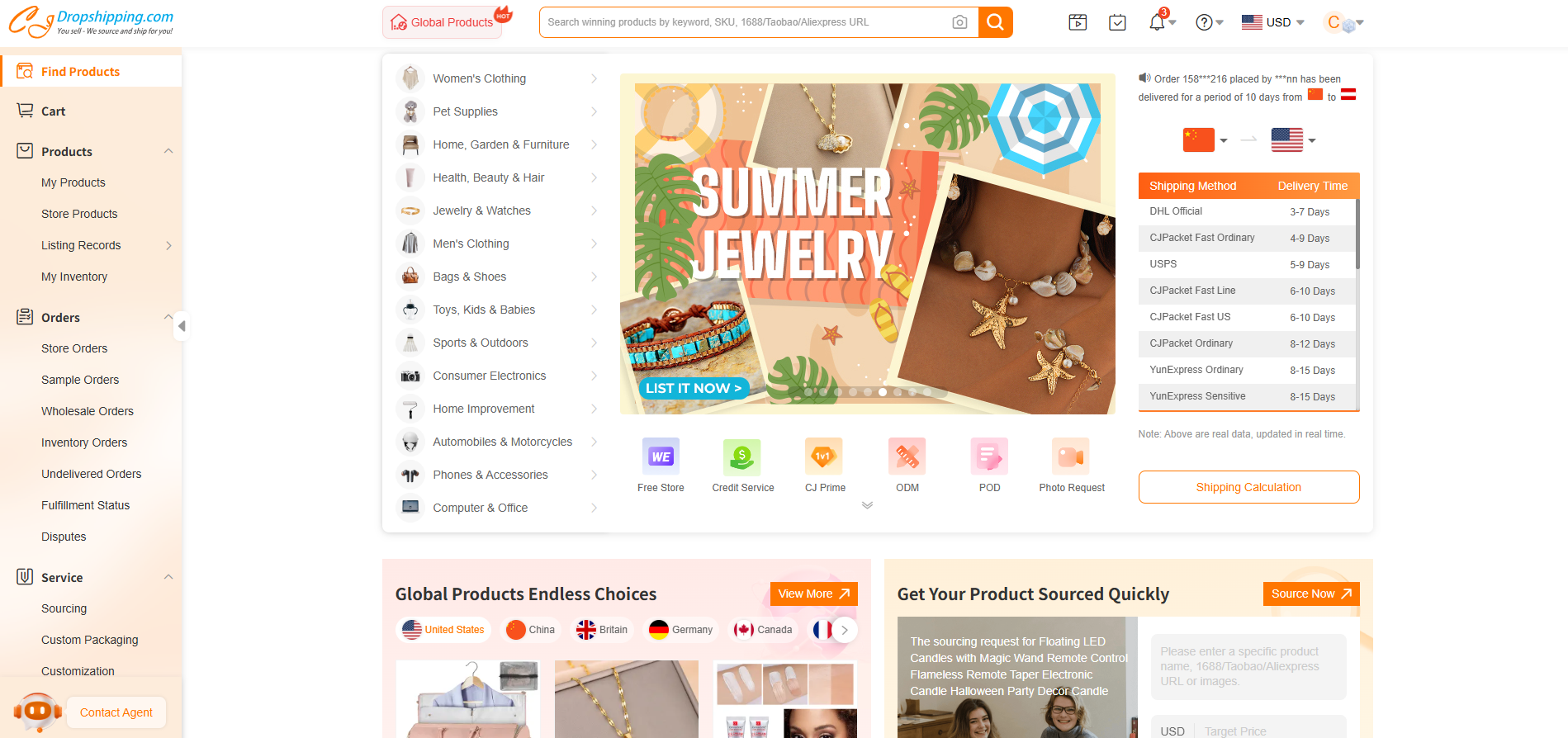
1. CJdropshipping
-
Country (Headquarters): China
-
Pros:
-
Extensive product catalog spanning electronics, apparel, home goods, accessories, and more.
- Seamless integrations with Shopify, WooCommerce, Etsy, BigCommerce, Wix, Squarespace, and other major e-commerce platforms.
-
Multiple global warehouses (China, USA, Europe), enabling faster fulfillment and reduced shipping times.
-
No monthly subscription fees; pay per order, lowering entry barriers for small sellers.
-
Offers private-label services (custom packaging, branded inserts, custom labels).
-
Built-in order management, sourcing, and quality-control services—all in one platform.
-
-
Cons:
-
Product quality varies significantly; sellers must perform thorough sampling and supplier vetting.
-
Reliance on Chinese factories can lead to shipping delays during peak seasons (e.g., Chinese New Year, Singles’ Day) or due to sudden customs restrictions.
-
Customer support primarily English-speaking but may exhibit slower response times (often 7–24 hours on average).
-
-
User-Selection Recommendations:
-
Ideal for beginners or mid-sized stores that want to rapidly test wide product assortments at low upfront cost.
-
If your store cannot tolerate stock outs or significant quality inconsistency, plan to order product samples first and maintain safety stock in a local warehouse.
-
For premium brands prioritizing image and packaging consistency, use CJdropshipping’s private-label options sparingly and only after validating supplier reliability.
-
2. Printful
-
Country (Headquarters): United States (California)
-
Pros:
-
Specializes in POD (print-on-demand) for apparel, accessories, home decor, and more—with multiple print centers in the U.S. and Europe for faster delivery to those markets.
-
High-quality printing processes (DTG, embroidery, sublimation) and strict quality control; consistent end-customer experience.
-
Easy-to-use online design tool; supports custom branding (inside labels, pack-ins, branded pack slip).
-
Reliable, transparent fulfillment—typically 2–7 business days production plus shipping.
-
-
Cons:
-
Product base costs are higher than many offshore POD providers, compressing margins for low-ticket items.
-
International shipping rates (outside U.S./Europe) can be high, and transit times increase during peak holidays.
-
No free warehousing for non-POD inventory; if you want to fulfill non-print-on-demand goods, you must use “Warehousing & Fulfillment” add-on at additional cost.
-
-
User-Selection Recommendations:
-
Best for brands selling higher-margin print-on-demand goods to North American or European audiences, where shipping times and costs remain moderate.
-
Not recommended if your business model relies on ultra-low margins (e.g., $10–$15 T-shirt tops) unless you price carefully.
-
Ideal for sellers who prize consistent quality and brand-aligned packaging over the absolute lowest fulfillment cost.
-
3. Printify
-
Country (Headquarters): United States (California)
-
Pros:
-
Marketplace of multiple print-on-demand print providers scattered globally (U.S., Europe, Asia) allows sellers to pick the most competitive base prices or fastest regional fulfillment.
-
Lower pricing tiers than Printful—Printify Premium plan (monthly fee) unlocks deeper volume discounts.
-
Integration supports Shopify, WooCommerce, Etsy, eBay, Wix, and others.
-
Wide product selection: thousands of SKUs spanning apparel, drinkware, home goods, accessories, phone cases, and more.
-
Flexible platform: switch print providers on a per-product basis to compare mockups, shipping costs, and delivery times.
-
-
Cons:
-
Quality control varies by provider—each print partner has its own print-quality standards. Sellers must order samples from each printer to confirm consistency.
-
Shipping times depend entirely on the selected print partner; some Asia-based providers can take 3–4 weeks for remote regions.
-
Customer support can be slower; live chat only for Premium members; email support average response ~24 hours.
-
Platform fees (if using Premium) plus per-order fulfillment costs can reduce margins if volumes are low.
-
-
User-Selection Recommendations:
-
Great choice if you want flexibility to experiment with different print providers to optimize price vs. quality regionally.
-
Ideal for merchants selling globally who want to localize fulfillment to cut transit times and shipping costs.
-
Less suitable for those unwilling to perform sample testing across multiple providers to ensure consistent product appearance.
-
4. Gelato
-
Country (Headquarters): Norway (Oslo)
-
Pros:
-
Distributed print-on-demand network with partners in 30+ countries, enabling very fast, localized shipping (often 2–5 days in domestic markets).
-
Zero upfront costs: pay per order; no subscription required.
-
Broad catalogue: clothing, wall art, photo books, stationery, home decor, promotional material (flyers, banners).
-
Easy integrations with Shopify, Etsy, WooCommerce, Wix, and API for custom platforms.
-
Eco-friendly focus: many print partner locations run on solar or 100% renewable energy; carbon-neutral shipping options available.
-
-
Cons:
-
Fewer printing techniques for apparel (mostly DTG, limited embroidery), so if you need advanced embellishments, options are narrower.
-
Slightly higher base costs on some items compared to Printful/Printify, especially for niche products like hardcover stationery or photo books.
-
Occasional localization issues—some print partners may run out of certain blank SKUs, leading Gelato to fallback to a different printer with longer lead times.
-
-
User-Selection Recommendations:
-
Best for merchants prioritizing speed-to-customer in Europe, Oceania, or North America without sacrificing sustainability.
-
Choose Gelato if you sell photo books, wall art, or stationery requiring local print partners to evade high international freight.
-
If your brand hinges on a very specific apparel print technique (e.g., DTG on premium fabrics, embroidery), verify Gelato’s available partners in your target region.
-
5. Gooten
-
Country (Headquarters): United States (New York)
-
Pros:
-
Global network of print partners for on-demand printing—offers apparel, accessories, home goods, wall art, stationery, pet products, and more.
-
Predictive fulfillment engine automatically routes each order to the partner offering the best combination of price, speed, and location.
-
Robust API and integration with Shopify, WooCommerce, BigCommerce, Etsy, eBay, and Amazon.
-
No monthly fees; pay per order. Volume discounts automatically apply as you scale.
-
Advanced analytics dashboard for tracking SKU performance, fulfillment times, and cost breakdowns.
-
-
Cons:
-
Print quality can be inconsistent across partners; sellers should order periodic QC samples.
-
Limited customization for packaging—most shipments arrive in plain packaging unless you negotiate higher MOQ (minimum order quantity) for custom inserts.
-
Customer support is primarily email-based and can take 24–48 hours for complex inquiries.
-
User interface is less intuitive than Printful/Printify; steeper learning curve to set up “pipelines” and pricing rules.
-
-
User-Selection Recommendations:
-
Suitable for mid-sized sellers who need a wide product selection and automated partner routing to minimize shipping costs.
-
Good choice if you have tech resources to integrate via API and want advanced fulfillment logic (e.g., route orders to different vendors based on region or cost).
-
Less ideal for beginners who prioritize an out-of-the-box, user-friendly dashboard.
-
6. TPOP
-
Country (Headquarters): France
-
Pros:
-
100% eco-friendly POD provider: certified carbon-neutral, uses biodegradable packaging and non-toxic inks.
-
Products printed and shipped from European facilities—delivery times in France/Western Europe often 2–5 business days.
-
Transparency on environmental impact (carbon emissions, paper trees planted per order).
-
Integrates with Shopify, WooCommerce, Etsy, Wix; API available.
-
Focus on European fashion and accessories: wide selection of organic cotton apparel, eco tote bags, recycled posters, natural skincare items (print on packaging).
-
-
Cons:
-
Base prices for organic apparel and eco-friendly materials are higher than standard cotton alternatives, reducing margin on low-ticket items.
-
Shipping outside Europe is slower and more expensive, as primary warehouses are in France.
-
Limited product range compared to larger POD providers (e.g., no phone cases, fewer home decor choices).
-
No embroidery or specialty print techniques; strictly digital printing (DTG).
-
-
User-Selection Recommendations:
-
Excellent for eco-conscious brands targeting European consumers, where “green premium” is valued.
-
Not recommended for merchants needing rapid USA/Asia delivery or selling very low-margin goods.
-
If sustainability is a core brand pillar and your customers are willing to pay 20–30% extra, TPOP is an ideal match.
-
7. Apliiq
-
Country (Headquarters): United States (California)
-
Pros:
-
Specializes in fashion-forward custom apparel with unique embellishments: custom labels (woven, printed), fabric appliqués, embroidery, cut & sew options.
-
Offers “Street-wear” aesthetic: custom side tags, pocket labels, embroidered patches, all done in small minimums (sometimes 1–5 units for samples).
-
Integration with Shopify and a public API for custom platforms.
-
Option to purchase “blank” inventory (custom-made bulk) to stock in your own warehouse or a 3PL.
-
Strong focus on brand identity—ideal for labels wanting unique branding touches instead of simple DTG prints.
-
-
Cons:
-
Base costs are high—embellished, cut-and-sew garments can start at $25–$30 per unit for low quantities.
-
Lead times for embroidered/appliqué items can be 10–15 business days; cut-and-sew might be 4–8 weeks for larger runs.
-
Geographic footprint is mostly U.S.-based, so international shipping costs and times are significant.
-
UI/UX is more complex; sellers need to understand garment tech-packs, print placements, and custom label file requirements.
-
-
User-Selection Recommendations:
-
Perfect for small-batch streetwear or indie labels willing to pay a premium for standout branding details.
-
Not suitable if you need ultra-fast turnaround or have price-sensitive customers; Apliiq is built around brand differentiation, not commodity pricing.
-
Best for designers skilled at apparel/print tech-packs and who plan to keep flagship SKUs in stock long-term.
-
8. Trendsi
-
Country (Headquarters): United States (California)
-
Pros:
-
Drop-shipping platform focused on women’s fashion—curated catalog of trending apparel, shoes, accessories, and beauty.
-
Low or no membership fee (basic tier is free; premium membership offers discounts on wholesale pricing).
-
USA-based warehouses mean 3–7 business days delivery to American customers; branded invoicing available.
-
Shopify and WooCommerce integrations; automated synchronization of inventory, tracking numbers, and pricing.
-
Free returns for defective items; Trendsi handles exchanges, returns, and customer disputes.
-
-
Cons:
-
Product catalog is limited solely to fast-fashion women’s apparel—no men’s or unisex pieces, excluding extended audience segments.
-
Quality is average—some garments use low-grade fabrics, so returns due to poor stitching/fabric are common.
-
Trends rotate quickly; risk of holding onto unsold inventory if fashion shifts.
-
Higher base costs than overseas wholesale, meaning retail markups must be sizable to maintain margins.
-
-
User-Selection Recommendations:
-
Ideal for new boutiques or influencers focusing on fast-fashion women’s wear, who want minimal setup hassle and US-standard shipping times.
-
If you need multi-category offerings (e.g., men’s wear, home goods), Trendsi alone will not suffice; combine with another platform.
-
Avoid if your brand emphasizes premium quality fabrics or timeless styles—Trendsi revolves around fast, low-cost, trending pieces.
-
9. MyOnlineFashionStore
-
Country (Headquarters): United States (Los Angeles, California)
-
Pros:
-
Focused exclusively on women’s fashion and accessories; curated selection of dresses, tops, outerwear, jewelry, and handbags.
-
USA-based warehouse and sample room allows sellers to order samples quickly (1–2 days) for quality checks or photography.
-
Integration via Shopify app; automated order routing.
-
Bulk pricing tiers available: deeper discounts when your volume exceeds certain thresholds per style.
-
Mix-and-match bundling tools let sellers create custom bundles (e.g., “3 dresses for $100”) to boost average order value.
-
-
Cons:
-
Catalog is relatively small compared to large wholesale platforms (around 3,000 SKUs vs. 10,000+ on major sites).
-
Primarily fast-fashion trends; not ideal for brands seeking a classic, evergreen inventory.
-
No international warehouses—shipping to Europe/Asia can take 10–20 business days.
-
Return policy: returns accepted only on boxed, unworn items, and sellers must absorb return shipping; higher return costs.
-
-
User-Selection Recommendations:
-
Suited to US-based fashion boutiques or Instagram influencers specializing in women’s apparel who need quick sample turnaround.
-
Avoid if you require men’s or children’s lines, or if your target customers reside outside North America.
-
Consider sample ordering first to verify fabric quality; don’t rely solely on product photos.
-
10. FashionTIY
-
Country (Headquarters): United States (California; but many suppliers in China)
-
Pros:
-
Wholesale marketplace covering jewelry, accessories, apparel, home decor, beauty, and more—focus on trendy, low-cost items.
-
No minimum order requirements on most products; bulk discounts are attractive: “Buy 50, get 10% off,” “Buy 100, get 20% off,” etc.
-
USA-based fulfillment centers (East and West Coast) and China warehouses allow faster shipping to North America via ePacket or express couriers (3–7 days).
-
24/7 live chat support; responsive customer service in English.
-
Dropshipping program with API access, automatic order forwarding, and branding options (custom packaging for higher-volume accounts).
-
-
Cons:
-
Product quality varies; most items are ultra-low-cost knick-knacks or trendy jewelry—durability often questionable.
-
Return/exchange policy is complex: must return to China unless seller qualifies for local US returns (only for volume accounts).
-
Website navigation can be cluttered; many near-duplicate listings of low-quality goods.
-
Many competitors also carry the same SKUs, reducing exclusivity and driving price wars.
-
-
User-Selection Recommendations:
-
Good for budget-conscious resellers on eBay, Mercari, or Amazon looking for trendy, low-ticket items in high quantity.
-
Avoid if your brand strategy demands premium or exclusive products—FashionTIY’s assortment is mass-market and easily commodified.
-
Ideal for testing micro-niches: buy small batches (10–20 units) to validate a trending product, then scale.
-
11. BelleWholesale
-
Country (Headquarters): United States (Alameda, California)
-
Pros:
-
Specializes in women’s fashion apparel, lingerie, and activewear sourced from Asia, repackaged for US/Canadian sellers.
-
No minimum order quantities on many items; high-quality product photography and detail shots provided for small retailers.
-
Dropshipping service with real-time inventory syncing; automatic fulfillment via ShipStation when integrated.
-
Competitive wholesale prices (often 30–50% below US retail), enabling healthy markups.
-
Dedicated account managers for higher-volume clients—access to exclusive, soon-to-be-released styles.
-
-
Cons:
-
Inventory fluctuations: popular items can sell out quickly, requiring constant monitoring.
-
Shipping from China to US warehouses can be delayed by customs or Chinese New Year, affecting restock times.
-
Returns are allowed only if the seller’s account is approved for RMA; otherwise, returns go to China at significant cost.
-
Product sizes may run small (Asia sizing); US sellers must adjust size charts accordingly to avoid high return rates.
-
-
User-Selection Recommendations:
-
Ideal for U.S./Canadian boutique owners looking for women’s fashion at low wholesale rates and willing to manage Asian size conversions.
-
Not recommended if you need consistent stock on core SKUs—expect build-up of backorders for bestsellers.
-
Always order samples to check fabric weight and fit; adjust your product listings with clear size-conversion tables.
-
12. Kiyonna
-
Country (Headquarters): United States (Ohio)
-
Pros:
-
Focus on plus-size women’s fashion (sizes 1X–5X) with a consistently stocked, seasonally updated catalog.
-
Specialty in dresses, tunics, pants, and tops engineered for comfort, stretch, and appropriate draping.
-
High-quality fabrics (stretch cotton blends, poly/spandex knits) and attention to fit details (gored skirts, ruching, tummy control).
-
Quick ship for U.S. orders (1–3 days); established B2B program for boutiques with customizable minimums.
-
Loyal customer base—Kiyonna’s brand recognition in the plus-size segment reduces marketing spend for retailers.
-
-
Cons:
-
Narrow niche: exclusively plus-size women’s apparel; no non-apparel items or other size ranges.
-
Wholesale prices are relatively high compared to fast-fashion plus-size, making MSRP higher (often $80–$120 per dress).
-
Limited geographic reach: primary fulfillment out of Ohio, so international shipping is expensive and slow.
-
Low variety in silhouettes per season—some boutiques may find offerings too repetitive if they stock year-round.
-
-
User-Selection Recommendations:
-
Excellent for boutiques specializing in plus-size fashion seeking proven sellers with good margins.
-
Avoid if your focus is on standard or petite sizes—no crossover.
-
Because Kiyonna has strong brand equity, consider co-branding marketing (e.g., “We’re a certified Kiyonna retailer”) for credibility.
-
13. ModeShe
-
Country (Headquarters): United States (California)
-
Pros:
-
Curated import fashion boutique model: sources trending women’s apparel from Chinese suppliers, repackaged under the ModeShe brand.
-
Dropshipping and wholesale options, with no monthly subscription for basic dropship accounts.
-
Integration via Shopify app for automated order routing and tracking updates.
-
Very low wholesale base prices ($5–$15 per piece), enabling high markups if quality expectations are managed.
-
Offers a free sample program (one free item per month per account) to test for quality and fit.
-
-
Cons:
-
Product quality is variable—often true “fast fashion,” with thinner fabrics prone to pilling and stitching issues.
-
Returns not supported for dropship orders (buyers must contact seller, not ModeShe directly).
-
Sizing runs small; inaccurate size charts lead to high returns if not audited carefully.
-
Limited to women’s fashion—no men’s, kids’, or accessories beyond basic hats/jewelry.
-
-
User-Selection Recommendations:
-
Suited for entrepreneurs on Shopify or WooCommerce testing fast-fashion women’s apparel with minimal upfront cost.
-
Not recommended for merchant brands aiming for cohesive, store-wide quality standards—ModeShe is best for occasional trending pieces, not core collections.
-
Always order and verify samples monthly to avoid surprise customer complaints about quality or fit.
-
14. AnnLoren
-
Country (Headquarters): United States (California)
-
Pros:
-
Focused on women’s modest fashion (kimonos, shawls, maxi dresses, abayas) catering to Muslim and conservative-leaning markets.
-
Premium fabrics (100% rayon, linen blends, chiffon) with a reputation for quality and fit.
-
Dropshipping service with branded tracking links and white-label packing slips (no AnnLoren logo on packaging).
-
Fast U.S. fulfillment (2–4 days) plus Canada via USPS/Canada Post.
-
Mix-and-match MOQ as low as 1 piece for sampling, with bulk tier pricing at 6+, 12+, 24+ units.
-
-
Cons:
-
Niche focus means limited appeal outside the modest/modest-wear segment; men’s or children’s items not offered.
-
Higher wholesale cost (often $20–$40 per garment), requiring MSRP approaching $60–$100 to maintain standard margins.
-
Inventory often sells out quickly due to limited SKUs; restocking can take several weeks.
-
International shipping (outside North America) expensive and not subsidized; delays common during peak seasons.
-
-
User-Selection Recommendations:
-
Excellent for boutique owners or influencers serving Muslim-majority neighborhoods or modest-fashion e-commerce.
-
Avoid if your target audience is general fashion or multi-demographic; AnnLoren’s specialty items may not resonate widely.
-
Pre-announce new collections on social media to drive quick sell-outs; maintain an email alert list for restocks.
-
15. FashionGo
-
Country (Headquarters): United States (California)
-
Pros:
-
One of North America’s largest B2B online fashion marketplaces—over 1,500 brands covering women’s, men’s, children’s apparel, accessories, and footwear.
-
Real-time inventory updates and tiered pricing (1–5 units, 6–10 units, 10+ units) to encourage bulk buys.
-
Integration with major POS and e-commerce systems (Shopify, WooCommerce, Shopify POS, QuickBooks).
-
Requires verified wholesale business status, reducing the likelihood of retail shoppers flooding the platform; higher overall product quality than pure dropship catalogs.
-
Hosts major fashion trade shows in Los Angeles, allowing buyers to inspect samples pre- or post-pandemic.
-
-
Cons:
-
Monthly membership fee ($39–$129) required to access full catalog and advanced features; upfront cost can deter very small startups.
-
Many sellers are U.S. importers of Chinese-manufactured apparel, so quality can still vary; not all vendors are “true domestic” manufacturers.
-
Minimum order quantities are typically 1–2 dozen per style, which can tie up cash flow for very new businesses.
-
Platform fees and restrictions on storefront promotion can hamper margin optimization (e.g., you cannot bundle product pricing outside the site).
-
-
User-Selection Recommendations:
-
Ideal for established or scaling boutiques in North America that need a broad selection of brands and can absorb MOQ and membership fees.
-
Not suitable for solopreneurs seeking to buy single pieces or sample collections—MOQ often starts at 12–24 units.
-
Keep a separate budget for trade-show attendance if you want to vet vendors in person; online-only vetting is possible but less conclusive.
-
16. Style Centre
-
Country (Headquarters): United States (Los Angeles, California)
-
Pros:
-
Long-standing wholesale platform focused on wholesale apparel for retailers; features womenswear, menswear, children’s, accessories, and formalwear.
-
Catalog includes both domestic and imported brands; curated to emphasize mid- to high-quality labels.
-
Offers a virtual showroom experience for buyers, with live chat and styling advice.
-
Minimum orders per style typically 2–6 units—more flexible than some trade-only platforms.
-
Bulk shipping discounts for retailers; consolidation service available to combine multiple vendor shipments.
-
-
Cons:
-
Monthly membership fee ($49–$99) depending on tier; adds to overhead for small businesses.
-
Lead times on domestic brands can be seasonally long (4–12 weeks) for made-to-order or apparel with high customization.
-
Website UX is dated; some buyers report difficulty navigating seasonal collections and filtering by size/color.
-
Returns policies vary by vendor; some charge restocking fees up to 20%.
-
-
User-Selection Recommendations:
-
Best for brick-and-mortar boutiques or e-commerce stores that prioritize a curated selection of mid- to high-end fashion.
-
Avoid if you prefer no-fee or very low-fee drop-ship models; Style Centre is more traditional wholesale.
-
Consider their consolidation service if sourcing from multiple vendors to avoid multiple “small parcel” surcharges.
-
17. Buy2Bee
-
Country (Headquarters): United States (Michigan)
-
Pros:
-
Wholesale platform focused on women’s, men’s, and kids’ fashion, as well as general merchandise like electronics, home goods, and beauty products.
-
No membership fee; volume-based pricing discounts automatically applied for larger order quantities.
-
Global fulfillment network: U.S., UK, China warehouses; shipping to North America and Europe is relatively fast (5–10 days).
-
Integrates with Shopify via app, allowing automated order forwarding for drop-ship orders.
-
24/7 live chat support and product photography assets (on-white, lifestyle images) provided for top SKUs.
-
-
Cons:
-
Large catalog of over 30,000 SKUs means product quality is uneven—some items (especially electronics) come directly from low-tier Chinese manufacturers.
-
Returns process can be confusing; returns to China unless you qualify for US-based returns (only for accounts over a certain sales threshold).
-
Some categories have stiff competition—e.g., general electronics—where margins are razor-thin.
-
Platform fee structure for drop shipping (a small per-order convenience fee) can chip away at margins.
-
-
User-Selection Recommendations:
-
Well-suited for small e-commerce stores that want a wide variety of inventory categories (not just apparel).
-
If your store focuses exclusively on higher-end fashion, the inconsistent product curation may be an issue.
-
Always order samples in apparel and electronics categories to validate quality; differentiate yourself with superior customer support.
-
18. BrandsGateway
-
Country (Headquarters): Lithuania (Vilnius) and Sweden (Malmo)
-
Pros:
-
B2B luxury fashion marketplace focusing on authentic, overstock designer brands (e.g., Michael Kors, Gucci, Prada) sold at wholesale discounts.
-
No minimum order requirement on some categories; flexible for small boutiques wanting a luxury touch.
-
Worldwide shipping from European warehouses—typical transit to North America is 5–8 business days.
-
24/7 B2B customer support, dedicated account manager, and automated EDI/API integration for large retailers.
-
Authentication guarantee—every item accompanied by proof of authenticity.
-
-
Cons:
-
Not a drop-ship model for most SKUs; typically, sellers must pre-purchase inventory and store it themselves or use a third-party logistics provider.
-
Luxury overstock margins can be thin if you must discount further to clear inventory.
-
Shipping costs from Europe on bulky items (coats, bags) can be substantial for smaller orders.
-
Returns accepted only if approved within 7 days of receipt—incoming return shipping to Lithuania/Sweden at buyer’s expense can be costly.
-
-
User-Selection Recommendations:
-
Perfect for established boutiques seeking to stock authentic European/American luxury brands at below-retail cost.
-
Not ideal for pure drop-shippers; if you can’t hold inventory, your best opportunity is to find a local 3PL partner for storage.
-
Since currency fluctuations can affect pricing, consider hedging or negotiating multi-order deals with your account manager.
-
19. BDroppy (BrandsDistribution)
-
Country (Headquarters): Italy (Verona)
-
Pros:
-
Europe-focused drop-shipping platform for branded fashion (clothing, footwear, handbags, accessories) carrying over 1,000 licensed brands (Tommy Hilfiger, Calvin Klein, Guess).
-
Multiple warehouses across Europe (Italy, Spain, Poland) enable fast EU shipping (2–4 business days) and extended coverage to the U.K.
-
Automated Shopify and WooCommerce integrations; orders automatically forwarded, tracking synced.
-
English, Spanish, Italian, and French customer support; digital catalog updated daily with new seasonal drops.
-
No membership fee; you pay per order plus a small platform fee.
-
-
Cons:
-
Geographically skewed toward Europe—shipping to North America can take 10–14 business days, with higher freight costs.
-
Pricing good for EU buyers, but U.S./Asia sellers face steep landed costs including import duties for each order.
-
Some brands have long lead times (e.g., pre-order only for upcoming wholesale seasons).
-
Return logistics can be challenging: retailers often must accept returns and pay to send them back to the EU.
-
-
User-Selection Recommendations:
-
Ideal for EU-based e-commerce stores or multi-market sellers targeting European fashion buyers with authentic brand names.
-
If you are a U.S. or Asian merchant, factor in duties and longer transit times, which can compromise margins and customer satisfaction.
-
Use BDroppy primarily for high-ticket branded items (designer handbags, branded footwear) to justify shipping/duty fees.
-
20. BigBuy
-
Country (Headquarters): Spain (Aragón)
-
Pros:
-
Europe’s largest dropshipping and wholesale marketplace for general merchandise: electronics, home & garden, fashion, beauty, sports equipment, toys, and more.
-
Over 200,000 SKUs; over 20 European warehouses in Spain, UK, Germany, France, Italy, Poland, etc., enabling 24–72 hour delivery in most EU countries.
-
Integration with major e-commerce platforms (Shopify, WooCommerce, PrestaShop, Magento, eBay, Amazon) and multichannel synchronization tools (e.g., ChannelEngine).
-
Automated language translation for product titles/descriptions into 10+ EU languages, aiding cross-border selling.
-
Volume-based pricing and multiple payment options (wire transfer, credit card, PayPal, local EU methods).
-
-
Cons:
-
Platform subscription fee required (\€49–\€199/month depending on tier); may be steep for micro-sellers.
-
Extensive catalog means some SKUs (especially electronics) are commoditized; competition on price is fierce.
-
Return policy: buyers pay return shipping; restocking fees of up to 10%; returns must go back to the Spanish warehouse.
-
Customer support primarily Spanish-speaking; English support may be slower or limited to ticketing system.
-
-
User-Selection Recommendations:
-
Best for established or scaling EU sellers needing one platform to source all product categories with fast EU shipping.
-
Avoid if your store is beginner-level with limited budget—subscription fees plus upfront marketing costs can be burdensome.
-
For non-EU sellers, EU warehouses may not be beneficial; transit to U.S./Asia is still long and costly.
-
21. Spocket
-
Country (Headquarters): United States (California)
-
Pros:
-
Curated marketplace of dropship suppliers primarily from the U.S. and EU, focusing on high-quality products: apparel, accessories, home goods, pet items, beauty.
-
Branded invoicing available (choose whether to include supplier invoice or Spocket-branded packaging slip).
-
Integration with Shopify and WooCommerce; automated order syncing and real-time inventory updates.
-
Fast shipping promise: U.S. orders usually ship in 2–5 days; EU orders in 3–7 days.
-
Free plan allows testing limited products; paid plans unlock deeper discounts and unlimited premium products.
-
-
Cons:
-
Monthly subscription fees ($24–$99/month depending on plan) required for full access; base markup (starting price) can be high relative to overseas suppliers.
-
Product catalog, though curated, is narrower than global platforms like AliExpress or CJdropshipping—fewer niche items.
-
Quality still varies by supplier; though limited to U.S./EU, some suppliers are smaller boutique producers with smaller QC teams.
-
Custom branding options are limited—Spocket-branded slips are standard unless you negotiate higher-volume terms.
-
-
User-Selection Recommendations:
-
Ideal for dropshippers prioritizing fast delivery in the U.S. or Europe who can absorb subscription costs for higher perceived product quality.
-
If you need ultra-low pricing or niche global products, consider other platforms (e.g., CJdropshipping or AliExpress) instead.
-
Use Spocket’s free plan to test hot products before upgrading to a paid tier.
-
22. Syncee
-
Country (Headquarters): Hungary
-
Pros:
-
Data feed management platform that connects online sellers with thousands of global suppliers (dropship and wholesale) across multiple product categories.
-
Integrations: Shopify, WooCommerce, BigCommerce, Wix, Magento. Offers an intuitive dashboard for mapping supplier feed fields to your store’s fields.
-
Syncee Marketplace: access to thousands of vetted suppliers offering print-on-demand, electronics, home & garden, apparel, pet products, and more.
-
Automatic daily feed updates ensure real-time inventory and price synchronization.
-
Tiered subscription plans (free plan allows up to 25 SKUs, paid plans unlock unlimited products and premium supplier lists).
-
-
Cons:
-
Feed-based model means sellers still need to evaluate supplier quality; inconsistent product photos or descriptions can hamper trust.
-
Subscription cost ($29–$299/month) can be high if you want premium curated suppliers.
-
No fulfillment or packaging services—synced products still ship directly from supplier without centralized branding options.
-
Returns management is entirely on the seller; no unified return portal or support.
-
-
User-Selection Recommendations:
-
Perfect for sellers who want to aggregate multiple suppliers onto a single store without manual CSV imports, especially if you have a large, varied catalog.
-
Avoid if you need a platform that also handles fulfillment and branding—Syncee is strictly feed-management.
-
Use higher-tier plans only once you’ve validated top suppliers on the Syncee Marketplace to minimize wasted spend.
-
23. Modalyst
-
Country (Headquarters): United States (California)
-
Pros:
-
Curated fashion dropshipping marketplace emphasizing independent designers and USA-based brands in apparel, footwear, accessories, and lifestyle goods.
-
Easily integrates with Shopify, BigCommerce, Wix; real-time inventory and pricing sync.
-
Branded invoicing and premium packaging available for “Encore” (U.S.-based) suppliers; shipping times usually 2–5 business days domestically.
-
No monthly fee for “Starter” plan with up to 25 products; paid plans unlock unlimited products and access to premium suppliers.
-
Automated back-in-stock alerts and low-stock notifications help manage product lifecycles.
-
-
Cons:
-
Limited to fashion and lifestyle categories—no electronics, home goods, or general merchandise.
-
Pricing for Encore suppliers is higher than overseas alternatives; base cost for boutique brands can be $30–$60 per item.
-
Quality varies among independent designers—some upstart brands lack robust QC processes.
-
Global shipping from non-U.S. suppliers can be 2–4 weeks; buyers outside North America pay premium shipping fees.
-
-
User-Selection Recommendations:
-
Ideal for Shopify or Wix merchants wanting curated, higher-quality fashion pieces with fast U.S. shipping.
-
Not recommended if you need multi-category products beyond fashion, or if you target primarily non-U.S. audiences.
-
Use the free Starter plan to test a handful of trending designer items before upgrading.
-
24. Wholesale2B
-
Country (Headquarters): United States (California)
-
Pros:
-
Aggregator platform connecting sellers to 100+ dropship suppliers across categories: electronics, home & garden, apparel, toys, health & beauty.
-
One-stop integration: sync products and orders to eBay, Amazon, Shopify, BigCommerce, WooCommerce, and more.
-
Monthly subscription plans ($29.99–$49.99) include access to product feeds, automated inventory updates, and order import tools.
-
No individual supplier relationships required; Wholesale2B handles order routing and vendor management.
-
Real-time inventory updates reduce bestseller stockouts.
-
-
Cons:
-
Sellers have no direct communication with suppliers; any quality or fulfillment issues must be funneled through Wholesale2B’s support.
-
Returns are managed per supplier policy—Wholesale2B does not centralize returns, so sellers must navigate multiple RMA processes.
-
Product descriptions and images often generic; sellers need to rewrite copy and possibly rephotograph to stand out.
-
Mixed reputation on customer support—some report delays in resolving shipping or inventory discrepancies.
-
-
User-Selection Recommendations:
-
Good for new multi-category dropship sellers who prefer a single platform to manage everything without negotiating 100+ supplier accounts.
-
Avoid if brand control, packaging, and direct supplier relationships are priorities; Wholesale2B is a true aggregator with little customization.
-
Use advanced automation to relabel or rebrand product descriptions and images to avoid “me-too” listings.
-
25. Avasam
-
Country (Headquarters): United Kingdom (London)
-
Pros:
-
Fully automated UK-focused dropshipping platform—integrates with Shopify, WooCommerce, eBay, Amazon UK, and more.
-
Only UK and EU-based suppliers (over 200 supplier partners), ensuring sub-five-day shipping across the UK and most of Europe.
-
No membership fees for Basic plan; pay per order. Paid plans (\£75–\£249/month) unlock premium suppliers, faster onboarding, and branded shipping.
-
Automated order routing, tracking updates, and returns management (returns can be consolidated to a UK returns address).
-
VAT invoices provided automatically for each order—simplifies EU tax compliance.
-
-
Cons:
-
Catalog focused on general merchandise—limited high-end fashion or niche electronics; mainly home & garden, gifts, toys, and health & beauty.
-
No direct integrations to U.S. or Canadian channels—any U.S. seller will face higher shipping costs and longer delivery times.
-
Some suppliers have restrictive MOQs (e.g., 5–10 units per SKU) despite being dropship; smaller sellers may struggle to meet thresholds.
-
Limited branding options—orders ship in supplier packaging unless you commit to higher-volume plans.
-
-
User-Selection Recommendations:
-
Ideal for mid-sized UK or EU e-commerce stores that want automated local dropshipping with sub-five-day delivery.
-
Avoid if you target global markets outside Europe—fulfillment won’t be competitive compared to China or U.S.-based providers.
-
Evaluate supplier MOQs carefully; some “dropship” items may still require 5+ units per order.
-
26. Sunrise Wholesale
-
Country (Headquarters): United States (California)
-
Pros:
-
Established wholesaler and dropshipper since 1996—large product catalog (over 30,000 SKUs) spanning electronics, home goods, kitchenware, toys, jewelry, and more.
-
No monthly fee for dropship program; purchase wholesale and dropship directly via their portal.
-
Integration available through Sunrise Dropship plugin for Shopify, BigCommerce, WooCommerce, and Magento.
-
Real-time inventory updates and branded packing slip options.
-
Competitive pricing on general merchandise—many items priced 20–40% below retail.
-
-
Cons:
-
Strict dropship policy: returns must go back to Sunrise West Coast warehouse, leading to higher return shipping for East Coast customers.
-
No fashion apparel-focused categories (primarily general merchandise)—not suitable if you need clothing or shoes.
-
Invoices and packing slips include Sunrise logo by default; white-labeling only available for high-volume accounts.
-
Customer support can be slow during peak seasons; some sellers report delayed order fulfillment when inventory sells rapidly.
-
-
User-Selection Recommendations:
-
Perfect for sellers on eBay, Amazon, or Shopify needing electronics, housewares, and basic gift items with no monthly fees.
-
Avoid if you specifically need apparel, footwear, or fashion accessories—Sunrise carries almost no clothing.
-
Keep an eye on inventory alerts for fast-selling gadgets (e.g., wireless earbuds) to avoid cancellation.
-
27. Shein
-
Country (Headquarters): China (Guangzhou/Shenzhen; corporate headquarters registered in Singapore)
-
Pros:
-
World’s largest fast-fashion e-commerce platform, with millions of SKUs in women’s, men’s, children’s clothing, accessories, shoes, home decor, beauty, and electronics.
-
Extremely low prices due to direct-to-consumer manufacturing model and economies of scale.
-
Robust mobile app with AI-driven personalization; easy browsing and quick checkouts.
-
Frequent flash sales, promo codes, and loyalty programs drive high customer acquisition.
-
Global logistics network: SHEIN Xpress, local warehouses in U.S., Europe, Middle East, and Asia enable 7–14 day delivery to major markets.
-
-
Cons:
-
Quality is hit-or-miss: many items are paper-thin fabrics prone to pilling and stitching defects.
-
Ethical and sustainability concerns: rapid overproduction model leads to high waste; controversies around labor conditions and carbon footprint.
-
Sizing is highly inconsistent; high return rates (often 30–40%) require efficient reverse logistics.
-
No “official” wholesale/dropship program open to outside sellers—Shein sells only direct to consumer, not B2B.
-
-
User-Selection Recommendations:
-
Suitable for price-sensitive consumers wanting constant style churn and extreme low cost.
-
Not an option for traditional e-commerce sellers wanting to resell branded or wholesale goods—no B2B channels.
-
If you’re a marketplace arbitrageur, proceed with caution; many resellers have been banned by Shein for violating TOS.
-
28. Temu
-
Country (Headquarters): United States (Boston, Massachusetts; owned by PDD Holdings, China)
-
Pros:
-
Rapidly growing marketplace offering ultra-low-priced apparel, electronics, home goods, pet supplies, beauty—leverages Pinduoduo’s supply chain to source directly from Chinese factories.
-
Generous new-user coupons and referral rewards drive viral customer acquisition; app features flash deals, group buys, and limited-time price drops.
-
Global shipping network: multiple fulfillment centers in U.S., Canada, Europe, and Latin America—most U.S. orders arrive in 8–12 days.
-
User analytics: crowdsource ratings and reviews visible on each listing; built-in AI recommendations for trending items.
-
Zero commission for sellers (Temu keeps margin by negotiating factory costs; this isn’t a seller-driven platform).
-
-
Cons:
-
Quality control is variable; items often extremely low-priced and may not meet standard durability expectations.
-
Many products arrive in unbranded, untracked satchels; tracking accuracy can be poor, leading to higher “lost package” rates.
-
Customer service response times vary; dispute resolution can take several days.
-
Ethical concerns: fast-fashion model and minimal transparency about factory conditions.
-
-
User-Selection Recommendations:
-
Best for bargain-seeking consumers or resellers willing to gamble on ultra-low upfront cost and potential quality trade-offs.
-
Not suited as a reliable wholesale or dropship source—Temu is DTC only; no B2B interface.
-
If you try Temu items for resale, verify each SKU’s quality thoroughly before listing on your own store.
-
Summary Recommendations for Users
-
For Print-On-Demand (POD) Apparel & Merchandise:
-
North America / Europe Focus: Use CJdropshipping (quality, brand packaging) or Printify (cost flexibility), Gooten (automated partner routing), or Gelato (local eco-friendly production).
-
Eco-Friendly European POD: TPOP.
-
Brand-Focused/Streetwear Embellishments: Apliiq.
-
-
For General Dropshipping Catalogs:
-
China-Based, Low-Cost Entry: CJdropshipping (wide categories), Temu (no B2B but DTC).
-
U.S./EU-Based Fast Delivery & Curated Selection: Spocket, Avasam (UK/EU), BDroppy (EU-branded fashion), BrandsGateway (European luxury).
-
Large Multicategory Aggregators: Wholesale2B (100+ suppliers), BigBuy (massive EU catalog), Sunrise Wholesale (US general merchandise).
-
-
For Niche Fashion & Boutique
-
Plus-Size / Specialized Apparel: Kiyonna (plus-size), AnnLoren (modest fashion), MyOnlineFashionStore (fast-fashion women’s), BelleWholesale (women’s apparel/lingerie), FashionGo & Style Centre (curated wholesale for U.S. boutiques).
-
Fast-Fashion Dropship (Female Apparel): Trendsi, ModeShe (trending women’s).
-
-
For Luxury/Designer Overstock:
-
European Designer Brands: BDroppy (EU-dropship of licensed brands), BrandsGateway (luxury overstock), FashionGo (some higher-end lines).
-
-
For Wholesale-Only B2B
-
Large-Scale North American Wholesale: FashionGo, Style Centre—ideal for traditional wholesale buyers with MOQ requirements.
-
Global Multicategory Feeds & Integration: Syncee (feed management, global suppliers).
-
When choosing among these platforms, consider:
-
Target Audience Geography: (e.g., U.S.-based consumers → prefer U.S.-or EU-based warehouses; EU sellers → BigBuy, Avasam, BDroppy).
-
Product Category & Niche Focus: (e.g., POD apparel vs. general merchandise vs. luxury designer).
-
Pricing vs. Quality Trade-Off: (e.g., ultra-low-cost but inconsistent quality on Temu and CJdropshipping vs. higher-cost but consistent quality on Printful, Kiyonna, AnnLoren).
-
Operational Complexity & Budget: (e.g., subscription fees on BigBuy, Syncee, Modalyst vs. pay-per-order on CJdropshipping, Printful, Gelato).
-
Branding & Packaging Needs: (e.g., Printful/Gooten/Apliiq for custom inserts and packaging; Spocket for branded invoicing; Many aggregators ship in supplier’s packaging by default).
By aligning these factors with your business model—whether it’s dropshipping, POD, wholesale buying for a brick-and-mortar boutique, or testing niche products—you can select the platform(s) that best fit your brand, margin requirements, and delivery expectations.
What clothing items should I dropship?
Choosing the right clothing items to dropship is essential for success. Start by analyzing consumer demand trends: what styles, fabrics, or categories are popular in your target market? For newcomers, basics like T-shirts, hoodies, and leggings are reliable because they have broad appeal and consistent demand. Plain or graphic tees, if sourced from high-quality suppliers, can provide healthy margins and lend themselves to niche branding—such as eco-friendly materials, vintage-inspired prints, or custom slogans. Similarly, leggings remain a powerhouse in women’s activewear; they cater to both fitness enthusiasts and the casual athleisure crowd, making them versatile sellers.
However, standing out in a saturated market requires more tailored strategies. Consider niche apparel segments where competition is lower and customers are more willing to pay a premium. Plus-size apparel, for instance, serves a growing demographic that often feels underserved by mainstream brands. Dropshipping specialty plus-size dresses, tops, and activewear can position your store as a go-to destination for fashionable garments in sizes 1X–5X or larger. Likewise, maternity clothing is another underserved niche. Expecting mothers frequently look for comfortable yet stylish pieces—such as stretchable leggings, empire-waist dresses, and nursing-friendly tops—that cater to changing body shapes. By focusing on maternity dropshipping, you can build a loyal customer base of repeat buyers.
Seasonal and trend-driven items also merit consideration. Fast-fashion consumers chase the latest styles seen on social media; think “it” dresses, statement crop tops, or coordinating “matching sets” that go viral. If you have a reliable, fast-turnaround supplier network, you can capitalize on these micro trends. Be mindful, though, that rapid inventory turnover is critical: if you hesitate, the trend may vanish, leaving you with inventory that customers no longer want. For example, when a particular athleisure print or cut-out design becomes popular on TikTok, being one of the first to list that style grants you a competitive edge.
Another promising category is sustainable and eco-friendly garments. Consumers are increasingly conscientious about the environmental impact of their purchases. Dropshipping ethically sourced clothing—organic cotton tees, recycled polyester activewear, or fair-trade-certified hoodies—allows you to market your brand on values-driven messaging. While base costs may be higher than mass-produced fast-fashion items, customers in this segment often accept a slight price premium for sustainability credentials. Highlighting certifications, transparent supply chains, and minimal-waste packaging can reinforce your brand’s eco-friendly positioning.
Finally, specialized performance apparel—such as compression wear, moisture-wicking fabrics, or UV-protection clothing—caters to fitness buffs, outdoor enthusiasts, and athletes. Dropshipping technical workout gear (running shorts, sports bras, cycling jerseys) can capture a segment willing to spend more on quality-performance features. In summary, a balanced dropshipping catalog typically blends evergreen basics (tees, leggings), niche-focused segments (plus-size, maternity, eco-friendly), and trend-forward items, ensuring you meet both broad and specialized customer needs while maintaining flexible margins.
10 clothing dropshipping categories
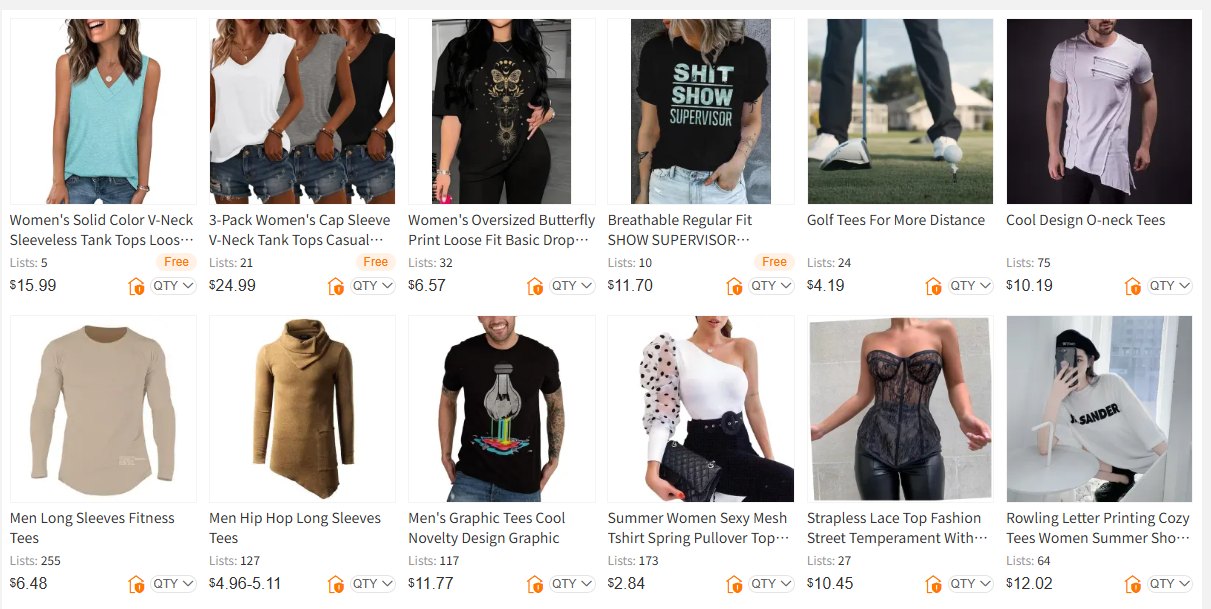
When building a clothing dropshipping business, organizing your catalog into clear categories helps customers navigate your store and increases cross-selling opportunities. Below are ten high-potential categories, each with brief context:
-
Basic Tees and Tops
-
Simple T-shirts, tank tops, and casual shirts form the backbone of many wardrobes. They’re affordable, unisex or gender-specific, and come in countless color and style variations—plain, graphic-printed, oversized, cropped—all of which allow for niche branding opportunities.
-
-
Activewear & Athleisure
-
Leggings, sports bras, joggers, and performance tops. This category merges functionality with style, appealing to fitness enthusiasts and lifestyle shoppers who seek comfortable, fashionable pieces for yoga, gym workouts, or casual daily wear. Moisture-wicking fabrics, four-way stretch, and breathable mesh panels are common value-adds.
-
-
Women’s Dresses & Jumpsuits
-
Day dresses, maxi dresses, wrap dresses, jumpsuits, and rompers—ranging from casual to semi-formal. Versatility here is key: sourcing items suitable for both everyday wear and special occasions broadens your customer base. Fast-fashion prints and sustainable fabrics can both be featured.
-
-
Plus-Size Apparel
-
Extended-size T-shirts, dresses, tops, bottoms, and activewear designed specifically for sizes 1X–5X and beyond. This underserved segment demands clothing that fits well, flatters varying body shapes, and uses higher-stretch fabrics. Niche marketing—via body-positive messaging—can drive loyalty.
-
-
Maternity & Nursing Wear
-
Maternity leggings, nursing-friendly tops, adjustable-waist pants, and flowy dresses that adapt to changing body shapes. Comfort, stretch, and ease-of-access (e.g., nursing clips or front zippers) are essential features. Target pregnant women from first trimester through postpartum.
-
-
Streetwear & Urban Styles
-
Hoodies, oversized sweatshirts, graphic tees, cargo pants, and snapback hats inspired by hip-hop, skate, and street culture. Incorporate trending designs—tie-dye, distressed denim, bold typography—to attract younger demographics. Limited-edition capsule drops can generate hype.
-
-
Eco-Friendly & Sustainable Clothing
-
Organic cotton T-shirts, recycled polyester hoodies, bamboo-fiber socks, and ethical denim. This category appeals to environmentally conscious consumers; emphasize certifications (GOTS, Fair Trade) and transparent supply chains in product descriptions. Premium pricing is acceptable if values are communicated clearly.
-
-
Loungewear & Sleepwear
-
Pajama sets, robes, lounge pants, and cozy knitwear—tailored for comfort at home. Post-pandemic, work-from-home trends have bolstered demand for soft joggers, matching pajama sets, and plush robes. Silk, modal, or brushed cotton fabrics elevate perceived value.
-
-
Accessories & Complementary Items
-
Hats, beanies, sunglasses, scarves, socks, and belts. Although they’re “accessory” categories, these items boost average order value when offered alongside core apparel. Focus on trending materials (e.g., knit bucket hats, printed socks) and unisex designs to maximize cross-sell potential.
-
-
Seasonal & Occasion Wear
-
Swimwear, holiday-themed sweaters, party outfits, and outerwear. Capitalize on specific periods—summer beachwear, winter coats, Halloween costumes, or New Year’s Eve dresses. Seasonal forecasting and quick supplier communication ensure you stock the right styles at the right time, minimizing overstock risk.
-
Structuring your store around these ten categories creates a cohesive shopping experience. Each category can be further segmented by gender, size, or price range, depending on your target audience. Additionally, incorporate filters for fabric type (organic vs. conventional), fit (slim, regular, plus), and style (e.g., vintage, minimalist, bohemian) to streamline navigation. Remember that consumer tastes evolve: use analytics tools to monitor which categories perform best and adjust your catalog seasonally or as trends shift.
How to start dropshipping clothes?
Launching a clothing dropshipping business involves several strategic steps: niche selection, supplier vetting, e-commerce setup, branding, marketing, and ongoing optimization. Below is a systematic roadmap to get started:
-
Identify a Niche & Target Audience
-
A focused niche helps differentiate your store. Analyze market trends via social media platforms (Instagram, TikTok, Pinterest) and keyword tools (Google Trends, SEMrush). Determine whether you’ll specialize in plus-size fashion, sustainable apparel, streetwear, or another submarket. Define your ideal customer by age, gender, spending habits, and values. Craft a clear value proposition—why should they purchase from you instead of a competitor?
-
-
Research & Validate Product Ideas
-
Within your chosen niche, list potential clothing items (e.g., organic cotton T-shirts, high-waist leggings, printed crop tops). Validate demand through small-scale testing: run paid ads or leverage social media polls to gauge interest in specific styles. Order samples from prospective suppliers to assess fabric quality, print durability, stitching, and fit. Use these samples for product photography and to verify supplier reliability before committing to long-term partnerships.
-
-
Select Reliable Suppliers & Platforms
-
Source suppliers through established dropshipping networks (e.g., Printful, Printify, CJdropshipping, Spocket) or specialized niche providers (e.g., TPOP for eco-friendly, Apliiq for custom streetwear). Evaluate supplier metrics: production lead times, shipping speeds, return policies, and communication responsiveness. Look for integrations with your planned e-commerce platform (Shopify, WooCommerce, BigCommerce). Establish clear agreements on branding capabilities (custom labels, packaging inserts) and order-tracking processes.
-
-
Build Your E-Commerce Store
-
Choose a user-friendly platform: Shopify is often recommended for beginners due to its intuitive interface, apps marketplace, and built-in payment gateways. Customize your store’s theme to reflect your brand’s aesthetic—select color palettes, fonts, and layout that resonate with your target demographic. Create essential pages: homepage, collection pages organized by category, product pages with high-quality images and detailed descriptions (fabric, care instructions, sizing charts), About Us, FAQs, Shipping & Returns, and Contact. Implement trust signals: customer reviews, secure checkout badges, and clear return policies.
-
-
Develop a Brand Identity & Marketing Strategy
-
A compelling brand identity distinguishes you from the sea of generic “fast-fashion” stores. Design a memorable logo, craft a brand voice (tone, messaging), and establish consistent visual elements across your website, social media, and packaging. Outline your marketing channels:
-
Social Media: Curate Instagram and TikTok accounts showcasing lifestyle imagery, outfit inspiration, and behind-the-scenes production insights. Leverage user-generated content and influencer partnerships to build credibility.
-
Paid Advertising: Create targeted Facebook/Instagram ad campaigns based on demographics, interests, and custom audiences (e.g., lookalike audiences of past purchasers). Test different ad creatives—flat lays, model shots, videos of apparel in action—to optimize for click-through rate and conversion.
-
Email Marketing: Collect emails through exit-intent pop-ups or lead magnets (e.g., 10% off first order). Craft automated flows: welcome series, abandoned cart reminders, post-purchase follow-ups asking for reviews, and periodic newsletters with new arrivals or exclusive deals.
-
SEO & Content: Write blog posts or style guides (“How to style high-waist leggings in summer”) targeting long-tail keywords relevant to your niche. Optimize on-page SEO: meta titles, descriptions, alt text for images, and fast page load speeds.
-
-
Implement Order Fulfillment & Customer Service Workflows
-
Connect your store to your dropshipping suppliers via direct integrations or third-party apps (e.g., Oberlo, DSers). Automate order forwarding: when a customer completes checkout, orders should seamlessly route to the supplier with correct shipping details. Set realistic processing and delivery windows on your store to manage customer expectations.
-
Establish clear customer service protocols: create templates for common inquiries (size exchanges, tracking updates, return instructions), and decide whether you’ll handle customer support in-house or outsource to a virtual assistant. Monitor supplier communications daily to spot potential delays or quality issues, and proactively notify customers if their orders might be impacted.
-
-
Monitor Metrics & Iterate
-
Track key performance indicators (KPIs):
-
Customer Acquisition Cost (CAC): Compare your advertising spend to new customer revenue—are you acquiring customers profitably?
-
Average Order Value (AOV): Use bundling, upsells, or volume discounts to increase AOV.
-
Conversion Rate: If your traffic is high but conversions are low, revisit product descriptions, site speed, trust signals, and checkout flow.
-
Return Rate: High returns often signal sizing issues or inaccurate product images. Address by refining size charts, adding more product photos, and clarifying fabric details.
-
Supplier Performance: Maintain a supplier scorecard—on-time shipment rate, defect rate, response times. Replace underperforming suppliers to protect customer satisfaction.
-
By systematically following these steps—niche validation, supplier vetting, thoughtful store design, targeted marketing, and diligent performance monitoring—you’ll lay a solid foundation for a clothing dropshipping venture that can scale profitably over time. Success hinges on constant iteration—listening to customer feedback, optimizing marketing campaigns, and refining your product mix as trends evolve.
Best Clothing Dropshipping Supplier FAQ:
Q1: What criteria should I use to choose a clothing dropshipping supplier?
A: Prioritize suppliers with consistent product quality, transparent production and shipping timelines, and robust communication channels. Key factors include:
-
Product Quality & Consistency: Order samples to inspect fabric weight, stitching, print durability, and fit.
-
Shipping Speed & Reliability: Look for suppliers with multiple warehouses (e.g., US, EU) if your primary customers are in those regions. Confirm average production time (2–7 days for POD vs. 14–21 days for fast fashion) and shipping carriers used.
-
Integration & Automation: Ensure they integrate seamlessly with your e-commerce platform—Shopify, WooCommerce, etc.—for automated order forwarding and tracking updates.
-
Branding Options: If you want custom labels, branded packaging, or pack-ins, verify minimum order quantities and associated fees.
-
Return & Refund Policies: A clear, customer-friendly return process (even if buyer pays return shipping) can reduce post-purchase friction and preserve brand reputation.
Q2: Are there zero- or low-minimum suppliers for custom-printed apparel?
A: Yes. CJdropshipping and Printify allow you to order single units, making them ideal for testing designs. Both platforms don’t impose minimums on standard POD items, though add-ons like embroidery patches or custom labels may have minimums (usually 10–20 units). Gelato and Gooten also offer no-minimum POD, but their eco-friendly fabrics (Gelato) or advanced routing algorithms (Gooten) might slightly raise base costs.
Q3: How do I ensure accurate clothing sizing with dropship suppliers?
A: Variations in sizing charts can lead to higher return rates. Steps to mitigate:
-
Sample Thoroughly: Order from each supplier in various sizes (e.g., S, M, L, XL) and measure actual garment dimensions.
-
Publish Detailed Size Guides: Provide bust, waist, hip, and length measurements in both inches and centimeters. Show garment laid flat and body measurements in your store.
-
Include Fit Notes: Indicate if items run small, true-to-size, or oversized. Use phrases like “Runs small—size up one size” or “Relaxed fit—true to size.”
-
Customer Reviews & Photos: Encourage buyers to share real-life images and feedback on fit—display these prominently on product pages.
Q4: Which suppliers offer sustainable or eco-friendly clothing dropshipping?
A: TPOP (France) specializes in eco-conscious POD: biodegradable packaging, water-based inks, and carbon-neutral shipping. For organic cotton basics and ethical sourcing, look for Printful’s “Organic & Sustainable” catalog or Gooten’s eco-friendly subcategory. Gelato also emphasizes local production centers using renewable energy. Always verify certifications (GOTS, OEKO-TEX) on supplier websites before listing.
Q5: What are typical shipping times and costs for clothing dropshipping?
A: Shipping times vary by model and location:
-
Print-On-Demand (POD): Production 2–7 business days (CJdropshipping, Printify), plus shipping 3–10 days domestically, 7–20 days internationally.
-
Fast-Fashion Dropship: Production/processing 5–14 days, shipping 10–25 days if shipping from Asia to U.S./EU. Some suppliers (ModeShe, Trendsi) maintain U.S. warehouses, cutting shipping to 3–7 days.
-
Domestic/U.S.-Based Suppliers: (Spocket, Apliiq, Sunrise Wholesale) often ship within 2–5 days nationwide.
Costs also vary: small apparel parcels typically range $3–$6 domestically; international shipments can start around $8–$15, increasing with weight or expedited options. Always display transparent shipping fees at checkout to avoid cart abandonment.
Q6: Can I private-label or rebrand clothing from dropship suppliers?
A: Many POD providers (Printful, Apliiq, Gooten) offer branding services—inside labels, woven tags, custom pack-ins—at additional fees and often with minimum quantities (e.g., 20–50 units). For non-POD suppliers, options may be limited: some allow custom packaging slip printing (basic with no MOQ), whereas others require bulk orders for custom-printed labels. Carefully read each supplier’s branding policy:
-
Printful: Woven labels (min. 30 units/design), inside-printed labels (min. 100 units/design), branded pack-ins (min. 50 units).
-
Apliiq: Custom neck labels (min. 12 units), patch appliqués (min. 12 units), cut-and-sew custom garments have higher MOs (50+ units).
-
Gooten: Limited branding—mainly in-bag pack-ins, label stickers (min. 100 units).
Q7: How do I handle returns and exchanges?
A: Return logistics depend entirely on your supplier:
-
POD: Returns are rare since items are made to order; defective products are usually reprinted at no cost. You handle customer support, but the supplier covers remakes for printer error or print defects.
-
Fast-Fashion/Wholesale Dropship: Returns often must be shipped back to supplier’s warehouse (e.g., China, U.S.). Specify in your store policy whether you’ll issue refunds without return (for small items) or require actual return. Be aware of restocking fees—some suppliers charge 10–20% of item price for returns.
Establish a clear return policy on your website:
-
Time Window: e.g., “Returns accepted within 30 days of delivery.”
-
Condition: “Garments must be unworn, unwashed, with original tags attached.”
-
Process: Provide a step-by-step guide: contact support, receive RMA number, ship to supplier’s address.
-
Cost: Indicate who pays shipping (customer vs. store) and whether you’ll deduct restocking fees or credit shipping costs.
Q8: Which clothing dropshipping supplier should I choose if I serve a U.S.-based audience?
A: For fast fulfillment and reliable quality:
-
Printful: Great for POD T-shirts, hoodies, and homeware with 2–5 day domestic shipping. Premium branding capabilities.
-
Apliiq: Best for streetwear-style garments with custom labels and high-quality embellishments; U.S.-based printing and manufacturing.
-
Trendsi: Fast-fashion women’s apparel with U.S. warehousing—3–7 day domestic shipping. Branded invoicing.
-
Spocket: Curated U.S./EU suppliers offering a range of apparel—2–5 day shipping. Good for testing boutique-style items.
-
Sunrise Wholesale: Large catalog of general merchandise (but not clothing-focused). If apparel is peripheral, it can serve as a supplementary supplier.
Q9: Which supplier is best for serving European customers?
A: To minimize shipping times and import duties:
-
CJdropshipping: Multiple EU warehouses; 24–72 hour delivery in most EU countries. Multi-category selection, including clothing basics.
-
BDroppy (BrandsDistribution): Dropship genuine branded fashion from EU warehouses—2–4 day EU shipping, albeit at higher per-item costs.
-
Avasam: UK/EU-based dropship for general merchandise; limited fashion selection but excellent shipping within Europe.
-
Gelato: Print-on-demand with European print partners; 2–5 day local delivery on prints and apparel. Emphasizes eco-friendly production.
Q10: How can I find reliable niche apparel suppliers?
A: Beyond the major platforms, consider specialized directories and networks:
-
Worldwide Brands or SaleHoo: Paid directories listing vetted suppliers by category, including niche apparel like cosplay, plus-size, or dancewear.
-
Faire: Wholesale marketplace with curated boutique vendors—some offer dropshipping arrangements upon request. Excellent for bohemian or independent designer items.
-
Modalyst: Good for indie designer apparel, though mostly U.S.-based. Use the free tier to test up to 25 products.
-
Syncee Marketplace: Explore curated “premium” suppliers—filter by “fashion,” “activewear,” or “plus size” and vet via Syncee’s rating system.
-
Trade Shows & Virtual Expos: Events like Magic Las Vegas, Premiere Vision Paris, or online trade fairs allow direct contact with up-and-coming apparel manufacturers. Request dropship agreements post-show.
Internal linking suggestions for further reading:
-
How to Start a Dropshipping Business with No Money: A Step-by-Step Guide (2026)
-
What Is Dropshipping And How Does Dropshipping Work in 2026?