
Shopify dropshipping still works in 2026, but it does not work the way many beginners imagine. The old model—importing random products, waiting weeks for delivery, and hoping a flashy product page can carry the whole business—is far weaker than it was a few years ago. Today, the stores that last are the ones that pair the right supplier or fulfillment partner with faster shipping, tighter operations, better branding, and a more coherent product strategy. That is why choosing your dropshipping company is no longer a minor technical decision. It is one of the biggest growth decisions you will make.
In 2026, Shopify merchants usually are not asking, “Can I find products?” They are asking better questions: Which platform gives me the best product mix for my niche? Which one automates fulfillment without creating chaos? Which one helps me move toward branding instead of staying stuck in generic commodity selling? Which one is strongest for US or EU shipping? Which one works best if I want to sell print-on-demand? Which one is easiest for a beginner to use without making expensive mistakes? Those are the questions that matter because the best dropshipping company depends on what kind of business you actually want to build.
This guide compares ten of the best Shopify dropshipping companies and fulfillment services for 2026: CJdropshipping, Zendrop, Spocket, DSers, AutoDS, Syncee, Avasam, Printful, Modalyst, and Shopify Collective. Some of these are broad supplier platforms. Some are automation-first tools. Some are more curated and premium. One is Shopify’s own native retailer-supplier network. I will break down what each one does best, where each one falls short, and which type of seller should use it. I’ll also include a comparison table so you can quickly scan the trade-offs before you decide.
What makes a great Shopify dropshipping company in 2026?
Before comparing platforms, it helps to define what “best” actually means. A lot of blog posts treat all supplier platforms as interchangeable, but they are not. The best choice for a beginner testing general products is not always the best choice for a niche lifestyle brand, and the best choice for a POD business is definitely not the same as the best choice for AliExpress-based product testing.
The first requirement is solid Shopify integration. If a platform does not connect cleanly to Shopify, import products reliably, sync inventory, and keep order flow manageable, it becomes a liability fast. CJdropshipping positions itself as an all-in-one Shopify dropshipping app with automated product sourcing, importing, and fulfillment.
The second requirement is fulfillment quality. In practice, this means delivery speed, tracking reliability, and geographic fit. Spocket’s app and site both emphasize verified suppliers in the US and EU, while Shopify Collective focuses on supplier relationships within the Shopify ecosystem and routes orders directly to suppliers at checkout. Printful’s Shopify app and integration materials emphasize automated fulfillment for custom products rather than generic marketplace sourcing. Faster and more predictable fulfillment is now a competitive edge, not a luxury feature.
The third requirement is automation. At small scale, you can survive a messy manual process. At larger scale, that same process will destroy your margins and your time. AutoDS leans heavily into tracking updates, supplier monitoring, automated ordering, and sourcing from US and EU suppliers. Avasam similarly emphasizes automated order management, shipping, stock updates, and low-manual-process integrations.
The fourth requirement is catalog fit and product quality. A huge catalog sounds attractive, but it is not always the best path. Broad platforms are great for testing and flexibility. Curated platforms are better when you care more about consistency, supplier trust, and long-term brand positioning. Syncee explicitly markets verified suppliers only. Spocket leans into verified regional suppliers. Modalyst emphasizes reliable US suppliers and tools to automate operations around a dropshipping marketplace.
The fifth requirement is branding potential. In 2026, generic dropshipping is much harder to sustain. Shopify itself increasingly frames successful dropshipping around tools and workflows that support faster shipping, tighter operations, or some path toward differentiation. That differentiation might come from creator-led merchandising, private-label improvements, curated supplier relationships, or print-on-demand customization. CJdropshipping promotes custom branding and POD features. AutoDS mentions custom branding and product edits. Printful is built around custom products and branded fulfillment.
So when we ask which company is best, we are really asking: best for what kind of Shopify store?
Comparison table: the 10 best Shopify dropshipping companies in 2026
| Company | Best For | Supplier Type | Shopify Strength | Shipping/Fulfillment Angle | Branding Potential | Main Advantage | Main Drawback |
|---|---|---|---|---|---|---|---|
| CJdropshipping | Flexible testing and scaling | Broad supplier platform + sourcing + fulfillment | Strong app/ecosystem support | Global fulfillment, warehouse options, sourcing support | Good, including branding support | Versatile all-in-one platform | Quality varies by product |
| Zendrop | Beginners who want simplicity | All-in-one dropshipping platform | Strong Shopify app presence | Fast-shipping focus, US network messaging | Good, with custom branding and POD | Easy learning curve | Less curated/premium than niche platforms |
| Spocket | Faster US/EU shipping | Regional supplier marketplace | Strong Shopify app | Verified suppliers in US/EU and more | Moderate, branded invoice support | Better regional fulfillment fit | Usually pricier than open catalogs |
| DSers | AliExpress-based testing | AliExpress automation tool | Strong Shopify/AliExpress integration | Depends heavily on AliExpress supplier choice | Low to moderate | Bulk ordering and supplier mapping | Less ideal for premium brand positioning |
| AutoDS | Automation-heavy operators | Automation platform + supplier access | Very strong Shopify app | US/EU supplier sourcing, automated tracking | Good, mentions custom branding | Excellent workflow automation | Can feel tool-heavy for true beginners |
| Syncee | Curated niche stores | Verified marketplace / wholesale + dropshipping | Strong Shopify integration | Verified suppliers in US, EU, UK, AU | Moderate | Better supplier quality and stability | Less ideal for trend-chasing |
| Avasam | Process reliability | Verified supplier automation platform | Strong Shopify integration | Order, inventory, and shipping automation | Low to moderate | Operations-first discipline | UK-centered orientation |
| Printful | POD brands | Print-on-demand fulfillment partner | Excellent Shopify integration | Automated print, pack, and ship | Very high | Brand differentiation and custom products | Not for broad general-product testing |
| Modalyst | Premium and branded assortments | Marketplace + automation | Strong Shopify app | Reliable US suppliers plus broader catalog | Moderate to good | Better premium/product curation angle | Not as broad or flexible as CJ |
| Shopify Collective | Retailer-to-retailer dropshipping | Native Shopify supplier network | Native Shopify environment | Supplier ships direct, pricing/inventory sync | Moderate | Higher-quality partner ecosystem | Availability and model fit are narrower |
The table gives the high-level picture. Now let’s go through each platform in more detail.
1) CJdropshipping
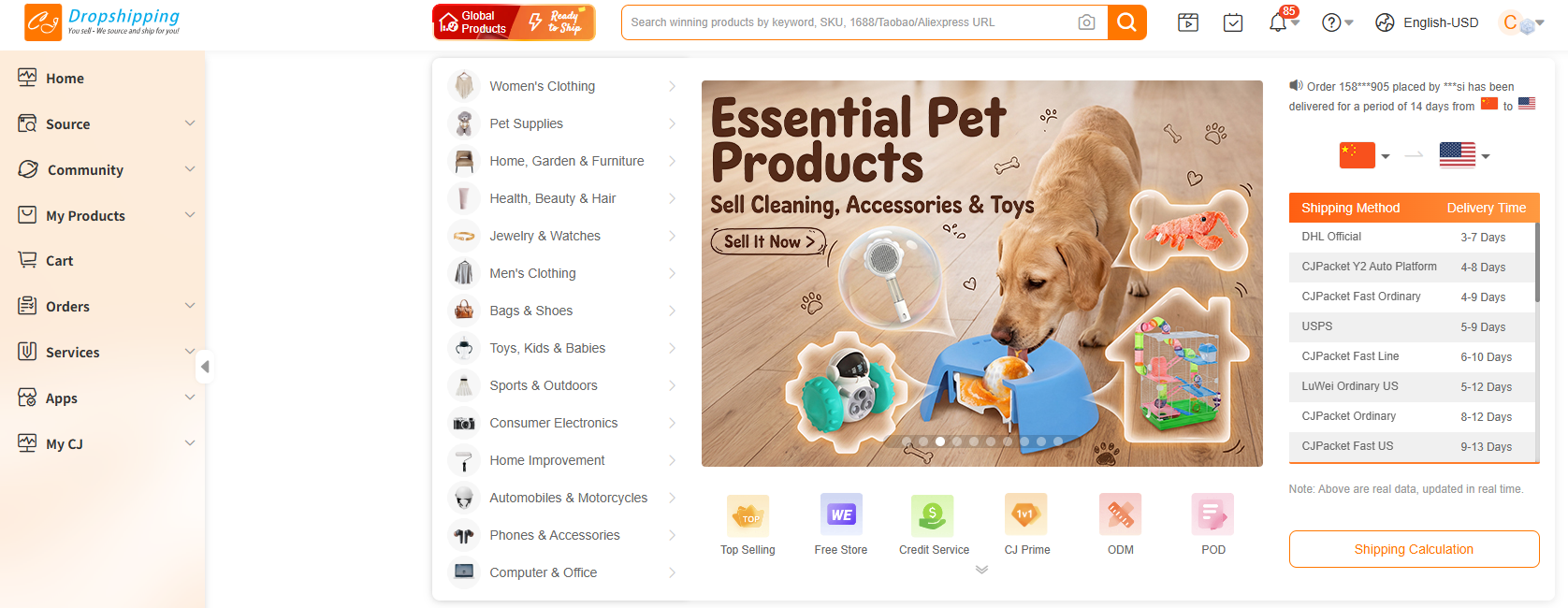
CJdropshipping remains one of the strongest all-around options for Shopify sellers in 2026 because it sits in the middle of multiple needs at once. It is not just a product catalog. CJ positions itself as a one-stop platform combining sourcing, fulfillment, and branding services, and its broader guidance content for 2026 continues to present it as a flexible solution for sellers who want more than simple one-click imports. Its recent guides also emphasize warehouse and fulfillment decisions as a major strategic factor in dropshipping performance.
The biggest reason merchants choose CJ is flexibility. If you want to test fast, source broadly, and still have some path toward improving branding or fulfillment later, CJ is hard to beat. It supports the early-stage “I need product options now” mindset while also appealing to the more advanced “I want to source better, maybe customize packaging, and reduce dependence on generic public listings” mindset. CJ’s own 2026 supplier roundups naturally place it prominently among Shopify-ready dropshipping platforms, and its materials continue to emphasize sourcing support, fulfillment, and scaling potential.
The main strength of CJ is that it can grow with you. A beginner can use it to find products and get a store live. An intermediate seller can use it to improve sourcing and logistics. A more advanced operator can use it as part of a broader branded DTC stack. That is unusual. Many tools are either beginner-simple or power-user complex. CJ lives somewhere in between.
Its biggest weakness is inconsistency. A broad catalog is both a blessing and a risk. You get room to experiment, but you also get more variability in product quality, supplier consistency, and delivery experience. That means CJ rewards sellers who sample aggressively, watch performance closely, and do not treat the catalog like a vending machine.
Best for: sellers who want the best overall balance of flexibility, sourcing breadth, and growth headroom.
Verdict: if you want one platform that can handle testing, sourcing, and gradual scaling better than most competitors, CJdropshipping is probably the best all-around choice in 2026.
2) Zendrop
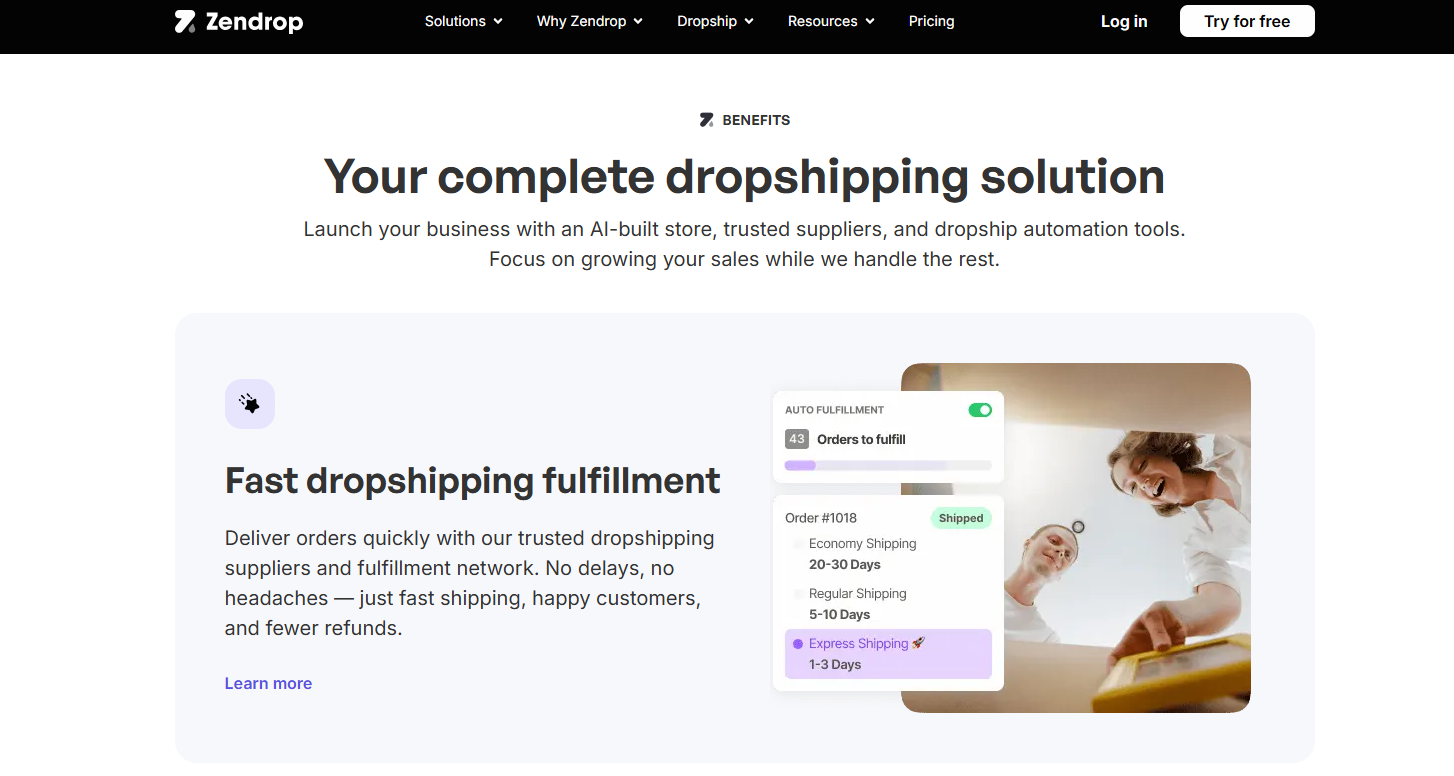
Zendrop is one of the cleanest beginner-friendly options in this whole category. Its Shopify app describes it as an AI dropshipping and POD app that automates sourcing and fulfillment, accelerates delivery through a USA dropshipping network, and offers custom branding across a very large product set. Zendrop’s own website also presents it as an all-in-one platform built to help sellers launch and scale quickly, with auto fulfillment, fast shipping, and a huge product base.
What Zendrop does especially well is reduce friction. Some supplier platforms feel like infrastructure products. Zendrop feels more like a guided business-building platform. That makes it appealing to merchants who want a smoother setup experience, less technical clutter, and a faster route to their first live store.
Another strength is how Zendrop talks about branding. Its app listing explicitly mentions custom branding and POD features, which matters because many beginners want to start simple but still keep the door open to stronger brand identity later. It is easier to grow confidently when your platform at least acknowledges that branding matters.
Where Zendrop is a bit weaker than CJ is pure sourcing flexibility. It is easier to use, but that simplicity can come with less “I can source almost anything from anywhere” energy. If you are the kind of operator who wants deep supplier maneuverability, CJ or AutoDS may feel more expandable. If you are the kind of operator who wants a clean first system that does not overwhelm you, Zendrop is more attractive.
Best for: beginners, side-hustle sellers, and merchants who want a clean learning curve.
Verdict: Zendrop is one of the best first dropshipping platforms for Shopify sellers who prioritize simplicity, branding support, and a less chaotic onboarding experience.
3) Spocket
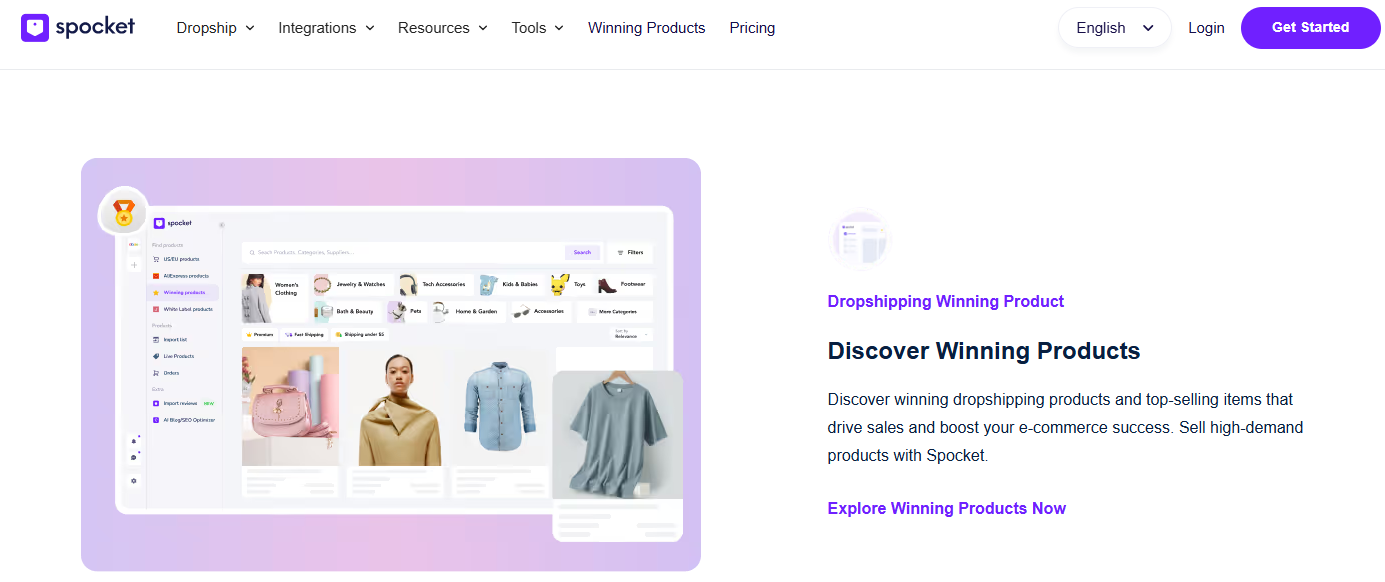
Spocket’s value proposition is easy to understand: it is one of the strongest choices if your priority is access to suppliers in the US, EU, Canada, Australia, Brazil, and more, with its positioning especially centered on verified regional suppliers and faster shipping than traditional overseas-only models. Both its Shopify app and its main site emphasize regional supplier access and branded invoice support.
This matters because shipping quality is often where dropshipping stores lose customer trust. A platform like Spocket works best for merchants who are less interested in “find the cheapest possible product” and more interested in “find a product that can arrive on time and support a cleaner customer experience.”
Spocket also fits nicely with stores that want to look more premium. When the catalog is more regionally filtered and more supplier-curated, your store tends to look less like a random import warehouse and more like a real ecommerce brand. That can support higher trust, better conversion, and lower refund risk.
The trade-off is price and breadth. Spocket often will not be your cheapest sourcing route. It also may not feel as endless as broad-source platforms. But that is part of the point: the platform is better when you care about regional reliability more than maximal catalog chaos.
Best for: Shopify sellers who care most about US/EU shipping, cleaner presentation, and more premium positioning.
Verdict: if shipping speed and customer experience are your biggest priorities, Spocket is one of the best options on this list.
4) DSers
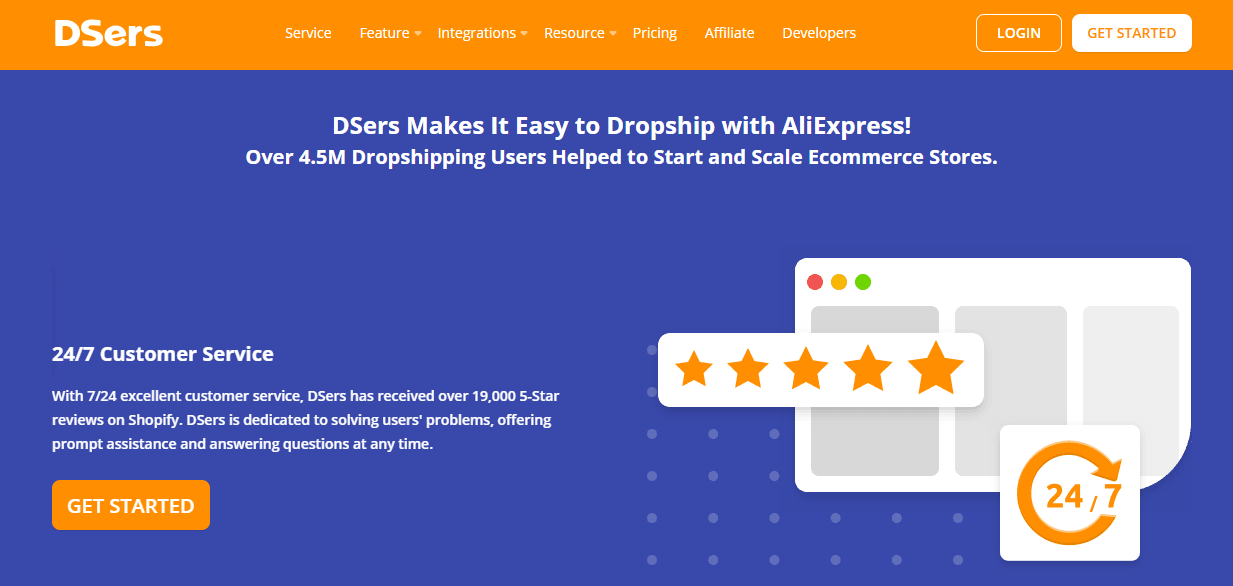
DSers continues to matter because it remains one of the clearest AliExpress-centered Shopify workflows on the market. Its Shopify app highlights bulk ordering, automation, supplier mapping, and strong Shopify/AliExpress integration. Its own website emphasizes multi-store management and fast order placement across ecommerce platforms, including Shopify.
For some merchants, DSers is still exactly what they want: a lower-barrier, broad-access testing setup tied to AliExpress suppliers. If your goal is to validate product demand quickly and cheaply, DSers still makes sense. It is especially appealing when you care about fast importing and order-handling efficiency more than supplier curation or brand elevation.
The downside is that DSers is very much tied to the strengths and weaknesses of the AliExpress model. That means lower barriers and more product variety, but also more variability in supplier quality, slower average brand maturation, and less obvious premium positioning. It is often a strong tool for discovering what sells, but not always the strongest foundation for building a brand customers remember.
That does not make DSers bad. It just means it serves a specific use case. Merchants who want low-cost market testing and a huge pool of product options can still get a lot of value from it. Merchants who want tighter control, better regional fulfillment, or clearer brand-building paths often move elsewhere over time.
Best for: budget-conscious testing, AliExpress workflows, and stores that want broad experimentation.
Verdict: DSers is still one of the best Shopify dropshipping tools for fast, low-cost product testing, but it is less ideal as a long-term premium brand foundation.
5) AutoDS
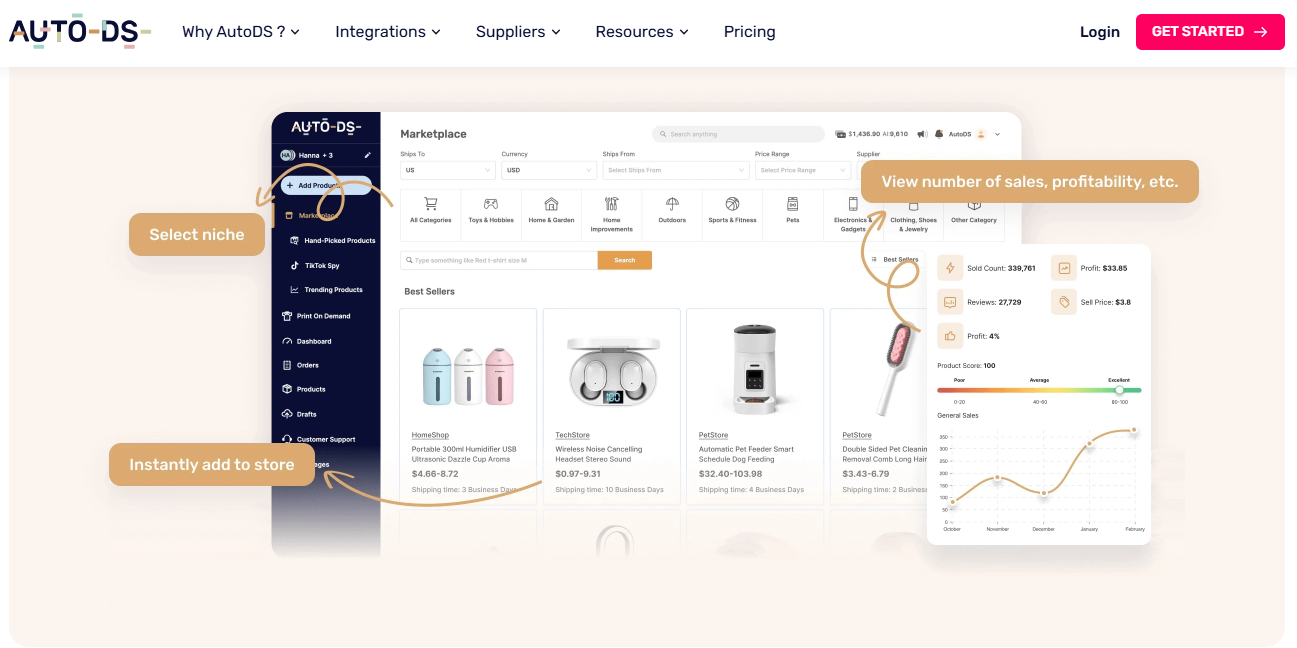
AutoDS is the platform on this list most associated with heavy-duty automation. Its Shopify app explicitly describes it as a one-stop dropshipping app that helps merchants find products, import them automatically, and automate everything from sourcing to order fulfillment, custom branding, product edits, and store-building support. Its Shopify-focused pages and help docs also emphasize automated tracking-number updates, auto-order modes, and broader business-overview tooling.
If CJ is the all-around flexible operator’s choice, AutoDS is the process-systems operator’s choice. It is built for people who think in workflows: product importing, auto-ordering, tracking sync, inventory logic, and centralized management.
That makes it especially useful for merchants who want to scale beyond a casual test store. When orders increase, workflow quality matters. AutoDS is trying to solve that scaling pain. Its messaging around US and EU suppliers, fast shipping, automated sourcing, and AI store support also shows that it wants to be seen as more than a simple plugin. It wants to be the command center.
The trade-off is complexity. AutoDS is powerful, but that can make it feel a bit more tool-heavy than beginner-first platforms like Zendrop. Some merchants love that because it gives them more control. Others feel overwhelmed.
Best for: automation-first operators, multi-product stores, and sellers who want a more systematized backend.
Verdict: AutoDS is one of the best Shopify dropshipping platforms in 2026 if your main goal is automation, operational leverage, and centralized control.
6) Syncee
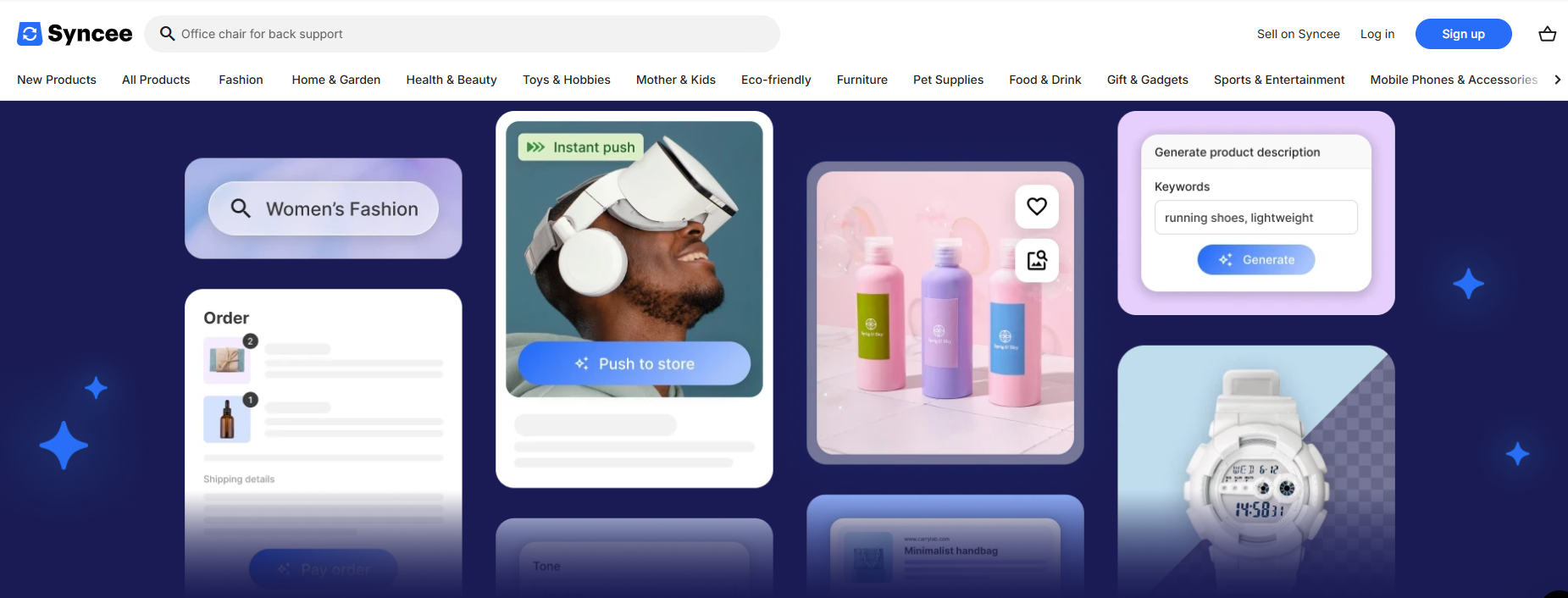
Syncee stands out because it leans more into verified suppliers and a premium supplier marketplace approach than into pure volume. Its homepage says “verified suppliers only,” and it specifically highlights trusted suppliers in the US, Canada, EU, UK, Australia, and more. Its EU wholesale page further emphasizes verified EU-based suppliers, competitive wholesale pricing, and fast delivery through local fulfillment. Its Shopify integration page focuses on adding products and automating workflows inside Shopify.
This makes Syncee especially strong for niche stores and merchants who want supplier quality over chaos. If your goal is to build a coherent store rather than test every viral trinket you can find, Syncee becomes much more appealing.
Syncee also sits at a nice point between dropshipping and wholesale thinking. The platform feels like it was designed for merchants who want a more retail-minded workflow: better product fit, cleaner supplier relationships, and stronger catalog discipline. That can make it a smarter platform for longer-term stores in home, pet, lifestyle, eco-friendly, or niche consumer categories.
Its weakness is the same thing as its strength: it is not the best “throw 100 products at the wall” environment. It works best when you are willing to curate.
Best for: niche stores, curated assortments, and merchants who care about supplier trust and consistency.
Verdict: Syncee is one of the strongest choices for Shopify sellers who want a more stable, verified, and retail-like supplier environment.
7) Avasam
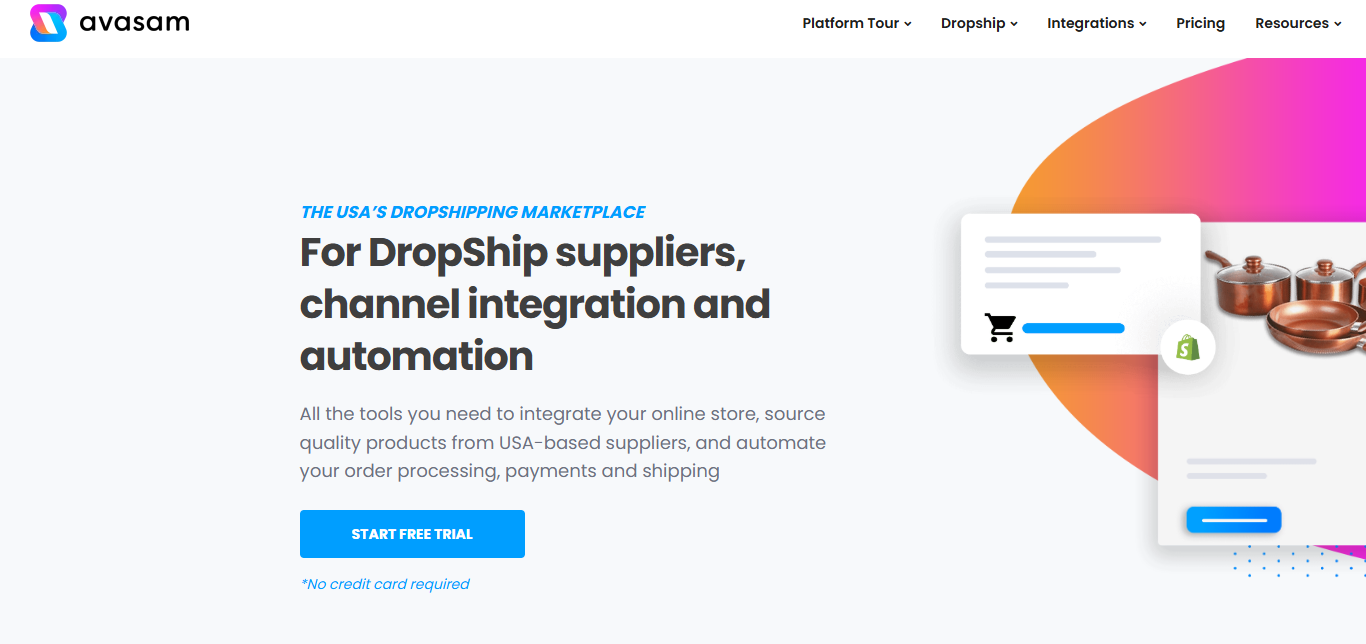
Avasam is an operations-first platform. Its official materials emphasize automated order processing, verified UK-based suppliers, inventory synchronization, and integrations that keep transactions flowing with little to no manual process. Its Shopify integration pages state that merchants can integrate Shopify to automate dropshipping order management, payments, shipping, stock levels, and listings.
That means Avasam appeals less to “I need trendy products now” and more to “I want controlled operations and reliable process logic.” For some merchants, especially those thinking about multichannel selling or larger backend complexity, that is exactly the right priority.
Its biggest differentiator is discipline. Verified suppliers, stock sync, and strong workflow automation reduce some of the randomness that plagues looser dropshipping stacks. If your biggest fear is operational mess rather than lack of product ideas, Avasam deserves serious attention.
The main limitation is that it is UK-centered in how it presents itself. That does not make it irrelevant outside the UK, but it does mean its natural appeal is strongest for merchants who see value in that ecosystem and its verified-supplier structure. If you want a more globally flexible or product-hunting-heavy model, CJ or AutoDS may feel broader.
Best for: operations-focused sellers, workflow reliability, and merchants who value verified supplier discipline.
Verdict: Avasam is an excellent option if your main goal is clean automation and process control rather than massive product exploration.
8) Printful
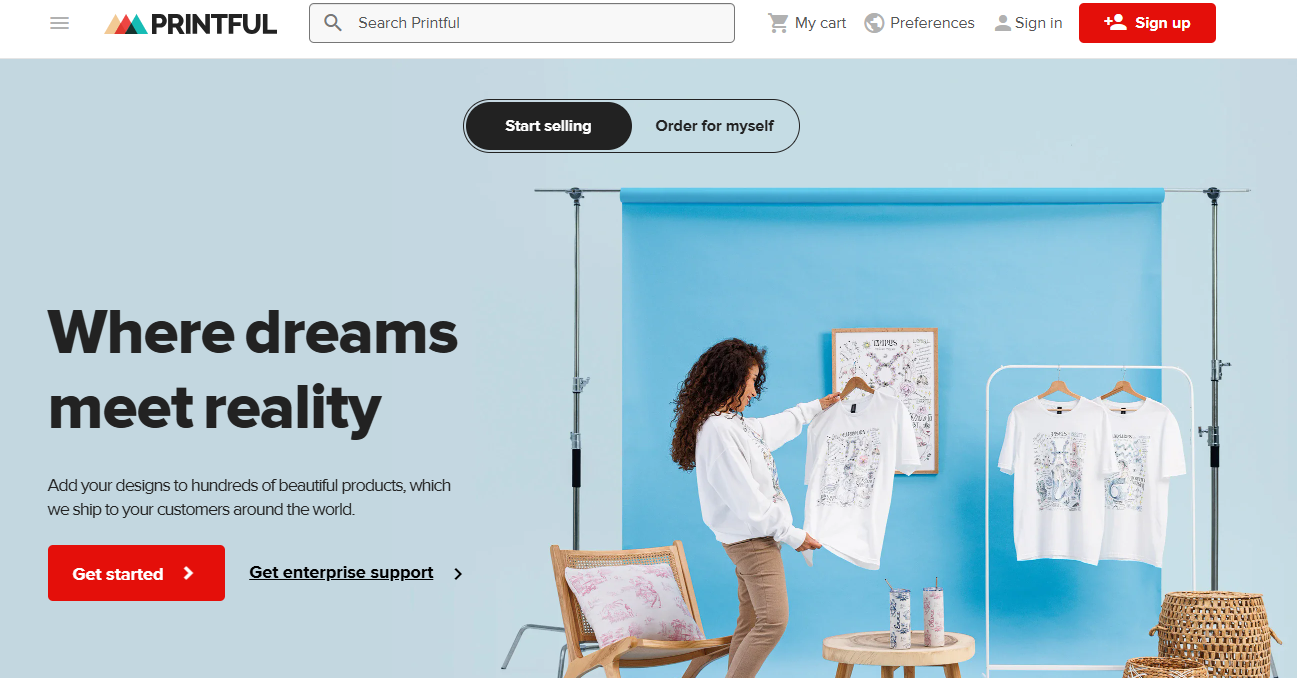
Printful is different from most names on this list because it is not a broad dropshipping marketplace. It is a print-on-demand fulfillment partner. Its Shopify app says merchants can build stores around custom print and embroidery products with no upfront inventory while Printful prints, packages, and ships under the merchant’s brand. Its main site positions it around custom products and selling online without inventory, and its Shopify integration page emphasizes automated fulfillment and scalable POD workflows.
This makes Printful one of the best choices in 2026 for merchants who care about differentiation rather than generic catalog arbitrage. If your brand idea depends on original designs, creator merchandise, niche community products, custom art, or branded apparel and accessories, Printful is far more relevant than a conventional supplier directory.
The biggest strength here is defensibility. Generic dropshipping is increasingly competitive because everyone has access to the same products. Printful gives you the ability to sell products that are genuinely yours in design, messaging, and audience fit.
The downside is obvious: Printful is not the right platform if your business model depends on testing lots of unrelated general products. It is best when you already have or want a distinct niche angle.
Best for: POD businesses, creator stores, branded merchandise, niche design-led brands.
Verdict: Printful is the best print-on-demand option in this comparison and one of the strongest paths toward true brand differentiation on Shopify.
9) Modalyst
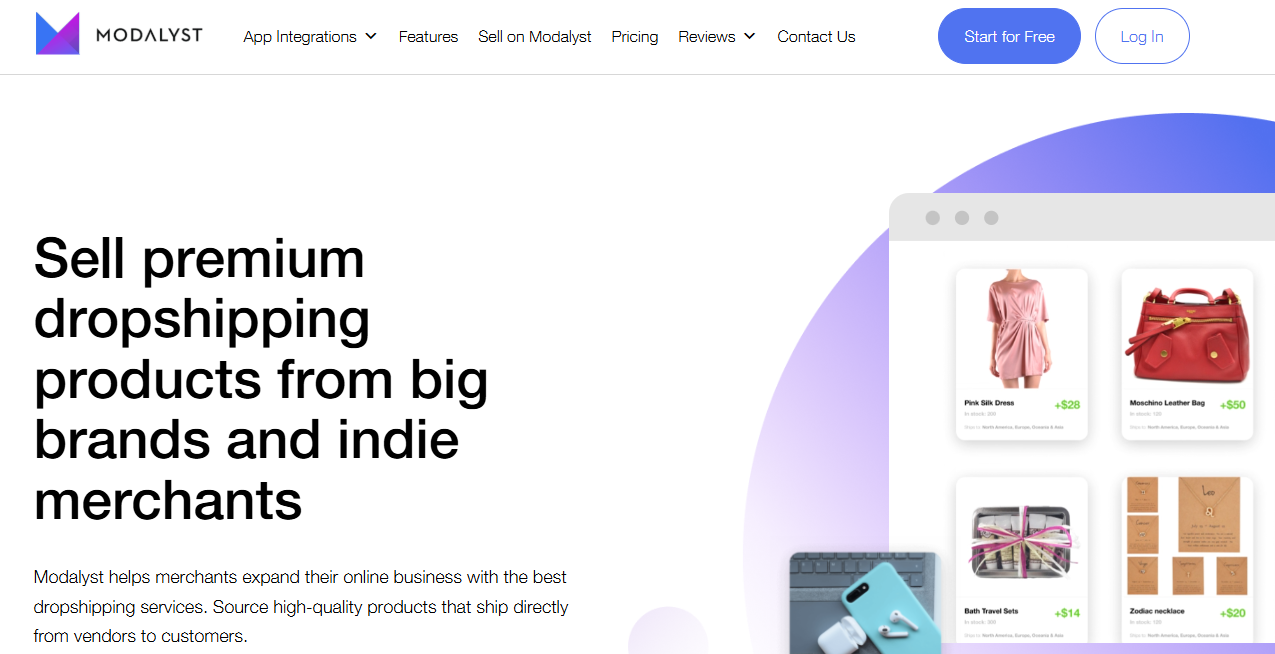
Modalyst sits in an interesting middle ground. Its Shopify app describes it as a dropshipping marketplace with tools to build and customize products while streamlining fulfillment, warehousing, and direct-to-customer selling. Its site emphasizes reliable US suppliers, automation, and a large product catalog for Shopify and other ecommerce platforms.
That makes Modalyst appealing for merchants who want something more curated or premium-leaning than basic AliExpress-style testing, but who still want broad marketplace convenience. The platform’s positioning around creators, brands, and streamlined operations also hints at a more polished use case than pure commodity flipping.
One of its strongest angles is product perception. Modalyst often appeals to merchants who want a better-looking assortment and stronger supplier presentation. That can help stores feel less generic and support a more premium customer experience.
Its main weakness is that it is not always as broad and flexible as CJ, and it is not as singularly automation-focused as AutoDS. But for merchants who want a balanced premium-marketplace angle, that may be exactly the sweet spot.
Best for: premium-leaning assortments, creator stores, and merchants who want better product presentation without going fully niche wholesale.
Verdict: Modalyst is one of the better Shopify dropshipping choices for merchants who want a more polished supplier marketplace and a stronger premium feel.
10) Shopify Collective
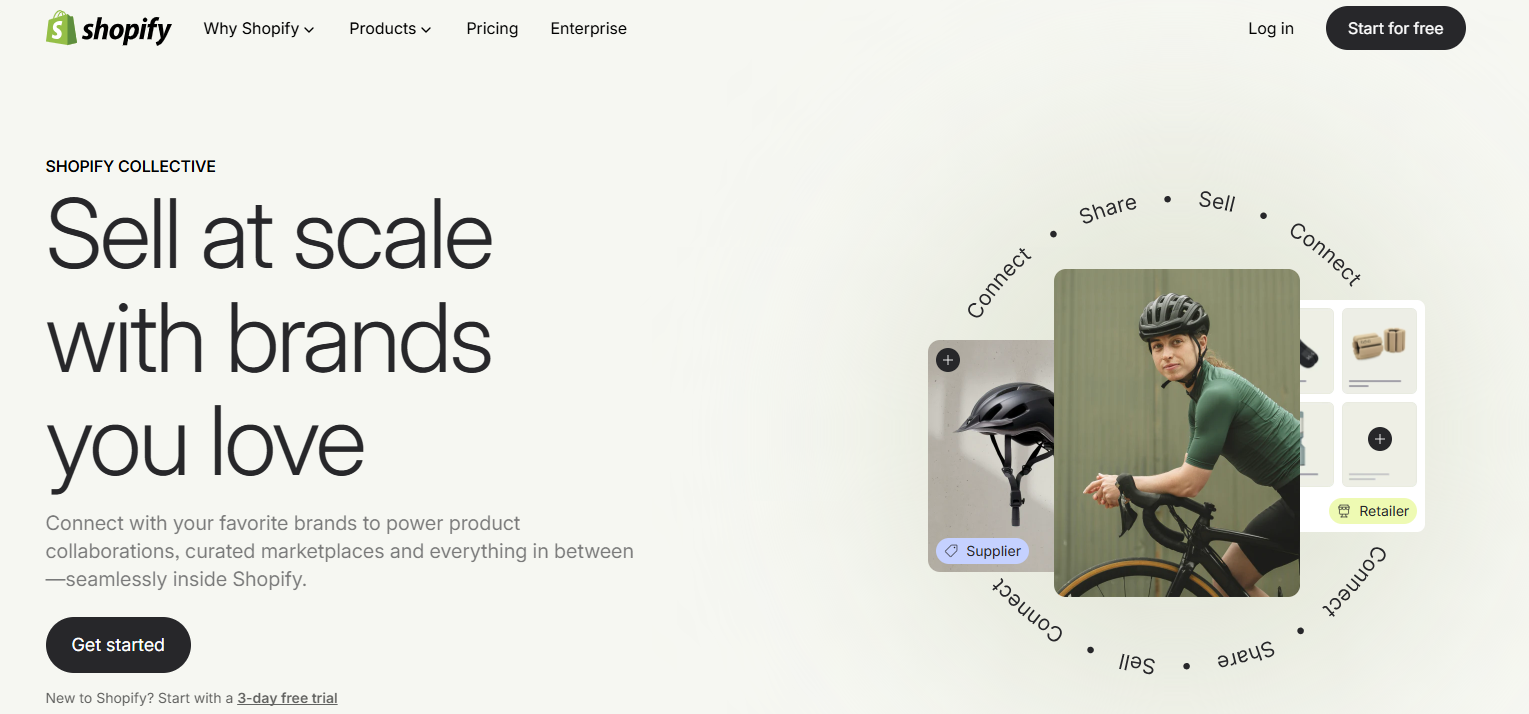
Shopify Collective is the most structurally different option on this list because it is not a traditional open dropshipping marketplace at all. Shopify describes it as a network that lets you connect with brands, import products into your store, and have orders routed directly to suppliers for fulfillment. Shopify’s own dropshipping guide says Collective lets merchants browse products with real-time pricing and inventory synchronization, while the supplier ships the item and payment is automatically processed. Shopify also describes it as a native solution with curated suppliers and faster shipping compared with more traditional marketplace-style models.
This matters because Collective is less about finding any product and more about partnering with other Shopify brands. It works especially well for merchants who already have some traction and want to expand assortment without holding inventory.
Its biggest strength is quality of ecosystem. Because it sits inside the Shopify network and focuses on supplier-retailer collaboration, it tends to fit stores that want more trustworthy brand-to-brand relationships rather than anonymous global listings. Shopify’s related materials also note that it calculates shipping, routes orders, syncs inventory and pricing, and can distribute payments after fulfillment.
Its biggest limitation is scope. If you want to test an endless variety of products from the broad internet, Collective is not that. If you want a more controlled, native, retailer-to-retailer dropshipping model, it is extremely compelling.
Best for: existing Shopify merchants, curated brand collaborations, and higher-trust assortment expansion.
Verdict: Shopify Collective is the best native Shopify alternative to traditional dropshipping marketplaces, especially for merchants who want stronger supplier quality and less marketplace noise.
Best Shopify dropshipping companies by use case
If you only remember one thing from this guide, remember this: the “best” platform depends on your use case.
For beginners, the strongest picks are usually Zendrop, CJdropshipping, and DSers. Zendrop is the easiest-feeling all-in-one entry point, CJ gives beginners room to grow, and DSers remains one of the cheapest and simplest ways to test products through AliExpress-based workflows.
For fast US/EU shipping, Spocket is the clearest marketplace-first answer, while Shopify Collective is a strong native alternative for merchants who fit its model. Spocket explicitly emphasizes verified suppliers in those regions, and Shopify frames Collective around curated brand networks, synced pricing and inventory, and routed fulfillment.
For automation, AutoDS is arguably the strongest specialized choice, with Avasam also highly attractive for process-heavy merchants. AutoDS leans hard into full workflow automation, while Avasam emphasizes stock sync, order management, and low-manual-process integrations.
For product variety and sourcing flexibility, CJdropshipping remains the best overall answer, with DSers and AutoDS also strong depending on whether you want AliExpress-heavy testing or a broader automation stack.
For print-on-demand and stronger brand differentiation, Printful is the clear winner. Zendrop and AutoDS mention POD or branding features, but Printful is purpose-built for custom-product businesses.
For curated and premium-feeling catalogs, Syncee, Modalyst, and Spocket stand out. Syncee emphasizes verified suppliers only, Modalyst highlights reliable US suppliers and an automated marketplace model, and Spocket centers on verified regional suppliers and branded invoice support.
How to choose the right one for your Shopify store
The best way to choose is not to ask which platform is “number one.” It is to ask what type of store you want to run six months from now.
If you are just starting out and want to learn the game with minimal friction, go with Zendrop or CJdropshipping. Zendrop is simpler. CJ is more expandable. If your priority is very cheap product testing and you are comfortable with AliExpress-style sourcing, DSers is still very relevant.
If you want to build a longer-term brand, think in terms of product fit and customer experience, not just supplier count. That usually pushes you toward Spocket, Syncee, Modalyst, or Printful, depending on whether your store is broad lifestyle, curated niche, premium-leaning, or POD-driven.
If you care most about speed and trust, choose platforms with stronger regional fulfillment signals. That makes Spocket and Shopify Collective especially attractive.
If you are an operator who loves systems, dashboards, and scaling workflows, AutoDS and Avasam deserve the most attention.
And if your business depends on original design rather than generic sourcing, skip the general marketplaces and start with Printful.
Red flags to avoid when comparing dropshipping suppliers
No matter which platform you choose, a few warning signs should make you cautious.
If a platform promises scale but does not clearly support inventory sync, tracking updates, and order automation, it will create backend pain. That is exactly why platforms like AutoDS, DSers, Syncee, and Avasam emphasize those functions so heavily in their product messaging.
If a platform gives you products but no clear path to better customer experience, you risk building a store that can only compete on cheap prices. In 2026, that is a weak position. The more promising platforms are the ones that give you either faster fulfillment, more trustworthy suppliers, stronger branding options, or better automation.
If a platform feels too good to be true on product breadth and pricing but says little about quality control or fulfillment reliability, assume you will need to do much more due diligence yourself. Broad-access platforms can be powerful, but they demand discipline.
Final verdict: which Shopify dropshipping company is best in 2026?
If I had to summarize the rankings by role rather than by hype, they would look like this:
Best overall: CJdropshipping
Best for beginners: Zendrop
Best for fast US/EU shipping: Spocket
Best for automation: AutoDS
Best for curated niche stores: Syncee
Best for operations-first reliability: Avasam
Best for AliExpress-based testing: DSers
Best for print-on-demand: Printful
Best for premium marketplace assortments: Modalyst
Best native Shopify network alternative: Shopify Collective
The reason there is no single universal winner is that these companies solve different problems. CJ is the best all-around platform because it combines sourcing flexibility, fulfillment, and a path to stronger branding. Zendrop is the best for a smoother start. Spocket is the best if customer experience depends heavily on regional shipping. AutoDS is the best if your brain works in systems. Printful is the best if you want a store that is truly yours in design. Shopify Collective is the best if you want higher-trust retail partnerships inside Shopify’s own ecosystem.
The broader takeaway is simple: in 2026, winning at Shopify dropshipping is less about finding a secret supplier and more about choosing a supply model that matches your business model. If your supplier stack supports your niche, delivery promises, automation needs, and brand ambitions, the rest of your growth becomes much easier.

FAQ for Shopify Dropshipping Companies
1. What is the best Shopify dropshipping company in 2026?
For most sellers, CJdropshipping is the best all-around choice because it combines sourcing, fulfillment, and a path toward branding support in one flexible ecosystem. But the “best” answer changes by use case: Zendrop is easier for beginners, Spocket is stronger for regional shipping, AutoDS is stronger for automation, and Printful is best for POD.
2. Which Shopify dropshipping supplier is best for beginners?
Zendrop is one of the best beginner options because it presents itself as an all-in-one platform with automated sourcing, fulfillment, branding features, and a clean Shopify app experience. CJdropshipping is also a good beginner choice if you want more room to grow into sourcing and scaling later.
3. Which platform has the fastest shipping?
If your priority is fast regional fulfillment, Spocket is one of the strongest choices because it emphasizes verified suppliers in the US and EU. Shopify Collective is also attractive for merchants who fit its model because it routes orders to suppliers inside a native Shopify supplier network.
4. Is AutoDS better than DSers?
They solve different problems. DSers is more closely tied to AliExpress-based order workflows, bulk ordering, and supplier mapping. AutoDS is broader and more automation-heavy, with positioning around sourcing, importing, tracking updates, order automation, branding tools, and AI store support.
5. What is the best Shopify dropshipping option for print-on-demand?
Printful is the strongest POD option in this comparison because it is built around custom products, no-inventory selling, automated fulfillment, and Shopify-native integration.
6. Can you still build a real brand with dropshipping in 2026?
Yes, but it is much harder if you stay generic. The better routes now are regional supplier quality, stronger automation, curated assortments, custom branding features, or POD-based differentiation. The platforms in this guide that best support that shift are Spocket, Syncee, Modalyst, Printful, CJdropshipping, and Shopify Collective, each in different ways.