
Belgium is one of the most underrated dropshipping markets in Europe. It is not usually the first country beginners think about, but that is exactly why it deserves attention. Belgium sits at the heart of Western Europe, has a mature ecommerce culture, and gives sellers access to customers who are already comfortable buying online. Belgium’s own digital roadmap says consumers spent €17.4 billion online in 2024, up 6.7% year over year, and that online represented 25% of all annual product and service purchases for the first time.
For dropshippers, that creates a very attractive setup. You are entering a market where ecommerce demand already exists, where cross-border shopping is normal, and where customers are used to comparing offers across multiple websites. But Belgium is also a market that punishes lazy operators. If your shipping is unclear, your store feels generic, your customer support is weak, or your product quality is inconsistent, Belgian shoppers will not hesitate to leave. This is not a market for random junk stores with fake urgency banners and vague delivery promises. It is a market for sellers who combine good product selection, credible delivery, and a more localized experience. The same official Belgian roadmap that highlights strong ecommerce growth also points to the huge volume of low-value parcels entering the EU, which is exactly why trust, compliance, and reliable fulfillment matter more in 2026 than they did a few years ago.
This guide is written for sellers who want to approach Belgium seriously. It covers how dropshipping works in Belgium, what legal and operational issues matter, which suppliers are worth considering, and which product types are most likely to perform well in 2026. The goal is not to hype “easy money.” The goal is to help you build a Belgium-ready ecommerce business that can actually convert and survive.

Why Belgium is a smart dropshipping market in 2026
Belgium has several traits that make it especially interesting for EU sellers and for non-EU sellers willing to localize well.
The first is ecommerce maturity. Belgian consumers are already deeply comfortable with online shopping. Statbel reported that 66% of Belgians aged 16 to 74 bought online in the previous 12 months in 2021, and 63% did so in 2022, both well above pre-COVID levels. Belgium’s 2025 digital roadmap then showed the market moving even further, with online spending reaching €17.4 billion in 2024 and accounting for 25% of annual product and service purchases.
The second is location. Belgium is surrounded by major ecommerce markets and logistics infrastructure. That means sellers using EU stock, nearby warehousing, or reliable European shipping lanes can often serve Belgian customers faster and more predictably than stores shipping every order from Asia. For dropshipping, that matters a lot. In 2026, speed is not just a convenience feature. It is part of trust.
The third is cross-border behavior. Belgian shoppers are used to buying online from businesses beyond their immediate city or region. That makes Belgium a workable target market for stores run from elsewhere in the EU, provided the storefront looks legitimate and the operational setup is clean.
The fourth is category potential. Statbel’s ecommerce reporting has repeatedly shown strong online demand in physical categories such as clothing, shoes, and accessories, which is important because successful dropshipping stores usually work best in categories that are visual, impulse-friendly, or tied to repeat everyday needs. In 2021, clothing, shoes, and accessories were the most popular ecommerce products in Belgium, purchased online by over two-thirds of surveyed shoppers.
In other words, Belgium is not a speculative market. The demand is already there. Your job is to meet that demand with the right products and a professional customer experience.
How dropshipping works in Belgium
At the basic level, dropshipping in Belgium works the same way it does in other markets. You create an online store, list products, run traffic through SEO, social content, paid ads, or influencer partnerships, and once a customer places an order, your supplier ships the product directly to that customer. You do not keep inventory yourself.
But Belgium adds a few practical realities.
First, your customer experience has to feel coherent. Belgium is multilingual, and many stores do best when they at least think carefully about whether they want to target Dutch-speaking customers, French-speaking customers, or a broader English-speaking cross-border audience. You do not need to support every language on day one, but you do need to avoid looking careless.
Second, your delivery message must be believable. Belgian consumers have plenty of alternatives. If your store looks polished but your shipping page quietly says 10 to 20 business days from overseas, you may lose trust before the order is even placed.
Third, your legal setup matters. Belgian consumers buying at a distance generally benefit from a 14-calendar-day withdrawal period under consumer law. Belgium’s FPS Economy states that consumers usually have at least fourteen calendar days to withdraw from a distance contract. Belgium’s FPS Economy also states that consumers buying a new product are legally entitled to a two-year guarantee.
That means dropshipping into Belgium is not “hands-off retail.” The supplier may ship the item, but you remain the merchant responsible for the customer relationship, the return experience, and your public promises.
The compliance side sellers cannot ignore
A lot of dropshipping content skips the compliance section because it is less exciting than product lists. That is a mistake, especially for Belgium and the EU more broadly.
1. VAT and IOSS
If you are importing low-value goods into the EU, the Import One Stop Shop (IOSS) was created to simplify VAT declaration and payment for distance sales of goods with a value not exceeding €150. The European Commission’s VAT ecommerce portal also makes clear that the old import VAT exemption for consignments up to €22 is gone, meaning all imported goods into the EU are subject to VAT.
This matters because one of the fastest ways to damage conversion is to create surprise costs on delivery. Belgian customers generally expect tax treatment to be handled clearly. If your model depends on confusing landed costs, expect complaints and chargebacks.
The broader OSS system also lets eligible sellers register in one member state for reporting certain EU ecommerce VAT obligations instead of managing everything country by country. The Commission explains that a taxable person opting into OSS registers in one single member state as the “member state of identification.”
2. Product safety
The EU’s General Product Safety Regulation (GPSR) has applied since 13 December 2024 and strengthens safety obligations for consumer products sold in the EU. The European Commission states that the GPSR replaced the old General Product Safety Directive and brought in stronger consumer-protection rules, including improved traceability and stronger online-marketplace responsibilities. The Commission has also emphasized that, under the GPSR, consumer products need an economic operator established in the EU.
For dropshippers, the practical meaning is simple: do not casually sell risky items you cannot document or stand behind. Be especially careful with electronics, chargers, children’s products, products making medical or body-related claims, and anything that could cause injury or fire risk.
3. Consumer rights
Belgium’s FPS Economy says consumers usually have at least 14 calendar days to withdraw from distance contracts. It also states that buyers of new goods are legally entitled to a two-year guarantee.
That means your return, refund, and guarantee language should be clear, visible, and compatible with the law. Belgium is not the kind of market where vague “all sales final” thinking works for general consumer ecommerce.
What makes a supplier good for Belgium
When choosing a supplier for Belgium, do not focus only on catalog size. Focus on fit.
A good supplier for Belgium should give you one or more of the following:
Fast or predictable shipping into Belgium
EU-based inventory or nearby fulfillment
Strong product data and images
Reliable stock syncing
Clear issue resolution
A product mix that suits a quality-first market
The best supplier for you depends on your model. If you want fast testing and broad sourcing, you need flexibility. If you want a more curated, premium-looking catalog, you need stronger supplier quality. If you want defensible products, print-on-demand or niche wholesale marketplaces may be better.
Here are five suppliers worth considering in 2026.
1) CJdropshipping
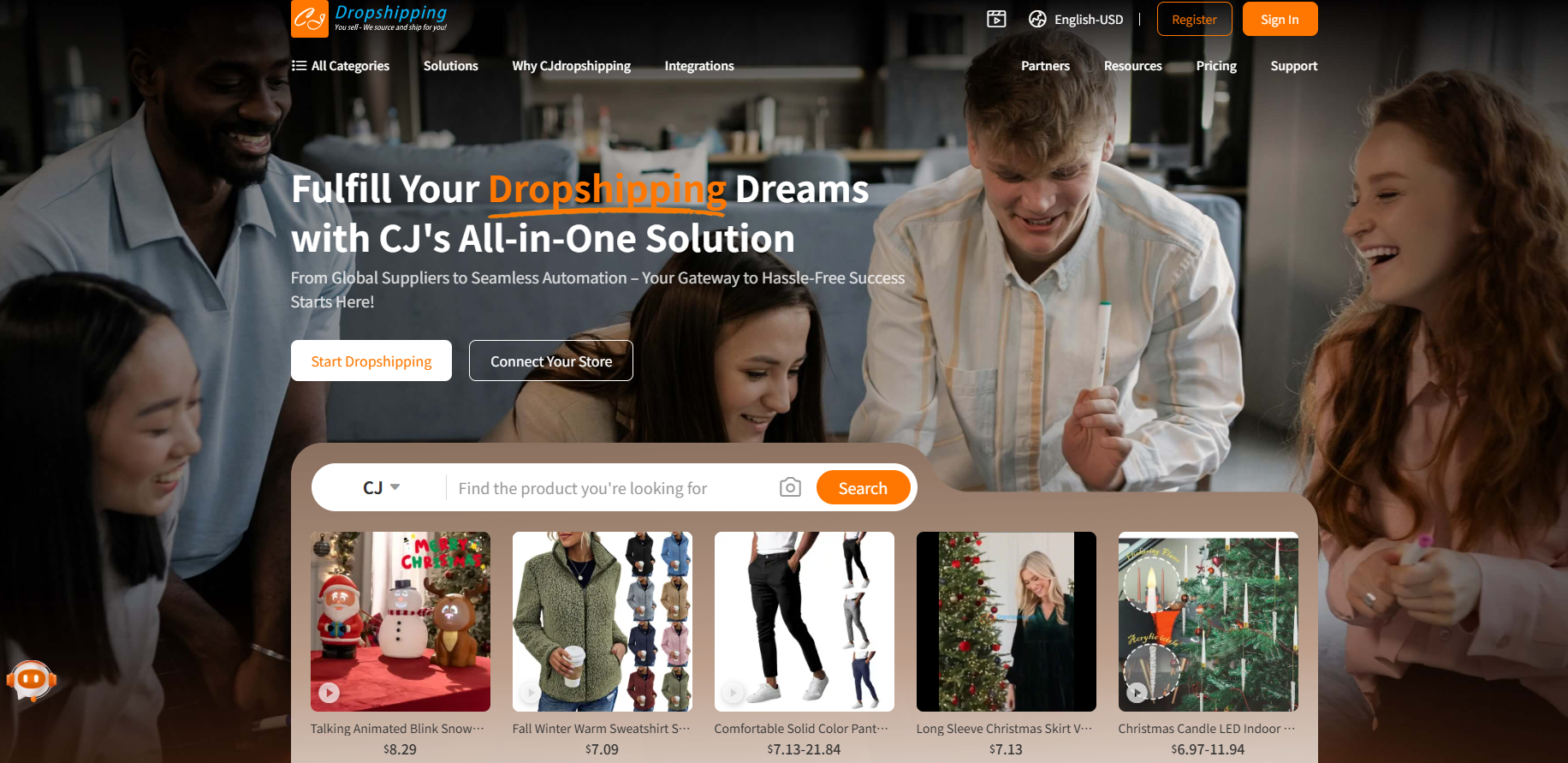
CJdropshipping is still one of the most flexible platforms for product testing and scaling. Its official site positions it as a platform serving dropshipping businesses, POD sellers, and DTC brands by linking sourcing agents, manufacturers, and fulfillment. CJ is especially useful if you want access to a large catalog plus sourcing help when you find a winner.
Why CJ works for Belgium is flexibility. If you want to test multiple product angles quickly, CJ gives you room to move. CJ also highlights domestic and overseas warehousing in its recent materials, and its 2025–2026 content emphasizes EU warehouse options as part of its European dropshipping guidance.
Advantages:
CJ is ideal for finding broad product variety, testing trends quickly, and requesting sourcing support when you want a better version of an item. It is also strong for sellers who eventually want to move from simple dropshipping toward branding elements like custom packaging or more controlled logistics.
Downsides:
The broad catalog means quality varies. You need to sample aggressively. Shipping performance can differ by product and route. Belgium is not forgiving enough to let you list random items without vetting them.
Best for:
General stores, one-product stores, fast product testing, and sellers who want access to both catalog listings and sourcing support.
2) Spocket
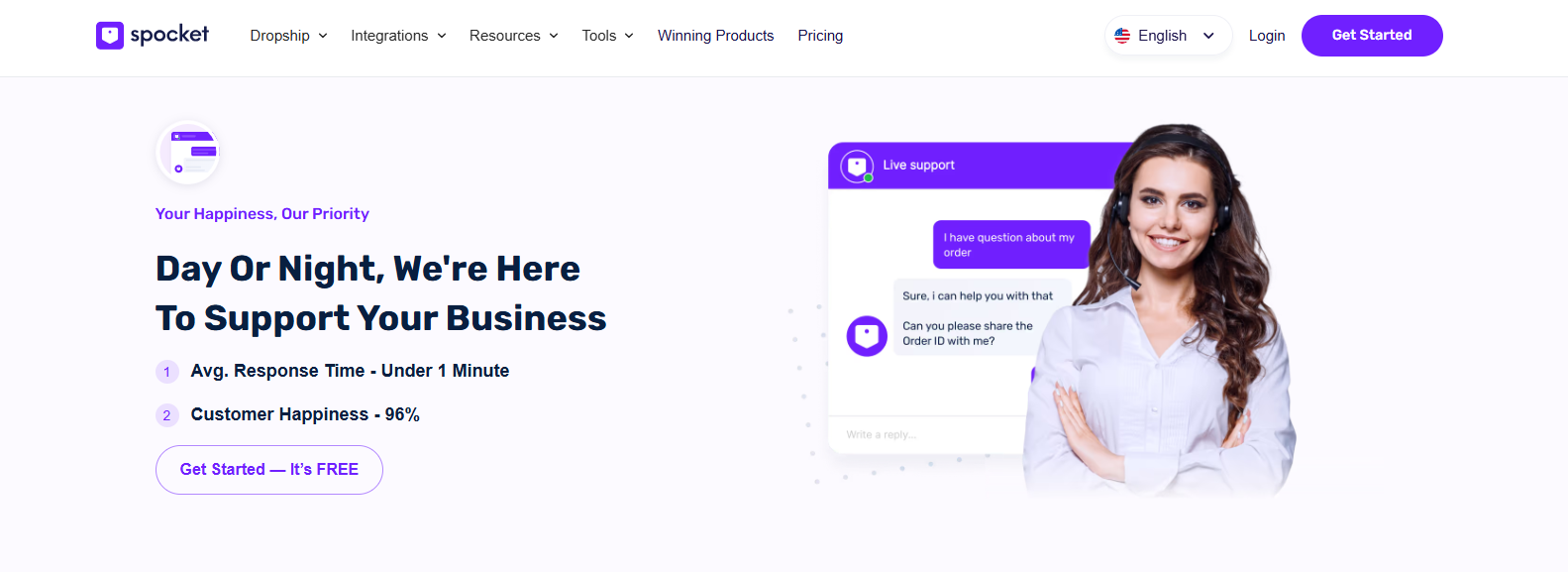
Spocket is one of the most recognizable supplier platforms for sellers who want products from US and EU suppliers. Its official homepage emphasizes automated dropshipping and access to thousands of suppliers, and Spocket’s support materials say the platform gives priority to suppliers located in North America, the EU, and Australia.
That matters for Belgium because local or regional fulfillment is often the difference between a credible store and a refund-heavy store. Spocket is less about catalog chaos and more about a cleaner supplier ecosystem.
Advantages:
A stronger EU supplier mix helps with delivery speed and customer confidence. The platform is beginner-friendly, integrates well with major ecommerce setups, and is a better fit than open global catalogs if your store wants to look polished from day one.
Downsides:
Product breadth and pricing can be less aggressive than very open marketplaces. You may give up some “wild trend testing” flexibility in exchange for better consistency.
Best for:
Newer sellers who want a cleaner EU-facing store, and niche stores where dependable delivery matters more than endless catalog experimentation.
3) Syncee
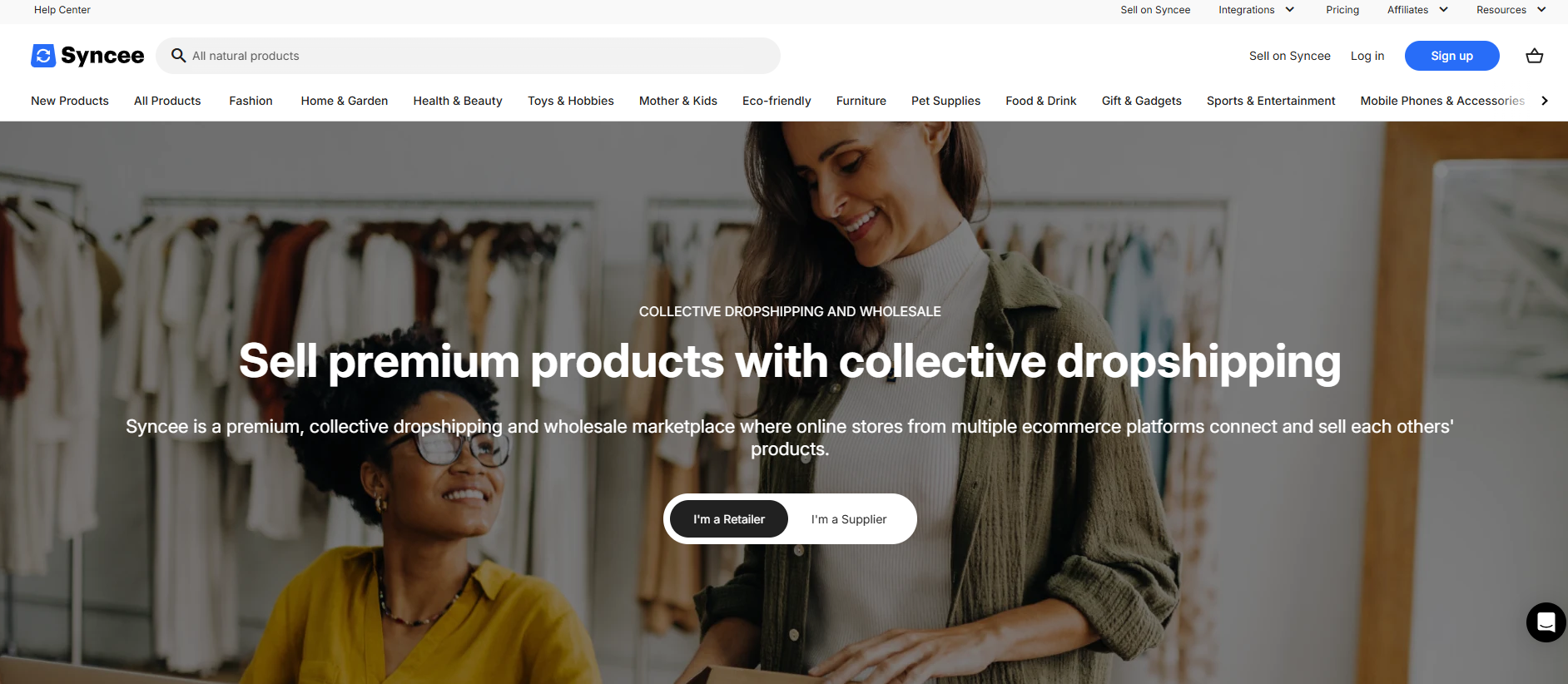
Syncee positions itself as a premium dropshipping and wholesale marketplace where online stores connect and sell each other’s products. It emphasizes supplier partnerships and, in its EU wholesale materials, specifically highlights verified EU-based suppliers, competitive pricing, and local fulfillment for fast delivery.
Syncee is attractive for Belgium because it suits a more curated approach. If your goal is not just to test trendy products but to build a store around better supplier quality and longer-term catalog stability, Syncee is strong.
Advantages:
The marketplace feels more wholesale-oriented and partnership-oriented. That can mean stronger product data, cleaner supplier relationships, and less risk of filling your store with low-trust items.
Downsides:
It is not the most exciting platform for very fast trend chasing. It rewards a more deliberate merchandising style.
Best for:
Niche lifestyle stores, home stores, pet stores, and sellers who want better long-term supplier consistency.
4) Avasam
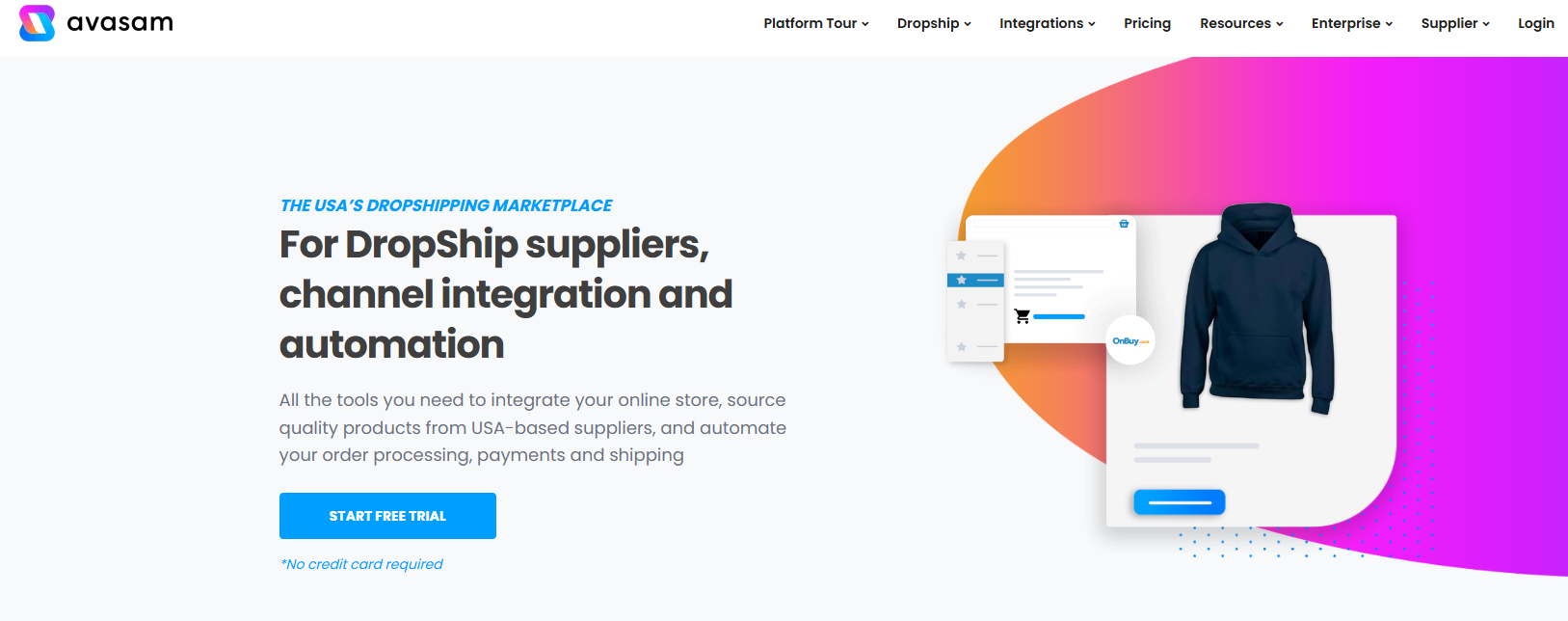
Avasam positions itself as an automated dropshipping platform built around verified UK-based suppliers, automation, inventory synchronization, and multi-channel selling. Its official materials emphasize supplier verification, automated order processing, and strong governance.
For Belgium, Avasam can still be useful even though it is UK-centered. It is especially appealing if you care a lot about workflow reliability and want verified supplier relationships rather than a giant open marketplace.
Advantages:
Automation, stock sync, and supplier governance are real strengths. This becomes more important as your order volume grows and you want fewer operational surprises.
Downsides:
Because it is more UK-oriented, it is not always the first platform people think of for Belgium. Brexit-related practicalities mean you need to be careful about fulfillment assumptions depending on your exact product mix and supplier setup.
Best for:
Operations-focused sellers, marketplace sellers, and businesses that value process reliability over aggressive trend hunting.
5) Printful
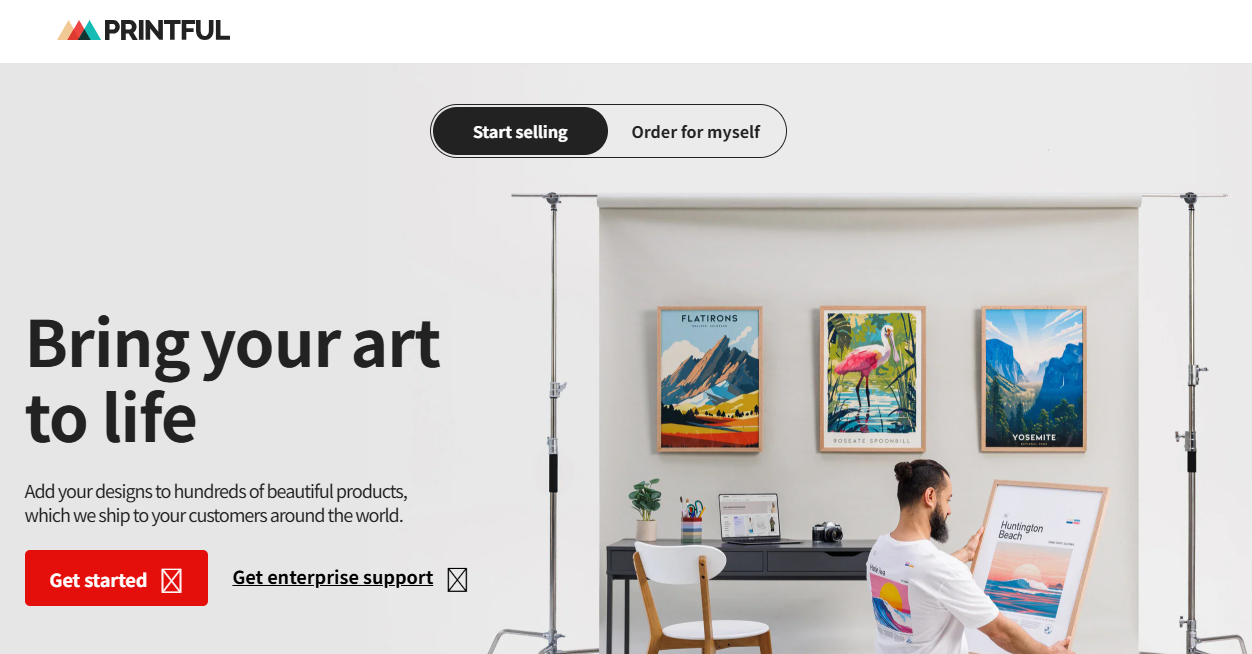
Printful is not a classic general dropshipping supplier, but it absolutely belongs in this guide. Printful’s official materials emphasize print-on-demand dropshipping, and its support documentation says it has three fulfillment centers in Europe: Spain, Latvia, and the UK. Printful also highlights local European fulfillment on its Europe-focused POD page.
Why is this important for Belgium? Because one of the hardest problems in dropshipping is defensibility. If you sell generic items anyone else can list, you compete mainly on price and ad creativity. With print-on-demand, you can sell products with your own angle, identity, and niche fit.
Belgium is a good market for tasteful, localized, community-based products: cycling-themed apparel, pet-owner gifts, city-themed posters, minimalist tote bags, or Dutch/French language niche designs. Printful also recommends using products fulfilled in Europe to reduce duties and speed up delivery into European destinations.
Advantages:
Better differentiation, easier brand-building, and local European fulfillment.
Downsides:
You need creative skill and stronger positioning. POD is not magic. Weak designs still do not sell.
Best for:
Niche apparel, gifts, posters, tote bags, branded communities, and stores that want something more defensible than generic catalog products.
Which supplier is best overall?
There is no universal winner, but for most sellers targeting Belgium:
Choose CJdropshipping if you want flexibility, product testing power, and sourcing options.
Choose Spocket if you want a cleaner EU supplier mix.
Choose Syncee if you want a more curated wholesale-style marketplace.
Choose Avasam if you care most about automation and verified workflows.
Choose Printful if you want a differentiated POD brand.
For many beginners, the smartest path is to use CJdropshipping for testing and then become more selective as data comes in. Belgium is a market where that second step matters. You can test broadly, but you should not stay sloppy.
What kinds of products work best in Belgium?
Belgium is not a “buy anything” market. Winning products here usually share a few traits:
They solve a practical everyday problem
They have clear visual demos
They are easy to explain in ads
They do not rely on unbelievable claims
They can be delivered fast enough to avoid disappointment
They fit lifestyle categories Belgian consumers already buy online
Statbel’s earlier ecommerce releases already showed the strength of categories like clothing, shoes, and accessories, and Belgium’s larger ecommerce growth trend suggests that practical lifestyle categories continue to have room.
That does not mean you should only sell fashion. It means product-market fit matters more than chasing random TikTok gadgets.
10 winning product ideas for Belgium in 2026
1) Pet hair remover roller
This remains one of the best low-risk pet products in Europe. It solves a very obvious problem, has excellent demo potential, and fits both apartment living and family households.
Why it works in Belgium:
It is useful, low-friction, and visually persuasive. It also bundles well with pet grooming accessories.
2) Minimalist desk cable organizer kit
A clean cable-management kit works especially well in markets where people care about tidiness and modern home presentation.
Why it works in Belgium:
It is practical, lightweight, easy to bundle, and fits home-office, student, and apartment-living use cases.
3) Rechargeable motion-sensor light
Closet lights, hallway lights, and under-cabinet lights are easy to demonstrate and feel instantly useful.
Why it works in Belgium:
The value is obvious within seconds. It is the kind of home-upgrade product people understand immediately.
4) Shower or bathroom organizer with no-drill mounting
Bathroom storage is a classic winning niche because it solves clutter without requiring large furniture or complicated installation.
Why it works in Belgium:
It appeals to renters, apartment dwellers, and anyone looking for simple home organization.
5) Foldable car trunk organizer
Belgium has a strong commuter culture and a dense urban-suburban mix. Car organization products often perform well when presented as family or convenience tools rather than “car gadgets.”
Why it works in Belgium:
It serves groceries, sports gear, pet accessories, and travel use cases.
6) Orthopedic-style washable dog bed
Pet comfort products have emotional appeal and often support higher average order values than basic gadgets.
Why it works in Belgium:
Pet owners are willing to spend when the product looks durable, washable, and home-friendly.
7) Stroller organizer bag
This is a good example of a family convenience product that avoids the compliance risk of more sensitive baby products.
Why it works in Belgium:
Parents immediately understand the utility, and the product can be demonstrated honestly without exaggerated claims.
8) Reusable insulated lunch jar or food container
Products tied to commuting, office lunch, and reusable daily habits tend to work well across Western Europe.
Why it works in Belgium:
It fits routine behavior, giftability, and practical value. It also feels more premium than many throwaway impulse products.
9) Washable kitchen comfort mat
Kitchen and home-comfort products can be strong when the aesthetic is clean and modern.
Why it works in Belgium:
It combines comfort with visual home improvement, which is ideal for lifestyle-focused stores.
10) Print-on-demand city or cycling themed poster/apparel line
Belgium is perfect for tightly themed POD products: cycling culture, coffee culture, Antwerp/Ghent/Brussels city pride, pet-owner humor, or minimalist home decor.
Why it works in Belgium:
It is more defensible than generic products and fits localized niches well.
Why these products beat random “viral” items
These product categories work because they are believable.
They solve normal problems.
They can be demonstrated clearly.
They are easier to support with real customer service.
They fit home, pet, family, and lifestyle categories already common in ecommerce.
Belgium is not the easiest place to sustain stores built around gimmicks. A practical, visually clear product usually beats a weird “must-have” gadget that depends entirely on hype.
Products to avoid
Do not treat Belgium as a dumping ground for risky products.
Avoid dubious electronics without reliable documentation.
Avoid chargers and batteries from weak suppliers.
Avoid products making medical claims.
Avoid risky children’s products unless you fully understand compliance.
Avoid cosmetics or ingestibles unless you have proper regulatory confidence.
Avoid bulky low-margin products that make shipping and returns painful.
The GPSR environment since December 2024 makes this even more important. Selling the wrong kind of product carelessly is not just bad for refunds; it can create real compliance exposure.
How to localize a dropshipping store for Belgium
A lot of sellers fail in Belgium not because the product is bad, but because the store feels foreign, vague, or careless.
Start with language strategy. Belgium has multiple official languages, so decide clearly whether you want to target Dutch-speaking customers, French-speaking customers, or both. A store that does one language properly is better than a store doing two badly.
Next, make shipping honest. If the product is from EU stock, say so. If it is not, do not pretend otherwise.
Then make returns and guarantees clear. Belgian consumers generally have the 14-day withdrawal right for distance contracts, and new goods generally come with a two-year legal guarantee. Your policy pages should not be written like a loophole hunt.
Also make your store look consistent. Belgium is a mature market. A sloppy logo, mixed image styles, fake reviews, and popup overload will cost you more than you think.
Pricing strategy for Belgium
Do not assume Belgium is a market where you can mark up cheap products aggressively just because Western Europe has higher purchasing power. Belgian consumers compare. They know how to shop cross-border. If your pricing looks silly relative to the experience you offer, your conversion rate will suffer.
A better strategy is value-based pricing:
Offer faster delivery where possible
Use bundles to raise AOV
Use cleaner photography and better product explanations
Position the product around convenience, design, or daily utility
Bundles work especially well. A desk organizer set, a pet-cleaning bundle, or a parent-on-the-go bundle feels more intentional than one overmarked item.
Marketing angles that tend to work in Belgium
The best angles are usually not the loudest ones.
Home organization
Pet-owner convenience
Routine upgrades
Cleaner living
Comfort and practicality
Family convenience
Localized or niche identity for POD products
For channels, UGC-style ads and creator-led demos usually outperform overhyped sales videos when the product is practical. Belgium is a market where trust and clarity help a lot.
A sensible launch model for Belgium
If I were launching a new store for Belgium in 2026, I would usually choose one of these three directions:
Option 1: Practical home and organization store
Supplier mix: CJdropshipping or Syncee
Products: sensor lights, bathroom organizers, kitchen mats, cable management
Why it works: practical demand, easy demos, coherent brand positioning
Option 2: Pet comfort and cleaning store
Supplier mix: CJdropshipping plus curated higher-quality products
Products: pet hair removers, washable dog beds, grooming tools, travel accessories
Why it works: emotional buying, strong visuals, good bundle opportunities
Option 3: Localized print-on-demand lifestyle brand
Supplier mix: Printful
Products: city posters, cycling-themed apparel, pet-owner gifts, tote bags
Why it works: defensibility, niche identity, stronger long-term brand potential
All three are better than a completely random general store.
Final thoughts
Belgium is a strong dropshipping market in 2026, but it rewards seriousness. The ecommerce demand is there. The online spending is there. The customer base is used to buying online. Belgium’s own official digital roadmap makes clear that ecommerce is now a major part of consumer spending, while EU-wide VAT and product-safety rules have made professional operations more important than ever.
That means the opportunity is real, but so is the standard you need to meet.
The best suppliers for Belgium are the ones that help you create a believable customer experience, not just a big catalog. CJdropshipping is the best all-round testing platform for many sellers. Spocket and Syncee are stronger if you want cleaner EU-facing sourcing. Avasam is good for process reliability. Printful is the best route when you want differentiation instead of commodity competition.
The best products for Belgium are not usually the weirdest or loudest ones. They are the products that improve daily life in simple, visible, credible ways: pet care, home organization, family convenience, comfort, and localized lifestyle products. When those are combined with better logistics, honest policies, and a cleaner storefront, Belgium becomes one of the most attractive EU markets for sustainable dropshipping growth.

FAQ for Dropshipping Belgium
Is Belgium good for dropshipping in 2026?
Yes. Belgium has a mature ecommerce market, with official Belgian figures showing €17.4 billion in online spending in 2024 and online reaching 25% of annual product and service purchases.
Which supplier is best for Belgium?
For most sellers, CJdropshipping is the best overall starting point because it offers broad sourcing and flexibility. If you want more EU-oriented supplier quality, Spocket or Syncee may be better.
Do I need to care about VAT when dropshipping to Belgium?
Yes. The EU’s IOSS can simplify VAT for distance sales of imported goods up to €150, and imported goods into the EU are generally subject to VAT.
What consumer rights matter most in Belgium?
For most distance contracts, consumers usually have at least 14 calendar days to withdraw, and buyers of new goods are generally entitled to a two-year legal guarantee.
What products sell best in Belgium?
Practical products with clear utility usually do best: pet accessories, home organization, family convenience, comfort products, and niche POD products with local relevance.