
Temu has exploded in popularity since its launch in late 2022, becoming one of the most downloaded shopping apps in the U.S. with hundreds of millions of users across North America, Europe, and beyond. Backed by Pinduoduo’s parent company, Temu gained notoriety through ultra-cheap prices and viral marketing (even running Super Bowl ads) to promote its “shop like a billionaire” experience. This rapid rise has entrepreneurs and dropshippers wondering: Can you use Temu for dropshipping in 2026?
Dropshipping enthusiasts—from beginners launching their first Shopify store to veteran e-commerce sellers—are curious if Temu’s bargain-basement product costs and huge catalog can translate into a profitable supply source. The term “Temu dropshipping” spiked on Google Trends, indicating many are asking how to dropship from Temu. On paper, Temu’s appeal is obvious: millions of products (spread across 20+ categories) often priced under $5 or even $1, far cheaper than similar items on AliExpress or even wholesale agents like CJdropshipping. Free shipping and 90-day return policies further sweeten the deal for consumers. It’s no surprise aspiring sellers are eyeing Temu’s catalog as potential inventory for their own online stores.
However, 2026 brings new challenges and questions. Temu is a B2C retail marketplace, not a traditional dropshipping supplier, and it explicitly does not officially support dropshipping. There are also concerns about packaging, shipping times, product quality, and even legal issues like counterfeit goods. Meanwhile, established dropshipping platforms (AliExpress, CJdropshipping, Spocket, etc.) offer integrations and seller-friendly features that Temu lacks. To help you decide if Temu is a viable supplier, this guide will delve into all aspects of Temu dropshipping in 2026:
-
What is Temu and how does it work?
-
Can you really dropship from Temu? (feasibility, pros & cons, Temu’s policies)
-
Temu vs other dropshipping platforms (AliExpress, CJdropshipping, etc.)
-
Legal and policy considerations (Temu’s terms, authenticity of products, customer service)
-
Shipping times and fulfillment (real-world delivery speeds in the U.S. and globally)
-
Should you use Temu for your business? (practical, balanced advice)
-
Reliable alternatives to Temu (other platforms’ strengths and weaknesses)
By the end, you’ll have a comprehensive understanding of Temu dropshipping in 2026 and whether it’s the right move for your e-commerce strategy. Let’s jump in.
What Is Temu and How Does It Work?
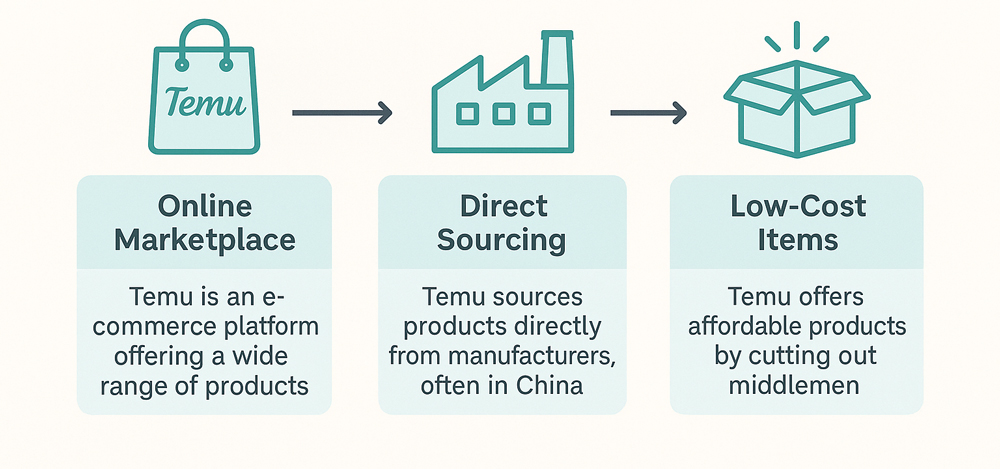
Temu is an online budget shopping marketplace operated by PDD Holdings (the owner of China’s e-commerce giant Pinduoduo). Launched in the U.S. in September 2022, Temu quickly expanded to over 49 countries by early 2024, including Canada, Australia, the UK, major EU nations, and more. It offers a vast array of products—from fashion and electronics to home goods, beauty, toys, and beyond—often at heavily discounted prices. In fact, Temu’s catalog spans millions of items (over 10 million SKUs by some counts) supplied mostly by manufacturers and merchants in China.
Temu’s Business Model: Temu leverages Pinduoduo’s consumer-to-manufacturer model and extensive supplier network to cut out middlemen and sell goods extremely cheap. Products are shipped directly from China to the end consumer, allowing Temu to eliminate traditional retail markups. Temu also takes advantage of the U.S. de minimis import rule, which lets packages under $800 enter duty-free, to streamline cross-border sales. This means a U.S. customer ordering a low-cost item from Temu typically doesn’t pay import taxes, helping Temu keep total prices low. (Notably, this loophole faced political scrutiny in 2026; U.S. regulators considered tightening it, which could raise Temu’s costs or slow deliveries.)
On the logistics side, Temu primarily ships from China via air freight and partners with local carriers for last-mile delivery (e.g. UPS, USPS, Canada Post, etc.). Shipping is free for customers on virtually all orders, with Temu subsidizing costs through bulk shipping arrangements. In some regions, Temu has begun using local warehouses: for example, PDD has warehouses in the U.S. where popular products are stocked, enabling faster domestic shipping for those items. As a result, shipping times can vary: orders shipped from a local U.S. warehouse might arrive in ~1 week, whereas items coming straight from China often take 7–15 days (or longer) to reach U.S. customers. Europe and other markets see similar timelines, typically 1–3 weeks for delivery. Temu’s 90-day return policy and price adjustment guarantee (partial refund if an item’s price drops within 30 days) are also core to its appeal, giving consumers confidence despite longer ship times.
In essence, Temu functions similarly to marketplaces like AliExpress: it connects bargain-hunting consumers with overseas suppliers. Its strengths lie in low prices, huge variety, and aggressive promotions. The company’s rapid growth (100 million active U.S. users by early 2026 and climbing) attests to the demand. But unlike AliExpress, Temu is purely B2C—there’s no formal program for resellers or dropshippers on the platform. This distinction is critical, as we’ll see when evaluating Temu as a dropshipping source.
Can You Really Dropship from Temu?
This is the million-dollar question. Officially, Temu does not allow dropshipping on its platform. Temu’s terms and support center explicitly state they do not support individuals or businesses using Temu as a supplier for reselling. You cannot register as a “Temu seller” to fulfill orders for another store – Temu is meant for consumer purchases only. However, in practice many entrepreneurs still attempt to use Temu as a de facto dropshipping source by placing orders on Temu and shipping them to their customers’ addresses. It’s a workaround strategy, not formally endorsed by Temu. Let’s break down how people try to dropship from Temu and the feasibility, pros, and cons of doing so.
How Dropshipping from Temu Works (Workarounds):
-
Direct-to-Customer Ordering: The simplest method is to list a Temu product on your own store, and when you get a sale, order it on Temu directly to your customer’s address. In other words, you act as the buyer on Temu, but enter your customer’s name and shipping info at checkout. The item then ships straight from Temu’s supplier in China to your end customer. This approach does get the product delivered, but has some major drawbacks. Notably, the package will arrive in Temu-branded packaging, tipping off your customer that it came from Temu (and likely cost much less than what they paid). The bright orange Temu bag with their logo is unmistakable. This can lead to customers feeling deceived or overcharged – there are reports of buyers demanding refunds upon discovering the Temu origin and price. Additionally, if the item incurs any import customs fees, the unsuspecting customer might be hit with a bill on delivery, causing anger and returns. In short, direct shipping is easy but risks your store’s reputation (due to Temu’s branding and possible extra charges).
-
Two-Stage (Reship) Model: Another approach is to order products to yourself (or a 3PL warehouse) first, then re-package and ship to your customer. In this model, the dropshipper acts as a middleman physically: you buy from Temu to your address, remove the Temu packaging, then send the item on to the buyer (perhaps with your own branded packaging). This avoids the customer seeing Temu branding, but it eliminates many advantages of dropshipping. You’ll pay for shipping twice (China to you, then you to customer), eat up time in transit and handling, and need to manage inventory or at least timely reshipment. The delivery becomes much slower overall, and any cost savings from Temu’s low prices might evaporate with the extra shipping expense. Effectively this turns into a form of online arbitrage or self-fulfillment, not the hands-off dropshipping most envision. It’s generally impractical at scale.
Given Temu’s lack of an API or official integration, both methods require manual work. You must copy product info and images from Temu, list them on your site, then place each order on Temu by hand. While there are third-party browser extensions or apps that attempt to automate importing Temu products, they are unofficial “hacks” prone to breaking or errors. Unlike AliExpress or CJ, Temu doesn’t provide any feed or system to sync inventory or automate orders. Scaling a business this way is difficult – fulfilling, say, 50 orders a day would mean 50 separate Temu checkouts and a high chance of mistakes, stockouts, or delays.
So can you dropship from Temu? Technically yes, in that nothing stops you from trying to source products this way. But it’s an uphill battle, and Temu itself may intervene. Temu monitors for reselling behavior: if an account is placing unusually high volumes of orders to different addresses, it can raise red flags. Users on Reddit and other forums have reported Temu canceling orders or even banning accounts suspected of bulk reselling. For example, attempts to request “no logo” or use alternative packaging are against Temu’s policy – one Reddit story noted that trying to dropship with your own packaging led Temu to cancel the orders and ban the account. The platform clearly wants to protect its brand and pricing; if they detect an account likely belongs to a dropshipper, they may shut it down to prevent a poor customer experience.
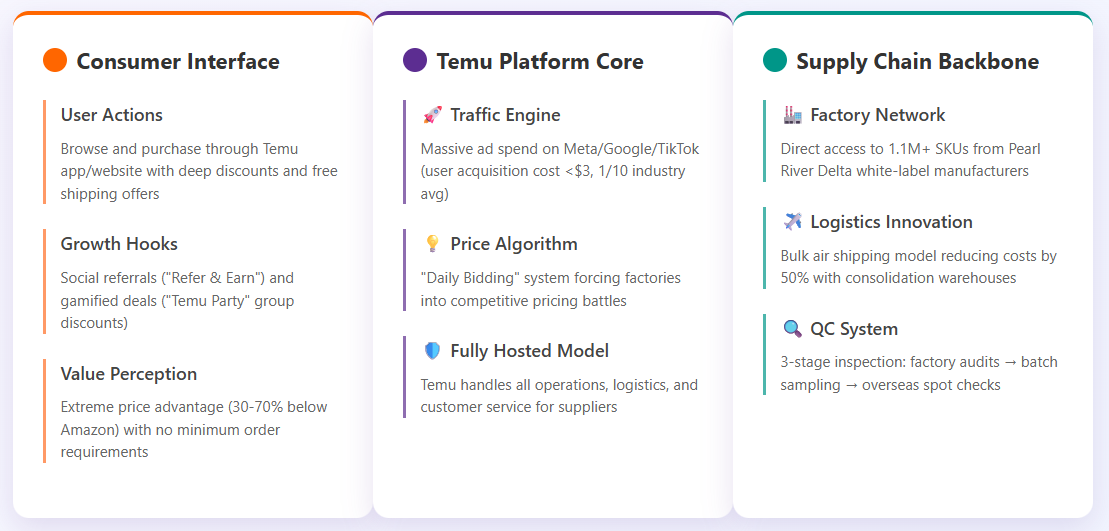
Pros of Using Temu as a Supplier: Despite the challenges, some dropshippers are drawn to Temu for a few potential advantages:
-
Ultra-Low Prices & High Margins: Temu’s pricing is often rock-bottom – you can find countless products for a few dollars or less. Many items are even cheaper than on AliExpress or wholesale sites. This means in theory you could mark them up significantly and still offer a deal to customers. If a gadget costs $2 on Temu but $5–$6 on AliExpress, you have more margin room to profit or to undercut competitors. Temu’s low prices are enabled by scale and the aforementioned direct-from-China model, giving dropshippers access to near-wholesale costs without bulk buying.
-
Huge Product Selection: With millions of SKUs available, Temu lets you find almost any niche product or trend. It covers 29 broad categories and everything from common household items to quirky gadgets. This vast catalog means you can test many different products and find “winners” that suit your store. You’re not limited to one supplier’s catalog; essentially Temu aggregates thousands of factories and merchants in one app.
-
Trending Products & Research: Temu’s platform is very trend-driven – it frequently updates lists of best-sellers, 5-star rated items, new arrivals, and flash sales. This effectively provides a free product research tool for dropshippers. By browsing Temu’s “Top Selling” or “Featured” sections, you can gauge what items are hot and viral. High sales figures or reviews on Temu might indicate strong demand that you could tap into. In other words, Temu can be used to identify winning products, even if you don’t ultimately source from Temu. (Some savvy sellers use Temu for inspiration, then find the same product on AliExpress or via a private supplier to fulfill orders – more on that later in alternatives.)
-
Buyer-Friendly Policies: Temu’s 90-day return policy and 100% refund guarantee on returns is quite generous. For a dropshipper, this means if your customer is unhappy and you need to return/refund, Temu is likely to honor a return (within that window) and not leave you out of pocket. Likewise, Temu’s 30-day price adjustment refund means if an item’s price drops shortly after you bought it for an order, you (as the Temu buyer) can recoup the difference. These policies can cushion some of the risk of sourcing from a new platform. Temu also typically eats the return shipping cost for defective products, making it low-risk for you to refund a customer and send the item back to Temu if needed.
-
Free Shipping on All Orders: Unlike many suppliers that charge shipping or have minimum order thresholds, Temu ships any order free (often combining multiple items into one package). This simplifies your cost calculations—the price you see is the price you pay. As a dropshipper, not worrying about variable shipping fees is convenient, and for customers “free shipping” is a selling point. Just be mindful that the trade-off can be slightly longer delivery times as Temu uses the most cost-effective shipping methods.
Cons and Challenges:
-
No Automation or Integration: The lack of automation is a major downside. Temu has no Shopify app, API, or feed to import products or sync orders. You cannot automatically push Temu products to your store or have orders forwarded to Temu – everything is manual. This leads to inefficiency and human error, and makes it nearly impossible to process high order volumes efficiently. By contrast, other platforms (like AliExpress with DSers/Oberlo, or CJdropshipping’s app) allow one-click order fulfillment and real-time stock updates – huge time savers Temu lacks. If you plan to scale, Temu will become a bottleneck unless you invest in custom scripting (which may violate their terms anyway).
-
Branded Packaging (No Blind Shipping): Perhaps the biggest issue is Temu’s signature orange packaging on every order. There is no option for unbranded or neutral packaging; the bright orange bag with “TEMU” emblazoned across it is unavoidable. For dropshippers trying to build their own brand or at least appear as the retailer, this is a deal-breaker. Your customers will know the item came from Temu. As mentioned, this can lead to customer distrust, demands for refunds, or damage to your brand reputation. Other dropshipping suppliers often offer blind shipping (no supplier info on the package) or even custom branding on packages/inserts – Temu offers neither by default. It’s a consumer platform first, so all branding goes to Temu, not you.
-
Risk of Account Ban or Order Cancellation: Since using Temu for dropshipping is against their official policy, you must accept the risk that Temu could freeze your account. If you push high volume or do anything that tips them off (e.g. dozens of orders to different names/addresses daily), Temu may cancel those orders or ban you. This could be catastrophic if you’ve collected customer payments and then Temu doesn’t ship the goods. You’d be left scrambling to refund customers or source elsewhere at possibly higher cost. Essentially, your “supplier” (Temu) isn’t reliable if they decide to enforce their no-dropshipping rule. This uncertainty is a serious con – one that dedicated dropshipping platforms don’t have, since they welcome resellers.
-
Inconsistent Shipping Times: While Temu can ship some items quickly, many orders will still take 1–3 weeks to arrive. Sellers and customers report that shipping often exceeds two weeks for certain items. Temu’s own estimates to the U.S. are usually around 7–15 days, but delays happen, especially if an item isn’t in a local warehouse. This is slightly better on average than some AliExpress sellers (which might take 3–4 weeks), but it’s nowhere near Amazon Prime speed or domestic supplier speed. Inconsistent delivery times can lead to customer complaints and order tracking headaches. You as the seller have no control over fulfillment speed – you’re at the mercy of Temu’s logistics. If a package is late or lost, you’ll be the one dealing with the unhappy buyer (though Temu might ultimately refund you). Furthermore, changes in global logistics or regulations could slow things down; for instance, in mid-2026 Temu had to hide listings shipping from China for U.S. buyers and rely more on U.S. stock due to regulatory pressure, which indicates potential inventory limitations and adjustments that can affect fulfillment.
-
Product Quality and Authenticity Issues: Temu’s marketplace, like many such platforms, has uneven product quality. Many goods are inexpensive because they are off-brand, generic factory items. There have been accusations of poor quality and even counterfeit products on Temu. As a dropshipper, selling low-quality or fake goods can result in returns, bad reviews, or even account issues on platforms like Shopify, Amazon, or eBay (which have strict anti-counterfeit policies). For example, some brand-name cosmetics or electronics found on Temu may be fake, and reselling them could lead to legal trouble or marketplace bans. You also have to trust that the item matches the description/photos on Temu; if it doesn’t, you’ll have dissatisfied customers. While Temu does have ratings and reviews you can check, it’s not as transparent as dealing with a known supplier. The burden is on you to vet Temu products (ideally ordering samples) to ensure they’re up to standard.
-
Customer Service and Support Gaps: If something goes wrong with a Temu order (late delivery, wrong item, etc.), you have to go through Temu’s customer support, which is not geared towards dropshippers. Temu advertises 24/7 support, but users report it’s not always responsive or effective. You don’t have a dedicated agent to help resolve issues for your business; you’re just another customer to Temu. This can lead to delays in resolving problems, leaving your customer waiting. In contrast, proper dropship suppliers (e.g., CJdropshipping) often provide agents or faster B2B support when issues arise. Additionally, Temu’s support may contact the end-customer (since you put their address) for certain issues, which could confuse the buyer or reveal your sourcing. Overall, handling disputes or returns via Temu can be a bit clunky when you’re effectively a middleman.
Bottom Line: Yes, you can technically dropship from Temu by manually ordering products to your customers, and some entrepreneurs do so to capitalize on Temu’s low prices. It might be workable for a small side hustle or product testing. For instance, you could validate a product idea by listing a Temu item and seeing if it sells, before investing in bulk inventory or a long-term supplier. Temu’s cheap costs and broad selection make it a quick testing ground. However, for a sustainable, scalable dropshipping business, relying on Temu as your supplier is fraught with challenges. The lack of automation, branded packaging, policy risks, and variable fulfillment make it hard to deliver a smooth experience to your customers or to build a reliable operation. In the next section, we’ll compare Temu vs other dropshipping platforms to highlight these differences further – and to see if Temu can stack up against alternatives like CJdropshipping or AliExpress that are more dropshipper-friendly.
Temu vs Other Dropshipping Platforms
How does Temu compare to traditional dropshipping supply platforms? Here we’ll pit Temu vs AliExpress vs CJdropshipping (and touch on others like Spocket) to understand the strengths and weaknesses of each. This comparison will make clear why many dropshippers might lean towards established platforms despite Temu’s low prices.
Temu vs AliExpress
AliExpress is often the go-to marketplace for dropshippers sourcing products from China. It shares some similarities with Temu – both offer a massive variety of low-cost products from Chinese manufacturers. However, there are key differences in integration, shipping, and supplier tools:
-
Product Range & Price: Both Temu and AliExpress have millions of products. You can find very similar items on each. In fact, many Temu products are likely sourced from the same factories that supply AliExpress sellers. Temu often edges out AliExpress on price for identical items. For example, a gadget might be $5-$6 on AliExpress but $3-$4 on Temu, because Temu’s model subsidizes costs (no middleman retail markup, and possibly lower shipping due to bulk arrangements). AliExpress prices have crept up in recent years for some items as sellers realize dropshippers will pay; Temu undercuts by going straight to the source. If purely comparing item cost, Temu frequently wins by a small margin. That said, AliExpress has a huge range of independent sellers—some may offer deals or bulk discounts, and you can sometimes message for a better price on large orders (Temu has fixed prices).
-
Integration & Automation: AliExpress is highly integrated into the dropshipping ecosystem. Tools like DSers (formerly Oberlo), Dropified, and AutoDS allow one-click importing of AliExpress products to your store and one-click fulfillment of orders. Product info, images, stock levels, and tracking can sync automatically. This makes running a dropshipping store at scale much easier. Temu, as discussed, has no official integration – you’d be copying and pasting everything manually. With AliExpress, you can even set up auto-order or bulk ordering for multiple orders at once. Moreover, platforms like Shopify have built-in AliExpress/DSers compatibility. Temu simply does not have this level of support. For anyone wanting to streamline operations, AliExpress is far superior in this aspect.
-
Order Fulfillment & Shipping: AliExpress shipping times vary widely depending on the seller and method. Traditionally, “ePacket” or AliExpress Standard Shipping would get small items to the U.S. in about 2–3 weeks. Some sellers now use warehouses in the US/EU for 5–15 day delivery on certain items. However, it’s common to see 20-30 day estimates on AliExpress if using the cheapest shipping. Temu’s shipping, as noted, is often 7–15 days to the U.S. and sometimes up to 20+ days, not drastically different from AliExpress. Temu’s advantage is that every item has free standard shipping, whereas on AliExpress you often must pay extra for faster shipping options. AliExpress allows choice of shipping service (e.g. DHL for high speed or Cainiao for economy) – you can pay more for faster delivery. Temu does the choosing for you (likely the cheapest method that meets their delivery promise). So in practice, speed can be comparable, but AliExpress gives you more control and sometimes much faster options at a cost. For example, if you need an item in 7 days, some AliExpress sellers offer FedEx/UPS expedited shipping (at a high fee), whereas Temu doesn’t offer an expedited upgrade – you get what you get.
-
Packaging & Branding: AliExpress sellers generally ship in plain packaging or Chinese postal packets. There is usually no AliExpress branding on packages (AliExpress is a marketplace, not a single retailer, so packages come from individual sellers). This means your customer might receive a nondescript padded envelope or box, sometimes with the seller’s name or just a shipping label. In many cases, it’s effectively “blind” – no obvious indication of price or platform. This is better for dropshippers since it doesn’t blatantly reveal your source. Temu, in contrast, brands every shipment with Temu logos. So on this point, AliExpress is superior – it’s easier to pass off AliExpress shipments as your own because the customer often can’t tell where it came from aside from the Chinese postage. Additionally, some AliExpress suppliers will accommodate requests to leave out invoices or promotional material if you message them. Temu doesn’t give that option (there’s no communication with the actual seller).
-
Reliability and Support: AliExpress has an established buyer protection system. If an item doesn’t arrive or is not as described, you can open a dispute and AliExpress often forces a refund if the seller is at fault. Dropshippers have leveraged this to refund customers then reclaim money from AliExpress in cases of lost packages or mis-shipped items. Temu also offers easy refunds and even refunds preemptively if a package is severely delayed. In fact, Temu’s customer-first approach might be even more lenient in some cases (some buyers report getting refunds without needing to return cheap defective items). However, as a dropshipper, you are effectively the “buyer” on both platforms. AliExpress disputes can take time and you deal with individual sellers; with Temu you deal with Temu corporate for any issues. Temu’s centralized support might resolve things faster in some cases (since they refund directly), but AliExpress gives you more control (you can escalate disputes, choose partial refunds, etc.). In either case, you must handle your customer’s issue externally. Neither platform offers dedicated dropshipper support, but AliExpress’s vast experience with resellers (and integration with dropship tools) arguably makes it more reliable for our use case.
Verdict (Temu vs AliExpress): Temu wins on price and perhaps slightly on average shipping cost/time for small orders (thanks to free shipping), and it provides a slick app with trending product insights. AliExpress wins on dropshipping integrations, automation, and supplier flexibility. It also doesn’t slap a giant logo on every package, which is crucial for brand-conscious sellers. If you are running a serious dropshipping business, AliExpress is generally easier to work with due to these integrations and the open nature of the platform. Temu might be useful for niche scenarios: for instance, to quickly test a product or fulfill a one-off order if you can’t find a supplier elsewhere. But relying on Temu long-term would mean sacrificing efficiency and risking customer experience. Many successful dropshippers use Temu as a research tool (to find trends) but then source the product via AliExpress or similar, precisely to avoid Temu’s pitfalls.
Temu vs CJdropshipping
CJdropshipping (CJ) is a popular end-to-end dropshipping supply platform that contrasts with Temu in that it is built specifically for dropshippers. Rather than a consumer marketplace, CJ is more like a fulfillment partner and sourcing agent combined. Let’s compare key points:
-
Business Model: CJdropshipping is an all-in-one dropshipping solution that sources products directly from factories (often in China) and holds inventory in various warehouses to fulfill your orders. Unlike Temu, CJ is not a consumer-facing retail site; it’s a B2B service for sellers. You don’t worry about CJ “competing” for your customers’ attention – CJ is behind the scenes. CJ enables you to import products into your online store (Shopify, eBay, WooCommerce, etc.) and when you get sales, CJ picks, packs, and ships to your customers. It’s essentially a full fulfillment service tailored to dropshipping.
-
Integration & Automation: CJ excels in integration. It offers a robust app and dashboard where you can browse products and with one click list them to your Shopify or other store. When an order comes in, you can have it synced to CJ and fulfilled automatically – even tracking numbers get updated back to your store without manual input. CJ supports automatic stock and price monitoring, multiple store management, and other seller tools (all for free). In short, CJ provides the plug-and-play dropshipping experience that Temu completely lacks. For example, CJ’s system can push tracking info to your customer email, whereas with Temu you’d be copying tracking codes from Temu’s app and emailing them yourself. Automation is critical for scaling, and CJ was built with that in mind.
-
Product Selection: CJdropshipping has a large catalog (tens of thousands of products listed) and also a sourcing service where they will find almost any product you request, even if not listed. This means if you see something trending on Temu, you could ask CJ to source it for you – they will reach out to suppliers and get it, often listing it at a wholesale price for you to dropship. CJ’s product variety is broad (covering most niches), though not as instantly massive as Temu’s open marketplace. However, because CJ can source on demand, its effective catalog is very large. It also focuses on quality control: CJ performs sample testing and quality inspections on products it sources. This helps avoid the low-quality duds that might slip through on Temu. In contrast, Temu doesn’t vet every product – it’s buyer beware apart from user reviews. CJ even offers product photography services and content creation for your listings if needed.
-
Pricing and Costs: CJ is free to use (no subscription for basic dropshipping) – you pay the cost of goods and shipping on each order. The product prices on CJ can sometimes be slightly higher than Temu’s super-discounted retail prices, but they are essentially wholesale rates. Also note, CJ typically separates product cost and shipping cost, whereas Temu’s price is “all-in.” For example, a widget might be $2.00 on CJ and shipping $3.00 to the U.S., total $5.00 cost; the same item might be $4.50 on Temu with free shipping. Depending on the item and route, one or the other could be cheaper. CJ does have the advantage of letting you choose cheaper or faster shipping methods, affecting cost. They also have bulk pricing if you start selling high volume (or you can buy inventory to stock in their warehouse for even lower costs per unit). Temu generally doesn’t have bulk discounts – every purchase is retail quantity. CJ also avoids U.S. import taxes via similar de minimis usage for individual orders, so there’s no extra duties typically (unless you stock inventory above $800). In summary, CJ’s pricing is competitive and designed for margin, but always compare item by item. Temu’s low prices are great, but if CJ can source the item, the difference might be negligible, and CJ offers far more seller value for that cost.
-
Shipping Speed and Options: CJdropshipping offers global fulfillment with multiple warehouses, which is a huge plus. They have warehouses in China, of course, but also in the USA, Europe (Germany, UK, etc.), Asia (e.g. Thailand, Indonesia), and more. If a product is stocked in a U.S. warehouse, you can deliver to U.S. customers in as fast as 2-7 days via USPS or UPS (similar to domestic shipping). CJ proactively stores popular products in overseas warehouses to enable fast local shipping. Temu has started doing this for some items, but CJ has a more extensive network dedicated to this purpose. Even from China, CJ’s shipping methods (like CJPacket) often deliver in 1-2 weeks to the U.S., comparable to Temu’s standard. CJ also provides tracking that can be automatically sent to customers. Moreover, CJ supports “blind dropshipping”, meaning they will ship without any CJ branding, and they can even add your custom branding if you arrange it. You can invest in custom packaging or inserts through CJ, so that when they ship orders for you, it has your logo or thank-you card, giving a professional touch. Temu will never do that for you. When it comes to international markets, CJ can also ship to virtually anywhere and often has faster routes to certain countries than Temu. If Temu isn’t yet serving a country you want to target, CJ likely can via its network.
-
Branding and Customer Experience: As noted, CJ allows brand-building – custom logos on products (via print-on-demand or private labeling), branded packaging, and unbranded shipping labels. To illustrate, if you scale a winning product, you could ask CJ to manufacture it with your brand name and then fulfill orders with packaging that looks like it came from your company. This is something Temu simply doesn’t offer (Temu’s model is about Temu’s brand, not yours). For experienced dropshippers, building a unique brand is key to long-term success, and CJ supports that path. Additionally, CJ provides better supplier support: you get an account manager or ticket support specifically to help with your orders and sourcing issues. Their customer service is 24/7 for sellers and attuned to typical dropshipping concerns (lost parcels, product quality disputes, etc.), acting on your behalf with factories. Temu’s customer service, conversely, is focused on individual buyers and returns, not on helping you grow your business. This difference in support can be crucial when solving problems quickly for your customers.
-
Legal and Policy: CJdropshipping, being a B2B service, doesn’t have a rule against reselling (it exists to enable reselling!). You won’t get banned for using CJ; in fact, they encourage bigger sales. There’s no conflict between using CJ and any platform’s terms. Temu, as discussed, has that conflict where you’re not supposed to resell their items, so you’re always a bit on thin ice with Temu. Furthermore, CJ likely has better documentation for customs, proper export handling, and can ensure things like FDA certifications if you’re selling cosmetics, etc., because they work with you to maintain compliance (and can advise if a product might have regulatory issues). Temu leaves all that to you to figure out.
Verdict (Temu vs CJdropshipping): For anyone serious about building a real dropshipping business, CJdropshipping is naturally a more powerful platform. It directly addresses almost every con we listed for Temu: CJ offers automation, global fast shipping, blind and custom branding, dedicated support, and encourages scaling without fear of account bans. The only area Temu has an edge is the immediate rock-bottom pricing on some items and perhaps ease of use for a consumer (Temu’s app is very user-friendly for browsing products, whereas CJ’s interface is improving but can feel more like a wholesale portal). However, if a product is that hot and cheap on Temu, you can bet CJ or similar can source it for you if you ask. CJ might even have it listed, since they continually add trending products (and you can always submit a sourcing request with a Temu link). CJdropshipping’s natural strengths – automation, worldwide fulfillment options, quality control, and brand support – make it a better choice for long-term dropshipping compared to Temu. Temu could be used in a pinch or for idea generation, but CJ is the partner you want for running the operations.
Other Platforms (Spocket, etc.) vs Temu
Beyond AliExpress and CJ, there are other dropshipping platforms each with their own model:
-
Spocket: Spocket is a marketplace that connects dropshippers with local suppliers in the US, Canada, EU, and more. It emphasizes fast shipping and quality – many products ship from the same country as the buyer, often arriving in 3-7 days. Spocket also supports branded invoices and inserts, meaning your store name can appear on the packing slip. Compared to Temu, Spocket’s products are generally higher priced (they are often boutique or made in smaller batches) and you pay a monthly subscription for access. The selection is smaller (thousands, not millions, of products) focusing on trending and high-quality items. Strengths: Quick delivery, reliable vetted suppliers, easy integration with Shopify, and a professional unboxing experience for customers. Weaknesses: Costs (monthly fee and higher unit prices) and limited catalog. If your business model is premium dropshipping with quick delivery (and you’re willing to sacrifice some margin), Spocket is an alternative to Temu that provides what Temu cannot: speed and branding. But you won’t find $1 gadgets on Spocket – it’s a different segment.
-
Amazon (as a supplier): Some dropshippers use retail arbitrage from Amazon or Walmart – essentially ordering from Amazon to fulfill their Shopify/eBay orders. This is somewhat analogous to using Temu (buy from a big retailer, send to customer). Amazon has the obvious benefit of incredibly fast shipping and trusted quality, especially with Prime eligible items arriving in 1-2 days. The downside is pricing: Amazon items are not wholesale cheap, so margins are tight or non-existent unless you mark up a lot or find clearance deals. Also, Amazon packages have Amazon logos, and including receipts (though one can mark as gift to omit prices). Using Amazon to dropship is generally against Amazon’s terms if you’re selling on Amazon (not allowed to dropship from another retailer), but if you’re using Amazon to fulfill your own website’s orders, it’s not a violation per se. Still, as a long-term model it’s unsustainable – customers could recognize Amazon packaging and wonder why they didn’t just buy from Amazon. In effect, dropshipping from Amazon is only viable for niche products or regions where Amazon doesn’t operate. It’s much more expensive than Temu for cost of goods, so not a direct competitor in the ultra-budget space.
-
Shein: Since Temu and Shein are direct competitors in ultra-fast-fashion, some dropshippers consider Shein as a source, especially for apparel. Shein’s prices are low and it ships worldwide, often faster than Temu for clothing. Shein even quietly allows some buyers to purchase in bulk or use discount codes which could help margin. However, Shein packages also have branding, and more importantly, Shein is well-known (arguably more so than Temu in fashion). A customer receiving a Shein bag might immediately recognize it. Also, Shein has strict policies and is suing Temu over intellectual property, indicating that reselling Shein designs could be legally sensitive. It’s not a typical dropship channel, though a few sellers might list Shein items on marketplaces for convenience.
-
Wholesale Suppliers/Directories: Another alternative is bypassing retail marketplaces entirely and using wholesale dropship suppliers. For example, SaleHoo is a directory that lists vetted wholesalers and dropship-friendly suppliers (mostly in the US/UK/China) for various products. You typically pay a membership fee to get access and then you can contact those suppliers. The advantage is you find reliable sources, potentially better quality items, and sometimes you can get arrangements for private labeling or exclusive products. Shipping is often faster if the supplier is domestic. The disadvantage is it’s more work to coordinate (no one-click import; you often have to manually upload products or use CSV feeds) and it may require business registration or minimum order commitments. Compared to Temu, working with a real supplier gives you consistency and legal use of products (no counterfeit worries if they are authorized distributors). It’s a route many advanced dropshippers take once they identify a winning product – partner with a wholesale supplier directly. Platforms like Alibaba can also be used in a similar way: while Alibaba is for bulk purchase, some manufacturers are open to dropshipping or small MOQs if approached. Alibaba excels for private labeling and scaling (you might test with Temu, then move to Alibaba to create your own branded version of the product in bulk). Temu cannot help you scale in that manner, since it’s strictly retail and unbranded.
In summary, Temu’s natural competitors in a dropshipper’s toolkit are AliExpress (for breadth and integration) and dropshipping agents like CJdropshipping (for full service and branding). Other platforms like Spocket or wholesale directories offer alternative strategies focusing on either faster shipping or more exclusive products. Each has trade-offs.
Temu is currently a bit of an outlier – it’s loved by consumers for cheap shopping, but not designed for resellers, which is why seasoned dropshippers often use it for intel rather than for fulfillment. Next, we’ll consider the legal and policy factors you should bear in mind before attempting Temu dropshipping, because ensuring compliance and authenticity is crucial in any business.
Legal and Policy Considerations
When using Temu (or any source) for your dropshipping business, it’s important to understand the legal and policy implications. Here are some key considerations regarding Temu’s terms of service, product authenticity, and customer service policies:
Temu’s Terms of Service – No Dropshipping Allowed: As noted earlier, Temu’s official policy is that it does not support dropshipping. In practical terms, this means Temu has not set up any seller or reseller program, and they reserve the right to refuse service if they suspect you’re purchasing items for resale. While there isn’t a public “Temu dropshipper ban clause” that we can quote from their Terms of Use, their Customer Support FAQ explicitly says they do not allow individuals or businesses to use Temu for dropshipping. This gives Temu a broad license to cancel orders or close accounts that violate what they see as personal use. For a dropshipper, this is a precarious situation – you don’t have a contractual guarantee of supply. You’re essentially buying as a retail customer in Temu’s eyes, with no protection if they decide your purchasing pattern violates their rules. If Temu bans your account with pending orders, you could be in trouble with your customers. Legally, Temu is within its rights to enforce its policy. Thus, one must tread carefully: avoid behavior that clearly looks like reselling (e.g., dozens of orders a day immediately after account creation), and be prepared with backup plans if Temu cuts you off. It’s a gray area because you aren’t doing anything illegal by reselling goods you bought, but you are at risk of violating Temu’s platform rules, which can result in losing access. Always keep an eye on Temu’s Terms & Conditions updates and, if unsure, you could reach out to Temu support to clarify any allowable uses (though likely they’ll reiterate the no-dropship stance).
Intellectual Property and Counterfeits: One of the biggest legal pitfalls in e-commerce is inadvertently selling counterfeit or trademark-infringing products. Temu, like other large marketplaces, has been accused of allowing counterfeit goods. In July 2026, the EU even launched preliminary actions against Temu for failing to prevent the sale of illegal and unsafe products, including possible counterfeit items, on its platform. As a dropshipper, if you take a Temu listing at face value, you might end up selling a “branded” item that is not authentic. For example, if you see Nike shoes or Apple AirPods on Temu at a fraction of retail price, they are almost certainly fake. Selling counterfeit or trademarked items without authorization is illegal and can lead to severe consequences – account bans on marketplaces, copyright infringement notices, even lawsuits and fines. You must verify a product’s legitimacy before adding it to your store. Avoid any products using major brand names or logos unless you have proof they are genuine (which on Temu is unlikely, as genuine brand goods are not Temu’s focus). It’s safer to stick to unbranded or novelty items. Additionally, watch out for intellectual property issues like patented product designs or copyrighted images. Some items on Temu might be knock-offs of a patented gadget, or clothing with imagery that infringes on copyrights. If you sell those, you could get IP complaints. The best practice is to do some due diligence: check if the product is a known brand or resembles one; read reviews for clues of authenticity; and if possible, order a sample to inspect it yourself. Also, avoid using the manufacturer’s exact product descriptions if they contain brand names or claims that could be infringing.
On a related note, Temu vs. Shein legal battles highlight IP concerns. Shein sued Temu alleging Temu’s sellers stole Shein’s photos and designs, and Shein even got a court order regarding Temu’s use of images. This indicates some products on Temu might be designer replicas or using stolen images. If an official brand or a competitor finds out you’re selling an infringing product (even unknowingly), you as the seller can be held liable in many jurisdictions. It’s not a place you want to find yourself. So legally, the safest approach is: stick to generic products, or better yet, create your own branding once you identify a product (so you’re not selling it as, say, “fake Dyson vacuums” but rather your own brand vacuum).
Import Regulations and Product Safety: When shipping products internationally (especially to the U.S. or EU), there are various import and safety regulations to consider. Temu’s model of shipping direct to consumers often skirts some regulations due to the low value of each shipment (de minimis), but certain product categories are still regulated. For instance, electronics may need FCC certification in the U.S., children’s toys might need to be CPSIA compliant, cosmetics might require FDA approval, etc.. If you dropship a product that doesn’t meet these local regulations, you could face issues (like customs seizure or customer harm leading to liability). Temu likely does not ensure every item meets all destination country standards – they leave that to “buyer beware.” As a reseller, you should be mindful: avoid selling electronics that aren’t certified for your market (no UL/FCC markings), avoid health or beauty products that could be unsafe or not approved. Also, lithium batteries, certain chemicals, or high-powered devices have shipping restrictions. Customs duties we discussed (under $800, U.S. is fine), but Europe has a much lower VAT threshold (they removed the minimum, so technically VAT applies to all imports, though in practice many small packets slip through or VAT is prepaid by platforms). As laws tighten (the EU and U.S. are both scrutinizing platforms like Temu on safety), you want to ensure you’re not on the wrong side of compliance. While this sounds daunting, an advantage of using a platform like CJdropshipping or a local supplier is they often handle compliance and can advise you. With Temu, you’re on your own. In summary, stick to “safe” categories (general apparel, accessories, home decor, simple electronics under required certifications), and be cautious selling anything ingestible or that plugs into a wall unless you verify it meets standards. It’s part of due diligence as a business owner.
Customer Data and Privacy: Another consideration – if you’re using Temu’s app or site heavily and inputting customer addresses, think about privacy. You are providing your customers’ personal info (name, address, maybe phone) to Temu, a third-party. This could potentially conflict with privacy policies (especially if you advertise as not sharing data). While Temu likely uses it just for shipping, be aware of GDPR or other laws if you’re sending EU customer data outside. It’s a minor point, but in an era of data privacy concerns, using consumer platforms for fulfillment adds complexity – something a direct supplier relationship would avoid.
Customer Service Policies (Returns, Refunds): Temu’s buyer protection policies can both help and hinder your dropshipping. On one hand, Temu offers refunds for missing or significantly not-as-described items, which can allow you to reimburse your customer and get your money back from Temu. On the other hand, Temu’s return process might not be straightforward for dropshippers. If your customer wants to return a non-defective product (e.g. they just changed their mind), Temu’s 90-day return policy technically allows the original purchaser to return the item. That’s you, not the end-customer. So you’d have to coordinate having the customer send the product to you (or back to Temu’s returns center) which can be a logistical headache and cost. Some dropshippers choose to eat the cost and not have the item returned (especially if it’s cheap) to avoid that hassle. Also note Temu’s price adjustment refund (if price drops in 30 days) – this is a unique perk. As the buyer, you could monitor if your purchased item’s price fell and claim the difference. This could add a bit to your profit or allow you to perhaps refund your customer some difference as goodwill. But realistically, monitoring that at scale is difficult, and the amounts might be small.
Temu vs. Platform Policies: If you sell on marketplaces like eBay, Amazon, or Etsy, be careful – those platforms often have rules against dropshipping from retail sites. For example, Amazon sellers are not allowed to dropship from another retailer (they don’t want a product arriving in a Walmart or Temu box to an Amazon customer). eBay is a bit more lenient but still frowns on retail arbitrage if it leads to problems. If you run your own website, you’re fine on that front, but just a note that using Temu as a source on major marketplaces could risk your seller account there if discovered. Make sure to review the policies of wherever you’re selling.
In summary, legal and policy risks when dropshipping from Temu include violating Temu’s own terms, unintentionally selling counterfeit or unsafe products, and navigating returns or disputes with limited support. To mitigate these:
-
Abide by Temu’s usage rules as much as possible; don’t blatantly resell hundreds of items immediately.
-
Vet products for authenticity and safety; avoid big brand knockoffs.
-
Keep records of your orders and product sources in case of any challenges or customer queries.
-
Have clear return/refund policies for your store that account for the realities of Temu’s process (perhaps note longer return handling times).
-
If possible, consult legal advice for your specific situation, especially if you plan to scale up (this guide is informational, not legal counsel).
Now that we’ve covered the risks and rules, let’s look at how Temu actually performs on shipping and fulfillment, since meeting customer expectations is crucial.
Shipping Times and Fulfillment for U.S. and Global Markets
One of the most critical aspects of any dropshipping supply choice is shipping time – how fast and reliably can the product get to your customer? In this section, we’ll analyze Temu’s fulfillment times for U.S. and international markets and compare them with other suppliers like CJdropshipping and AliExpress. Setting proper customer expectations about delivery is vital if you use Temu.
Temu’s Shipping Times (U.S.): Temu generally quotes standard delivery to the U.S. of around 7–15 business days. Many users report receiving orders in roughly 10–14 days on average. There are cases where items arrive in as little as 5–7 days if shipped from a U.S. warehouse or a particularly fast route. For example, Temu’s parent company Pinduoduo has fulfillment centers in California and New Jersey; if the item is stocked there, it gets to U.S. customers quickly via USPS or UPS (often within a week). Temu doesn’t always make it obvious which items ship locally, but sometimes labels like “Expedited” appear on listings that might indicate faster dispatch. On the other hand, shipping can occasionally exceed 2–3 weeks, especially if an item is coming from overseas with delays. Customers have had packages split into multiple shipments too – so one item might come in 8 days, another in 15 days, even if ordered together. Temu provides tracking for each package in its app, which you (as the dropshipper) would need to relay to your customer.
Importantly, Temu has been dealing with changes in 2026: trade policy crackdowns in the U.S. are pushing Temu to adjust its logistics. Reports indicate Temu started blocking U.S. shoppers from seeing items that ship directly from China, shifting to show more products that can ship from U.S. warehouses, likely to avoid customs scrutiny. This might improve delivery times for U.S. customers in the long run (because only faster local-stocked items are shown), but it also could mean a narrower selection or stockouts. If you find a product on Temu that was shipping from China, it might suddenly become “unavailable” to U.S. addresses if Temu is hiding it. This dynamic situation means you have to watch for changes – something available last month might not be shippable next month depending on Temu’s policy responses.
For other countries, Temu’s shipping times can vary:
-
Canada: Temu serves Canada with similar methods. Shipping to Canada is often around 10–20 days. Canadian customers might face import GST/VAT on orders (Temu may pre-collect it for Canada since they have to for orders below a certain threshold).
-
Europe (UK, EU): Temu expanded to major European countries. Delivery there also ranges ~7–15 days in many cases, but European customs can occasionally cause delays. Temu likely has some local fulfillment centers in Europe as well (for example, they launched in the UK, Spain, etc., possibly using local partners to dispatch popular goods). The EU has stricter import rules; Temu as a platform probably charges VAT at checkout for EU orders and uses IOSS (Import One-Stop Shop) to streamline customs. Still, recent EU investigation findings pointed out unsafe products slipping through, which might lead to more checks. If EU customs ramp up inspections on Temu parcels, shipping could slow or items get stopped. It’s good to keep an eye on news in that regard if you have European customers. For now, assume roughly 2 weeks average to Europe.
-
Australia/NZ: Temu launched there in 2023. Shipping times to Australia are often 10–20 days as well. Australia has a high de minimis threshold (AU$1000), so duties usually aren’t an issue.
-
Other regions: Temu was reported to expand to parts of the Middle East (like Qatar) and Latin America (Chile, Colombia). It’s likely shipping to those areas takes on the order of 2–4 weeks, given distance and less optimized routes. If your dropshipping audience is global, you’d have to consider that Temu might not cover every country and some places will have long transit times.
Comparing to CJdropshipping: With CJ, if you use a product stocked in a U.S. warehouse, shipping can be 3–7 days domestically, which is on par with Amazon standard shipping and far better than Temu’s typical 10-15 days. CJ’s China warehouse to U.S. via their standard lines is often around 7–12 days (they’ve developed optimized shipping similar to ePacket). They also offer expedited options like DHL (3-5 days globally, though expensive). CJ gives you the flexibility to choose slower cheap shipping or faster premium shipping for each order. For Europe, CJ’s local warehouses (e.g. in Germany or UK) mean 3-8 day delivery within Europe, and their China-to-Europe lines might be ~10–18 days depending on country. Temu’s shipping is not customizable per order – you can’t pay Temu to ship faster. With CJ or AliExpress, if a customer needs something urgently, you could pay for FedEx. With Temu, you have what you have. So for customer satisfaction, especially if you want to offer expedited shipping options, Temu falls short.
Comparing to AliExpress: AliExpress can be all over the map on shipping. But nowadays, many AliExpress items to the U.S. arrive in ~2 weeks if using AliExpress Standard Shipping (which often uses airlines similar to Temu’s method). Some sellers also offer “US warehouse” items on AliExpress with 4-7 day delivery. If you specifically choose those, AliExpress can actually match or beat Temu on speed. On slow end, some economy Ali shipments still take 30-45 days, which is worse than typical Temu. But as a dropshipper, you’d likely not choose those slowest options. AliExpress also launched programs like “AliExpress Premium Shipping” to get items faster to certain countries. In short, with careful supplier selection on AliExpress, you can achieve similar shipping times to Temu, though you might pay a bit for shipping.
Reliability and Tracking: Temu provides tracking numbers (often trackable via global tracking websites or 17track). They sometimes combine packages – if you order multiple items, Temu might ship them in one package or separate, depending on if they come from different partner warehouses. You’ll need to keep track and ensure the customer gets all tracking numbers. CJdropshipping and AliExpress (via integrated apps) will automatically send tracking info to your store and mark orders as shipped, which is much more streamlined. In terms of lost packages, Temu will refund after a certain window if non-delivery is confirmed. CJ and AliExpress have similar policies (they’ll reship or refund if an item doesn’t arrive by a certain time).
Customer Expectations: If you use Temu, it’s crucial to set proper expectations with your customers about delivery times. Since you likely won’t advertise “Shipping from Temu”, you should at least indicate an estimated timeframe (e.g. “Delivery in 10-18 days” or “1-3 weeks”) on your product pages or at checkout. Many customers will tolerate a 2-week delivery if told upfront, especially if the price is good or the item is unique. What causes complaints is expecting a week and getting 3 weeks. So be transparent. Some dropshippers using Temu might pad the estimate a bit (say 2-4 weeks) to be safe. With CJ or domestic suppliers, you could confidently offer 3-7 day delivery as a selling point, which is more appealing. That’s one reason a lot switch away from pure China shipping as they grow.
It’s also worth noting, Temu’s packaging and fulfillment might confuse customers. For example, the package might come from “Temu” or a third-party logistics name, not your store. Some customers might receive multiple Temu packages if items ship separately. This can lead to “Did I get everything I ordered?” queries. To handle this, you should be ready to explain to customers that items may arrive in separate parcels and the timeframe for each. Essentially, you have to do a bit more hand-holding in customer service when using a slower, multi-parcel supplier like Temu.
Returns and Fulfillment Aftermath: If a customer needs to return an item, how fast can that be handled? With Temu, if you decide to have them return it, typically Temu provides a return label to send it to a U.S. facility, which then eventually gets processed (often they refund upon carrier scan). That might take a week or more overall. If the customer just wants a refund for a defect, Temu might issue it faster and not require return for low-value items. With CJ, returns are less common because as a dropshipper you often just refund the customer and don’t ask them to mail a cheap item back. But CJ does have a US address for returns if needed and can inspect and restock returned goods for you. The point is, dealing with returns is never fun, but consider that Temu’s 90-day policy means customers might expect you to honor that window – you need to align your store policy with what you can actually do via Temu. Perhaps you offer 30-day returns to be safe (you can still utilize Temu’s window behind the scenes).
In the global market perspective, Temu has rapidly expanded, but it might not have the same level of infrastructure everywhere. For instance, a customer in a country Temu doesn’t officially serve (say, someone from India or Brazil ordering from your store) might face much longer shipping or you might not be able to fulfill via Temu at all, since Temu might not ship there yet. Always double-check Temu’s available country list before promising worldwide shipping if Temu is your source. CJdropshipping or other agents often cover more countries by default, albeit with varying rates.
Summary of Fulfillment: Temu’s shipping times are acceptable for low-cost goods (around 2 weeks to the U.S. typically) but not the fastest. They align with classic dropshipping from China speeds, maybe slightly improved in some cases by local warehouses. If your target market demands Amazon-level rapid delivery, Temu won’t cut it. But if your niche is used to waiting a bit (for example, specialty hobby items often have longer lead times, or if your store positions the products as coming from a unique overseas source), then Temu’s timeline can be workable. Just communicate clearly. Also, monitor the evolving landscape: if regulatory changes force Temu to stock more inventory locally, times could improve; conversely, crackdowns could temporarily slow things.
Comparatively, CJdropshipping can significantly outperform Temu on shipping (with local inventory) or match it while providing more control. AliExpress can be on par if you choose good suppliers. Spocket or domestic suppliers easily beat Temu on speed, delivering in days not weeks, which might allow you to charge a premium or attract a different customer segment that won’t buy if shipping is long.
Now that we’ve dissected the pros, cons, and performance of using Temu as a dropshipping source, let’s address the big question: Should you use Temu for your dropshipping business? We will weigh all factors and give some practical advice.
Should You Use Temu for Your Dropshipping Business?
Considering all the above, is Temu a good choice for your dropshipping business in 2026? The answer isn’t a simple yes or no – it depends on your business goals, your tolerance for manual work and risk, and the experience you want to deliver to your customers. Let’s break down a balanced perspective:
When Temu Might Be Useful:
-
Product Research and Trend Sniffing: Even if you never fulfill an order via Temu, the platform is a treasure trove of trend data. You can quickly see what products are hot sellers, what new gadgets or styles are emerging, and gauge consumer interest by reading reviews and seeing sales counts. Many dropshippers use Temu as a research tool – find a winning item on Temu, then source it elsewhere. If you have a keen eye for trending products, Temu can inspire your product catalog.
-
Testing a New Store or Niche with Low Capital: If you’re a beginner dropshipper just starting out, you might be looking for a way to test products without committing to bulk inventory or paid apps. Temu’s zero upfront cost model (you only buy when you get an order, and there’s no app fee since you’re doing it manually) can be appealing. You can list a few Temu-sourced products on your store and see if they get traction. The margins might be great on paper due to low cost. For a small scale trial, the manual ordering isn’t too burdensome. In this scenario, Temu serves as a quick and cheap supplier to validate your business idea. If the product flops, you haven’t invested much – just refund the few orders or ship them and move on. If it succeeds, you then know it’s worth investing in better infrastructure.
-
Extremely Budget-Sensitive Markets: Perhaps your target customers are very price sensitive, and you need the absolute lowest product costs to make your business model work (for example, if you’re doing high-volume, low-margin sales or free+shipping offers). Temu could give you that edge in cost versus even AliExpress. If saving a dollar per item in cost is the difference between profit or loss in your model, Temu might be the source to achieve it – but you must ensure the other trade-offs (like shipping time) are acceptable to those customers.
-
One-off or Arbitrage Opportunities: Let’s say you have an Amazon or eBay store and you spot a specific item on Temu that’s in high demand and sold out elsewhere. You might temporarily use Temu to fulfill those orders as an arbitrage play. Some sellers do this carefully – e.g., they see a viral TikTok product and Temu has it cheap and in stock, so they list it on eBay/Amazon for a markup. This is risky (especially on Amazon, where packaging will reveal it), but on eBay it can fly under the radar if the buyer doesn’t mind. It’s not a sustainable business model, but a way to capitalize on short-term spikes or supply gaps.
Why Temu May Not Be Ideal Long-Term:
-
Brand Building is Hindered: If your goal is to create a long-term brand or a branded store, Temu will hold you back. The inability to customize packaging or to reliably keep your sourcing secret from customers is a major issue. Building brand loyalty is hard if customers realize you’re just ordering from a bargain app. With drop shipping evolving, many successful stores differentiate through branding, content, and customer experience. Temu’s orange bags and the possibility of customers finding the product on Temu (and feeling overcharged) can damage your brand reputation. In contrast, working with a supplier like CJ or sourcing your own branded inventory allows you to craft a unique brand identity that customers remember. If you aspire to have a boutique feel or a recognized brand name, Temu isn’t compatible with that vision.
-
Scaling and Automation Problems: If you plan to scale your business to hundreds of orders per month or more, Temu’s manual process will become a logistical nightmare. You’ll either need to hire virtual assistants to place orders or use some unofficial automation tool which could be unreliable. The overhead in time and potential for mistakes (wrong address, wrong variant ordered, delays in ordering leading to stockouts) grows with each additional order you have to manually handle. This severely limits scaling. Many businesses that start with AliExpress manual ordering quickly realize they must switch to automated systems to grow – that’s even more true with Temu. Unless Temu changes its stance and offers an API someday (unlikely in the short term), you’ll hit a wall where the labor cost and error rate cut into your profits.
-
Customer Satisfaction Concerns: Modern consumers are getting used to faster shipping and transparent tracking. Dropshipping in general gets a bad rap when customers are left waiting a month for a product. Temu’s ~2 week delivery is at the upper end of what many consumers tolerate in 2026, given that Amazon Prime is often next-day and even AliExpress is speeding up. If your store is in a competitive niche, slower shipping can lead customers to shop elsewhere. Additionally, if something goes wrong (damaged item, late delivery), resolving it through Temu may not be as smooth as through a dedicated supplier or domestic fulfillment. Each unhappy customer can lead to chargebacks, bad reviews, and headaches. If you use Temu, you have to be proactive in customer service: send tracking updates, explain the timeframe, possibly offer partial refunds or perks if shipping is taking too long – all of which eats into your time and margins. Using a more reliable supplier can reduce these support issues.
-
Competition and Uniqueness: Temu’s products are widely accessible and often not unique – plenty of sellers might be trying to peddle the same cheap phone case or gadget from Temu. In contrast, using alternative platforms or sources might allow you to find more unique products or to private label something. If the only angle you have is price arbitrage from Temu, that can be copied easily by others. Some dropshipping gurus note that relying on obvious sources like AliExpress (and now Temu) can lead to a “race to the bottom” on price once multiple stores sell the identical item from the same source. To build a sustainable store, often you need either a winning marketing angle, a unique product, or a brand story. None of those are inherently provided by just sourcing from Temu.
Balanced Advice: If you are brand new to e-commerce, using Temu to fulfill a few initial orders and learn the ropes could be an okay training wheels strategy. It’s low commitment and teaches you about order handling, customer communication, and so forth. Make sure to reinvest profits into improving your process (for instance, move to a better supplier or invest in an app integration as soon as feasible).
If you already have some experience or if you’re aiming to create a serious business, you should likely limit Temu’s role. It might serve as a backup supplier – e.g., if your main supplier is out of stock, you could in a pinch order from Temu to avoid a stockout (taking the hit on packaging weirdness to keep the customer satisfied with receiving the item, then explaining it was from an “affiliate warehouse”). But as a primary source, it’s arguably not worth the downsides once you know how to work with proper dropshipping platforms. The ecommerce landscape in 2026 is competitive; saving a dollar on product cost isn’t worth a flood of customer complaints or 10 extra hours of manual work a week.
One strategy some dropshippers employ is a hybrid approach: They might list a wide array of products (some sourced from Temu, some from AliExpress, etc.) to test which ones get sales. For any product that starts selling consistently, they then pivot to a better fulfillment method – such as sourcing that product via CJdropshipping, ordering bulk inventory to a U.S. warehouse, or finding a niche supplier – to improve margins and customer experience. You could adopt this approach. Temu finds you a “winning” product cheaply; then you switch to a reliable pipeline for scale. This way Temu is just the launch pad, not the forever supply.
In conclusion, you should use Temu with clear purpose and caution. It can be an effective tool for research and short-term gains on trending products where ultra-low cost is essential. But for building a long-term, reputable dropshipping business, Temu alone is insufficient and potentially detrimental. Strongly consider transitioning to or supplementing with dedicated dropshipping suppliers as soon as you validate demand. Next, we will highlight some of those reliable alternatives to Temu, which can support your business growth with fewer of the caveats we’ve discussed.
Alternatives to Temu for Reliable Dropshipping
If Temu’s limitations have you seeking better options, you’re in luck – there are numerous dropshipping platforms and suppliers that cater to sellers’ needs. Here we list some recommended alternatives, each with their strengths and weaknesses, so you can choose what fits your business model best:
1. CJdropshipping
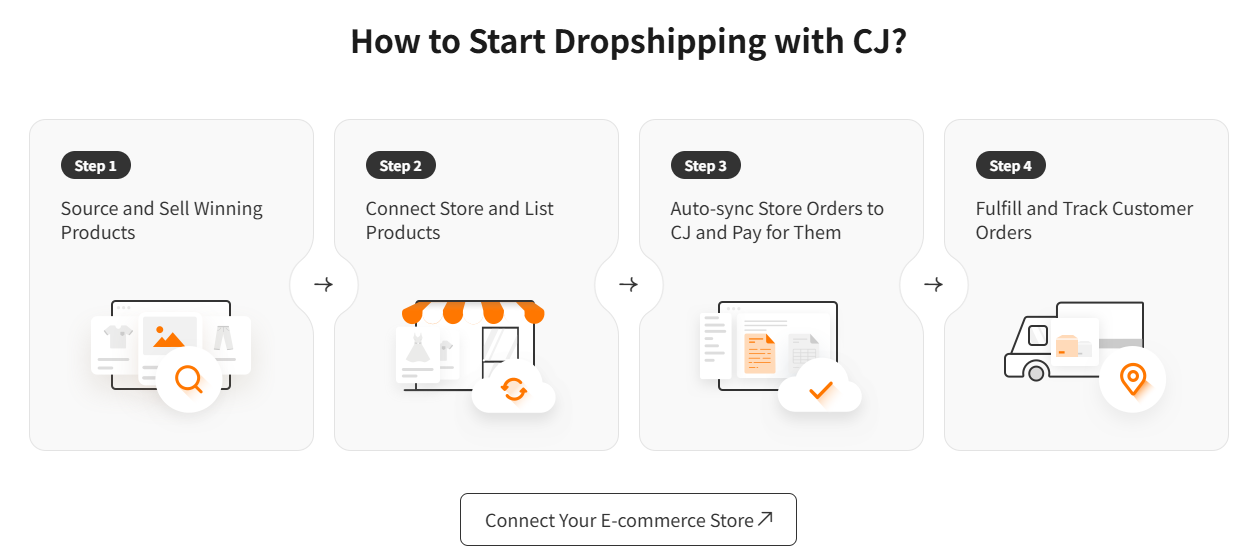
Overview: As discussed, CJdropshipping is an all-in-one dropshipping solution that handles product sourcing, warehousing, and fulfillment for you. It’s free to use (no subscription; you pay per product/shipping).
Strengths:
-
Wide Product Range & Sourcing Service: CJ offers hundreds of thousands of products in its catalog and will source almost any product you request if they don’t have it. This means access to virtually any item you see trending.
-
Global Fulfillment Network: CJ has warehouses in the US, Europe, China, and more, allowing fast shipping (as quick as 3-7 days) to many markets by shipping from local stock. It can significantly cut delivery times and even let you advertise “Ships from USA” on your store for certain items.
-
Automation & Integration: CJ integrates with Shopify, WooCommerce, eBay, Amazon, TikTok Shop and other platforms. You can sync products and orders easily, with automatic inventory updates and tracking info pushing to customers. This saves you time and reduces errors.
-
Branding & Customization: CJ supports white-label dropshipping – they can use neutral packaging or even custom branded packaging that you design. They also offer print-on-demand and product customization services. This helps you build a brand identity (e.g., include your logo or a thank-you card in orders).
-
Quality Control & Support: CJ conducts quality checks and has agents that communicate with suppliers. The risk of defective or fake products is lower. If issues arise, CJ’s support is there to resolve them quickly, acting as your advocate with manufacturers. This is more seller-centric than Temu’s generic support.
-
No Upfront Cost: You don’t pay to list items or any monthly fee (unless you opt into something like CJ’s optional paid services). This makes it easy to try out.
Weaknesses:
-
Learning Curve: CJ’s interface, while powerful, can be a bit overwhelming for newcomers. It has many features and options which require some learning. It’s not as “simple” as just shopping on a retail app. However, CJ provides tutorials and once you get used to it, it’s straightforward.
-
Shipping Costs Visible: CJ separates product price and shipping cost. Sometimes new dropshippers are surprised that a product might be $2 but shipping $5, making total $7. With Temu, you see one price with free shipping. On CJ, you have to factor in shipping. That said, the total cost can still be very low; it just requires understanding the logistics pricing.
-
Stock Dependency: If you rely on CJ’s warehouse stock, occasionally items can run out if demand surges. CJ is usually quick to restock, but there might be short gaps. They do notify you and you can often work around it or preorder inventory. It’s just something to monitor (though this is a concern with any supplier, including AliExpress sellers).
Use Case: CJdropshipping is ideal if you’re ready to streamline and scale your business. It’s a top choice for those wanting to reduce shipping times, add branding, and automate operations. Many dropshippers graduate to CJ after starting on AliExpress or Temu. It’s also great for multi-channel sellers (since it integrates with eBay, Amazon, etc., where using Temu would be a no-go). Overall, CJ is a natural next step if you want reliability and partnership in your supply chain.
2. AliExpress (with Dropshipping Tools)
Overview: AliExpress is a well-known marketplace that has long been the backbone of many dropshipping businesses. It’s essentially the “classic” dropship supplier.
Strengths:
-
Huge Selection: AliExpress has millions of products from thousands of sellers. You can find almost anything, from electronics to fashion to obscure niche items. This breadth is great for testing and scaling product offerings.
-
Competitive Prices: While not always as low as Temu on every item, AliExpress prices are generally low and there’s competition among sellers which can drive prices down. You can often find multiple sellers for the same item and choose the best price or service.
-
Established Dropshipping Ecosystem: Perhaps AliExpress’s biggest advantage is the mature ecosystem around it. Tools like DSers, AliDropship Plugin, Oberlo (historically), etc., make importing products and fulfilling orders extremely easy. Automated ordering, one-click import, bulk order processing – all available with AliExpress. This massively reduces your workload compared to manual methods.
-
Supplier Communication: You can communicate with AliExpress sellers directly to ask questions, request bulk pricing, or ensure they don’t include invoices. Some sellers are aware of dropshipping and will cooperate (like using neutral packaging). Building a relationship with a good supplier can lead to priority service or custom requests.
-
Buyer Protection: AliExpress’s dispute system protects you if customers report not receiving goods or if items are not as described. It’s an escrow system – sellers get paid only when you confirm receipt (or after a time). So sellers have incentive to fulfill properly, and if not, you can often get a refund, which you can pass to your customer.
Weaknesses:
-
Shipping Times (if not optimized): Without selecting faster options, some AliExpress shipments can be slow (20-30 days). This is mitigated by choosing the right sellers/shipping or using ePacket/warehouse items, but it requires attention. There’s also variability – one seller might ship in 3 days, another in 10 days.
-
Quality Variance: AliExpress is an open marketplace; quality can range from excellent to awful. You have to vet suppliers via ratings and order samples if possible. There are fakes on AliExpress too, though they’ve cracked down somewhat. Still, due diligence is required.
-
No Unified Branding: Each AliExpress seller ships their own way. If a customer orders two different products from two Ali sellers, they’ll get two packages at different times. You don’t have the unified fulfillment that CJ or an agent could offer by combining items. You’re basically managing multiple mini-suppliers.
-
Customer Awareness: AliExpress is known to some consumers (less so than Amazon or eBay, but people who have seen the name might realize it’s cheap Chinese goods). However, because packages are usually unbranded, the customer might not know it came via AliExpress. It’s not as obviously branded as Temu.
Use Case: AliExpress is great for beginners to get started with minimal fuss, thanks to the integration tools. It’s also useful for niche or unique items you can’t find on aggregated platforms. Many continue to use AliExpress for long-term for certain products, especially if they find a reliable seller. If you’re not ready for an agent like CJ, AliExpress is the next best thing to source widely. Just be prepared to manage multiple suppliers and ensure the ones you use are dependable. It’s a bit like the bazaar of dropshipping – lots of choice, but you must pick wisely.
3. Spocket
Overview: Spocket is a platform that connects you to vetted suppliers (mostly in the US, Canada, EU, UK) who are willing to dropship their products. It’s more curated and quality-focused.
Strengths:
-
Fast Shipping & Local Suppliers: The big draw is that 80% of Spocket suppliers are in the West. This means shipping times of 2-7 days are common for U.S. or EU customers because products ship from within the same country or region. It enables you to compete with Amazon-like delivery speeds.
-
High-Quality Products: Suppliers on Spocket are usually independent brands or manufacturers offering quality goods, often not found on AliExpress. This can differentiate your store with unique items (e.g., handmade jewelry from a U.S. artisan, natural cosmetics from a Canadian company, etc.). It moves you away from the generic “cheap stuff” image.
-
Branded Invoicing: Spocket allows you to generate invoices/packing slips with your store’s logo/name on them, which suppliers include in the shipment. This keeps your branding front and center even though a third party ships the item.
-
Integration: Spocket integrates with Shopify, Wix, WooCommerce and more, making it easy to import products and sync orders. Like CJ and AliExpress apps, Spocket automates fulfillment to a large degree.
-
Supplier Vetting: Spocket claims to vet suppliers for product quality and reliability, so you’re less likely to encounter fraud or extremely poor service. There’s some assurance of legitimacy which you don’t have on a free-for-all marketplace.
-
Customer Support: Since you’re paying for Spocket, they provide decent support if you encounter issues with suppliers, acting as an intermediary if needed.
Weaknesses:
-
Monthly Fee: Spocket is a subscription service. The pricing plans can range roughly from $29 to $99 per month (with various product limits). This is an extra cost you must account for, and it only becomes worth it if you’re making enough sales to cover it.
-
Higher Product Costs: Because these are often premium suppliers in high-cost countries, the product base prices are higher than China-sourced goods. Your margins might be slimmer or your retail prices higher. You’re paying for quality and quick delivery, so it’s a trade-off.
-
Limited Catalog: Spocket has on the order of tens of thousands of products, much fewer than AliExpress/Temu. Depending on your niche, you might find only a handful of suppliers. It’s growing over time, but if you’re in a very specific niche, Spocket’s selection could be lacking. It’s great for trendy apparel, accessories, home decor, etc., but if you’re looking for, say, a niche electronic component, Spocket likely won’t have it.
-
Supplier Communication: You typically don’t talk directly to Spocket suppliers (it’s somewhat anonymous). Everything is through Spocket’s interface. That’s convenient, but if you wanted to negotiate something custom, it’s not as straightforward as messaging an AliExpress seller or working with CJ.
Use Case: Spocket is ideal for those who want to build a brand with faster shipping and are willing to pay for it. If your store’s value proposition is quality and quick delivery (and you target customers who are okay paying a bit more for that), Spocket can give you an edge. It’s popular for boutique fashion stores, beauty products, and gift items – basically things where customers expect a nicer experience and aren’t just bargain hunting. It’s also a good complement: you might source some products from Spocket (for speed on key items) and others from elsewhere. For someone burnt out on long shipping times and customer complaints, switching some bestsellers to Spocket suppliers can improve reviews and repeat purchase rates.
4. EPROLO
Overview: Eprolo is another dropshipping fulfillment platform similar in concept to CJdropshipping. They offer product sourcing, global warehouses, and an app to integrate with stores.
Strengths:
-
All-in-One Service: Eprolo combines product sourcing, automated fulfillment, and branding options (like print-on-demand and custom packaging) similar to CJ. It’s also free to use with no subscription.
-
Large Catalog: They have many products listed and also allow sourcing requests. Their catalog spans fashion, electronics, home goods, etc..
-
Global Warehouses: Eprolo has warehouses in the US, UK, EU, and Australia, which means they can store products for you and ship domestically to cut times. They explicitly advertise faster shipping through their warehouses.
-
Branded Packaging: Eprolo has a branding project where you can get custom logos on packaging and inserts once you accumulate a certain number of orders. They aim to help you build your brand identity just like CJ does.
-
Integration: It integrates with Shopify, WooCommerce, etc., for easy product import and order sync.
-
Special Features: Eprolo has an interesting feature where you can find products by image. They suggest you can take a Temu product image and search Eprolo for the same item. This is a nifty way to transition from Temu: find the product on Temu, then quickly locate it on Eprolo to use for fulfillment – leveraging Temu’s research but Eprolo’s fulfillment.
Weaknesses:
-
Less Known Entity: Eprolo is not as widely known or used as CJ, so community support and documentation might be less. However, it’s been growing and many have had success with it.
-
Potential Shipping Costs: Like CJ, shipping isn’t free. You’ll need to evaluate the total cost. Eprolo’s pricing is competitive though, often on par with CJ or AliExpress.
-
App Maturity: Some users have reported minor bugs or a less refined UI compared to bigger players, but Eprolo generally works fine. They are continuously improving.
Use Case: Eprolo is a solid alternative to CJdropshipping – if for some reason CJ doesn’t have what you need or you want to diversify suppliers. Its feature set is similar: good for scaling, branding, and automating. One might choose Eprolo if they prefer some of its interface or specific integration. Also, Eprolo might have different product offerings or warehouse availability that could benefit you in certain niches. For example, they might have more suppliers in a certain category or faster shipping to certain countries. It doesn’t hurt to install and browse both CJ and Eprolo to see which you like better or even use both concurrently for different products.
5. Alibaba (for Bulk & Private Label)
Overview: Alibaba is a marketplace for manufacturers and wholesalers, typically for bulk buying. While not a dropshipping platform per se, it’s the next step if you want to scale a product with your own branding or buy in volume.
Strengths:
-
Lowest Unit Costs: Buying direct from factories in larger quantities (even modest MOQs of 50 or 100 units) can dramatically cut your cost per unit compared to single-item dropshipping. This boosts your profit margins if you have a proven seller.
-
Customization: On Alibaba, you can find a manufacturer to create custom or private label products. This means you can have your brand name printed on the product or packaging, or even have a product manufactured to your specifications. This is how you create a truly unique brand. For example, you find a popular gadget you’ve been dropshipping – you could contact an Alibaba supplier to produce it in a custom color or with an added feature exclusive to your brand.
-
Supplier Relationships: You can build direct relationships with factories which can lead to better payment terms, priority production, and a more stable supply chain. Over time, you might move from dropshipping to a hybrid model where you stock inventory at a 3PL for faster shipping.
-
Bulk Dropshipping: Some Alibaba suppliers are open to dropshipping arrangements or small-batch shipping. You might negotiate with a supplier to hold your branded inventory and ship orders one by one (effectively acting like CJ does, but exclusively for your brand).
-
Quality Control: Because you’re in direct contact, you can arrange pre-shipment inspections, request sample batches, and ensure quality is consistent. It’s a more controlled process than randomly buying from various AliExpress sellers.
Weaknesses:
-
Higher Upfront Investment: Alibaba typically requires MOQs (minimum order quantities). This could be anywhere from 10 units to 1000+ units depending on the product. This means you need to invest capital in inventory. It moves you out of pure dropshipping’s no-inventory model. If the product doesn’t sell as expected, you could be stuck with inventory.
-
Longer Lead Times Initially: Manufacturing and shipping bulk can take time. Getting a private label product might have a production lead time of 2-4 weeks plus sea shipping of 4-6 weeks (if you ship by sea to save cost). You’ll need to plan around that or pay for faster shipping.
-
Logistics: If you order bulk, you then need to fulfill orders yourself or use a fulfillment center. You basically become an e-commerce retailer with inventory. This requires setting up infrastructure (though many 3PL fulfillment centers can connect to your store and handle it for you, akin to how FBA works for Amazon).
-
Not for Testing: Alibaba is not for trying out an unproven product. It’s best for when you have a validated winning product and you’re confident in continuing to sell it.
Use Case: If you’ve been dropshipping (from Temu or others) and discover a clear winner that sells in high volume, Alibaba is the gateway to brand it and improve margins. For example, say a pet gadget from Temu sold like hotcakes on your store. You could find a factory on Alibaba to make the same gadget with your logo, maybe even tweak the design to differentiate from competitors. Then order, say, 500 units and send to a U.S. warehouse. Now you can advertise your exclusive brand product, with 3-5 day delivery, potentially listing on Amazon or retail channels too. This is how many big dropshipping success stories evolve – they start with dropshipping to validate, then transition to a brand by sourcing in bulk. It’s not an “alternative” to Temu for day-one beginners, but it’s the evolutionary alternative once you outgrow basic dropshipping.
6. SaleHoo and Wholesale Directories
Overview: SaleHoo is a paid directory of vetted wholesale suppliers and dropshippers. Similar directories include Worldwide Brands, Doba, etc.
Strengths:
-
Reliable Suppliers: SaleHoo lists over 8,000 suppliers that have been screened. These include dropshipping-friendly wholesalers from USA, UK, China, etc.. By using the directory, you avoid scam suppliers and you often get access to suppliers who don’t advertise publicly.
-
Diverse Products: You can find suppliers for branded goods, niche specialties, and more. For example, a supplier of authentic sports jerseys in the US, or an electronics wholesaler offering dropship programs. These might be items not available on AliExpress or Temu.
-
Direct Accounts: Once you identify a supplier on SaleHoo, you typically will need to create an account directly with them (maybe show business documents). It’s a more professional B2B relationship, which can be good for long-term stability.
-
No Middleman Markup: When you go direct to a supplier (found via SaleHoo), you’re likely getting better pricing than through a middleman. Some dropshipping suppliers found here might offer lower prices or bulk discounts as you grow, since you work with them directly, not through a platform that takes a cut.
Weaknesses:
-
Membership Cost: SaleHoo has a membership fee (around $67/year). Other directories have various pricing. It’s not huge, but it’s a cost to consider and only worth it if you use the resource.
-
Manual Process: Unlike an app, you usually don’t have a one-click import. You have to get product data from the supplier (maybe CSV files or manual entry) and also send orders to them, possibly via email or their portal. It’s less automated, unless the supplier has an API or you use a generic inventory management software. This can be a bit of work to set up.
-
Supplier Requirements: Some wholesalers may require proof of business (like a reseller license or company registration) and may not dropship single units unless you establish an account. It’s not as accessible to a casual newcomer compared to just using an app or marketplace.
-
Variable Quality: While vetted, the suppliers can still vary in terms of service speed, product range, etc. You have to research each and perhaps test them out.
Use Case: If you are looking for specific products or more reputable supply, a directory like SaleHoo can help. It’s particularly useful if you want to sell brand-name products (e.g., real Nike shoes – finding authorized distributors) or other items that aren’t on Chinese marketplaces. It’s also a gateway to local dropship suppliers in various countries, which can reduce shipping time. For instance, you might find a US-based supplier of eco-friendly kitchenware who will dropship for you – that could be a unique addition to your store with fast shipping. This route is good for intermediate to advanced sellers who are fine dealing with B2B logistics and want to diversify from the typical AliExpress assortment.

These alternatives show that you have many options beyond Temu to build a resilient dropshipping business. A common strategy is to start lean with AliExpress/CJ and then expand or upgrade to faster suppliers or direct sourcing as you grow. There’s no one-size-fits-all; some sellers succeed using just one platform, others use a combination. For example, you might use CJdropshipping for core products, Spocket for a few premium items, and AliExpress for some filler niche items. The key is finding reliable sources that align with your brand’s promise to customers (be it lowest price or fastest shipping or highest quality).
In the end, dropshipping in 2026 is about providing real value – simply exploiting a price difference on Temu might work short-term, but to thrive long-term, focus on curating great products, marketing them well, and ensuring a good customer experience. Choosing the right suppliers plays a huge role in that experience.
Final Tip: Continuously evaluate your suppliers’ performance – monitor delivery times, defect rates, customer feedback – and don’t hesitate to switch or invest in better solutions as your business evolves. The landscape of platforms and policies (like the de minimis rule changes or Temu’s own adjustments) will keep changing. Staying agile and having multiple reliable sourcing options is the best strategy to mitigate risk and capitalize on opportunities in the dropshipping world.