
Why Picking the Right POD Platform Matters in 2026
The print-on-demand (POD) industry is booming. In 2024 the global POD market was valued at $10.2 billion, with analysts projecting it will reach nearly $103 billion by 2034 (a ~26% CAGR). This explosive growth is driven by consumer demand for customization: 81% of shoppers say they prefer brands that offer personalized products. Apparel remains the dominant POD category, but home décor is fastest-growing – with home-goods printing (pillows, canvases, mugs, etc.) growing at ~28% annually.
For beginner ecommerce entrepreneurs and Shopify merchants in 2026, choosing the right POD partner is crucial. The platform you pick will determine what products you can sell, how quickly orders are fulfilled worldwide, what profit margin you earn, and how much effort is needed to integrate and scale. With dozens of POD services out there, it’s important to compare key features side by side. In this guide we cover nine major global POD platforms – Printful, Printify, CJdropshipping, Gelato, Gooten, Teespring/Spring, SPOD (Spreadshirt), Zazzle, and Redbubble – focusing on apparel and home decor products. We examine each service’s catalog, pricing, print quality, shipping speed, branding options, Shopify integration, pros and cons, and more. Where available, we cite data and industry benchmarks to help you make a data-driven decision.
Key Criteria for Evaluating POD Platforms
When comparing POD platforms, consider several critical factors:
-
Product Catalog & Customization: How many products and categories (t-shirts, hoodies, mugs, pillows, etc.) can you design? Can you print all-over designs or only front-only? Do they offer special items (e.g. all-over print leggings, backpacks, wall art, etc.)?
-
Pricing Structure: What are the base costs of products? Is there a monthly subscription (and what perks does it offer)? How does shipping pricing work (flat rate vs per-item)? Are there volume discounts?
-
Print & Product Quality: Does the platform have good reviews for print sharpness, color accuracy, and durable inks? Do they use high-end printers (DTG, dye sublimation, embroidery)? Are products sourced from well-known brands?
-
Fulfillment Speed & Coverage: How fast are fulfillment and shipping (particularly to your target markets)? What regions or countries are supported? Are there global production partners or regional warehouses to speed delivery?
-
Branding & White-Label Options: Can you use custom pack-ins, labels, or branded tracking pages? Do shipments arrive in unbranded or custom packaging so customers see your brand rather than the POD provider?
-
Shopify (and other) Integrations: Is there an official Shopify app? How easy is it to sync products, place orders, and manage tracking? Does it support multi-channel selling (Etsy, Amazon, social shops, etc.)?
-
Customer Support & Reliability: Are there robust support channels, clear policies, and a stable service? Platform choice affects customer satisfaction and your workload.
Printful
Overview & Key Features: Printful is a market leader in POD, known for high quality and reliability. It operates its own production facilities in the US, Europe, and other regions, producing a wide range of custom products on demand. Printful directly fulfills orders (no middlemen), giving it tight control over quality and brand consistency. It offers built-in mockup/design tools and handles the entire flow – from printing to customer shipping – so sellers focus on design and marketing.
Product Catalog: Printful advertises 443 premium products. These cover apparel (men’s/women’s t-shirts, hoodies, sweatshirts, leggings, etc.), accessories (hats, bags, masks), and home goods (pillows, mugs, posters, canvas prints, rugs, etc.). Many of these are brand-name garments (e.g. Bella+Canvas, Gildan), and Printful continually expands its lineup. The catalog has particularly strong offerings in apparel and popular items like embroidered hats or all-over-print (AOP) clothing.
Pricing Structure: There is no monthly fee to use Printful’s service – you pay only the base cost per item and shipping. Printful’s base prices tend to be higher than some alternatives, reflecting its higher-quality supplies. However, Printful offers an optional Printful Pro ($49/month) plan that unlocks mockup tools and tiered discounts on fulfillment. (Note: We did not find a 2026 change to pricing – it remains free to get started.) Shipping is charged per order; domestic US flat-rate shipping is typically around $3–5 for apparel, and international rates vary (US→Europe ~$10–15, etc.). Printful also provides a breakdown of shipping costs by category on its site.
Print Quality: Printful is widely regarded for excellent print quality. Because it owns its factories, it can ensure consistency: DTG prints are sharp, colors are vibrant, and embroidery is neat. As one analysis notes, Printful’s in-house production lets it “control product quality more easily” than a distributed network. Their quality control catches defects before shipping. Overall, sellers report very few customer complaints about Printful product quality (especially on apparel).
Shipping Speed & Coverage: Printful’s average production time is about 2–5 business days. In practice, “over 97% of orders ship within 5 business days” (more than half ship in 3 days or less). After fulfillment, standard US domestic shipping takes ~3–4 business days (1–3 days via Express). So a US order typically arrives in under a week. For Europe, Printful has facilities in Latvia and Spain: EU orders are similarly ~5–7 days after production. Printful ships to 100+ countries worldwide (it only omits a few sanctioned regions). Note that shipping is separate from production time – you should add both. Overall, Printful is among the faster PODs, especially for North America and Europe.
Branding Options: Printful offers a number of white-label features. Sellers can add custom pack-ins (stickers, flyers, etc.) and use printed packaging to include branding. There are also custom inside labels, outside labels, and pack-ins (all for an extra fee) as well as a free option for a generic tracking page. In short, you can mostly remove Printful branding on products and packing. (Printify has similar neck label options, but Printful’s in-house approach gives more polish.)
Shopify Integration: Printful has a fully featured Shopify app and integrates seamlessly with Shopify. Setting it up is straightforward. You can sync Printful products (with your designs) into Shopify and have orders auto-fulfilled. The Shopify community generally finds Printful easy to use; for example, Printful can automatically calculate shipping, and its dashboard neatly manages orders and variants. Reviews note that Printful’s integration "is fairly easy to use" with Shopify (although we rely more on official statements). In short, Shopify beginners can add Printful to their store in minutes.
Pros: High product quality and consistency; large product range (443 items); robust mockup/design tools; global fulfillment centers for good shipping times; strong brandability (white-label packing); no upfront cost; one of the most established, reliable POD companies.
Cons: Above-average base costs (can squeeze profit margins); print-run minimums of 1 per order (no bulk discounts); relatively fewer truly unique items (mostly apparel + common home goods); extra tools require monthly fee (Pro plan); fulfillment speed is good but not “lightning-fast” (2–5 days).
Printify
Overview & Key Features: Printify is a POD marketplace, not a manufacturer. It connects you to hundreds of independent print providers worldwide, each offering different products. You create a design and product on Printify, then Printify routes orders to the appropriate partner (based on location or price). This model yields enormous variety.
Product Catalog: Printify advertises 1,300+ products spanning apparel (tees, hoodies, leggings), accessories, drinkware, and home decor (pillows, blankets, shower curtains, wall art, etc.). Because it has many providers, its selection is vast. For example, multiple pillow types, eco-friendly garments, and specialty items (like flip-flops or pet beds) may be available. A comparison notes “Printify’s selection is entirely POD products… still substantial for a home-goods shop”. In practice, Printify often leads in sheer variety, and filters let you find items by product type or region.
Pricing Structure: Printify is free to start. (No monthly fee to use the platform.) It offers a Premium plan ($29/month) that grants up to 20% off base prices on most items – useful if your volume is high. Otherwise, each item’s base cost depends on the chosen print provider. Generally, Printify’s costs are lower than Printful’s for similar products, since many providers are based in Asia or Eastern Europe. Shipping is added per order; providers set rates (often flat by region). Because you choose the provider, you can often pick lower shipping or free shipping options.
Print Quality: Quality varies by provider on Printify. Since it’s a network, some printers use top-tier equipment (vibrant, durable prints) and some are less consistent. Reviews consistently warn that “print quality can be variable” with Printify. On the plus side, Printify lets you view supplier ratings and select “Printify Premium” high-rated vendors. It also offers a “Quality Promise” for replacements if there’s an issue. As one comparison found, Printify prints can be very vibrant when a top provider is chosen, but one’s experience may require trial and error. In summary, quality can be excellent or mediocre depending on the vendor. Ordering samples is highly recommended so you can find the best providers for your designs.
Shipping Speed & Coverage: Shipping time on Printify depends on your chosen printer. Many providers are international, so shipping can range from 3–7 business days (for US/EU printers fulfilling US/EU orders) up to 10–20+ days from overseas producers. For example, Printify states US deliveries often take 2–8 business days domestically, but 15–20+ for Asia→US. In practice, you can often find fast options: Printify has local print shops in the US and EU, so you can select a nearby facility to minimize transit time. By carefully choosing providers, Shopify sellers often see ~4–7 day US shipping from US-based printers. Printify ships worldwide to 200+ countries. Overall, fulfillment is typically a bit slower than Printful (because you may get a split shipment if items come from different vendors), but competitive if you plan wisely.
Branding Options: Printify offers basic branding: many providers allow custom neck labels or inside labels for apparel (prices start around $0.55). You can also add packing inserts (thank-you cards, branded stickers) with some providers. However, Printify does not control the actual packaging – orders ship in plain or provider-branded mailers, unless you bundle separately. (This is a limitation: only select premium printers might offer some pack-in services.) Compared to Printful or CJ, Printify’s white-label options are more limited, since third-party printers do their own shipping.
Shopify Integration: Printify has an official Shopify app and integrates well. It syncs products you create on Printify into your Shopify store. Orders placed on Shopify are automatically sent to Printify. Setup is quick, and Printify even has a one-click “Mockup Generator” for listing images. User feedback generally finds the integration straightforward, though with slightly more steps (choose provider, check settings) than Printful. Printify also connects to Etsy, WooCommerce, and more.
Pros: Massive product selection (1300+ items); highly competitive base prices; strong for international sellers (choose nearby printers); no minimums or fees (free to use); optional Premium plan for discounts; easy Shopify/marketplace integration.
Cons: Quality inconsistency (varies by supplier); shipping times vary widely (requires management); support can be spotty across many vendors; less cohesive branding/packaging; some sellers find the interface a bit cluttered due to many providers.
CJdropshipping
Overview & Key Features: CJdropshipping (CJ) is best known as a large dropshipping company based in China, but it has expanded to offer print-on-demand as well. It is an “all-in-one dropshipping solution” with global warehouses and a newly added dedicated POD function (“You Sell, We Print”). CJ is unlike pure-POD players: its catalog includes both standard dropship products and POD merchandise. This means you can easily add POD items alongside other inventory on CJ.
Product Catalog: Hugely diverse. CJ’s entire catalog contains over 400,000 SKUs in 13+ categories, including home décor. In practical terms, CJ offers everything from apparel (t-shirts, hoodies, leggings) to electronics to unique home items. For POD specifically, CJ’s app shows many decor items like printed pillows, canvas wall art, blankets, lamps, and more. In fact, CJ’s catalog dwarfs most POD-only services – the CJ review notes “CJ has 400k+ SKUs versus Printify’s ~1300”. This massive range means niche stores can find unusual products to customize. One CJ store owner even points out that if something isn’t listed, CJ’s sourcing agents can import products from Alibaba to make them POD-printable.
Pricing Structure: CJ is free to use (no monthly fee). Base product prices are typically very low, since most printing is done by factories in China. Shipping has various options: CJ provides its own CJPacket lines (discounted bulk shipping), plus USPS, DHL, etc. CJ frequently highlights that its U.S. warehouses enable “lightning-fast US delivery (3–6 days)”. For domestic (US) orders stocked in a US warehouse, shipping can be as fast as 3–6 business days. CJPacket (from China) is generally 7–12 days to the US – still much faster than typical ePacket. There are no extra platform fees, but obviously you cover product + shipping costs. CJ’s pricing is extremely budget-friendly, particularly for high-volume or heavy items (e.g. large decor).
Print Quality: CJ works with vetted Chinese factories. According to user tests, CJ’s print quality is good for the price. Colors on canvas prints and pillows tend to be vibrant and consistent, and fabrics feel serviceable. They also offer a built-in quality control service: CJ inspects POD items before shipping to ensure standards are met. One user reported that CJ’s quality “exceeded expectations” on a sample pillow order. Of course, Chinese production means quality can vary slightly between batches, but overall CJ’s output is solid. For home décor categories especially, CJ delivers “reliable quality at great value”. (As with any POD, ordering samples is wise.)
Shipping Speed & Coverage: CJ truly excels in logistics. It has warehouses in China, the US (NJ and CA), and EU countries. If an item is in CJ’s US stock, it typically arrives in a US customer’s hands in about 3–6 days (nearly Amazon-Prime speed). For Europe, CJ routes through EU warehouses for similar speeds. If an item isn’t in a US/EU warehouse, CJ ships from China via its CJPacket line, which averages 7–12 days to the US – still much faster than many Asian dropship alternatives. CJ’s own blog even touts “lightning-fast US delivery (3–6 days)”. In summary, CJ’s global warehouse network and shipping lines make it one of the fastest options for US/EU customers. (A CJ help article confirms CJPacket to the US in 7–12 days, and USPS+ from US stock in 2–7 days.)
Branding & White-Label: CJ is notably “private label friendly”. Sellers can ship items with no CJ branding. CJ offers extensive custom branding options: you can request custom logos on products, branded packaging boxes, inserts, and even customized labels. CJ’s Custom Packaging service allows you to design your own box/packaging inserts. They will print your logo on the exterior of packages and include custom thank-you cards or business cards inside. In fact, CJ advertises “video shooting” and other listing media services, emphasizing pro-grade branding and presentation. In short, CJ supports putting your brand on everything, much like Printful’s white-label. This is a big plus if you want a fully white-label experience.
Shopify Integration: CJ has an official Shopify app that automates order syncing. Once connected, orders placed on Shopify are forwarded to CJ for fulfillment (like Printful). The app also works with WooCommerce and other platforms. Many Shopify merchants appreciate CJ’s seamless integration and order management. In practice you push products (with your designs) to CJ’s app and they fulfill automatically. It’s one of the few full dropshipper-POD hybrids with strong Shopify support.
Pros: Enormous product selection (400k+ SKUs), including unique home décor and hard-to-find items; extremely low base costs (good for budget stores); fast US/EU shipping via local warehouses (US 3–6 days); free to use (no subscription); strong white-label branding (custom packaging, logos); extra dropshipping services if needed (photography, product sourcing).
Cons: Less transparent interface – the site is geared to Dropshippers, not all POD sellers; CJ is a Chinese company (language/support can be different); returns can be tricky from overseas; mainly FYI: some vendors see CJ as more technical to navigate than Printful. Overall, CJ is ideal if you need breadth of products, low costs, and fast US shipping.
Gelato
Overview & Key Features: Gelato is a global POD platform with an extensive international network. It partners with 100+ print locations in over 30 countries, letting each order be fulfilled close to the customer. Gelato’s pitch is “local printing, global reach.” It offers a wide range of items, focusing on art prints and general merchandise. Gelato also emphasizes sustainability (paper from certified sources, carbon tracking).
Product Catalog: Gelato’s catalog is not as vast as Printful or Printify, but it covers key categories. It includes apparel (basic tees, sweatshirts), home décor (canvas prints, posters, pillows, mugs, tapestries), stationery (notebooks, greeting cards), and accessories (tote bags, phone cases). Gelato’s specialty is wall art and custom prints – for example, it prints canvases, framed posters, and art prints on demand. It also offers some unique items like calendars, puzzles, and photo books.
Pricing Structure: Gelato is free to use; there are no platform fees. They do have subscription tiers: a free plan, Gelato+ ($24/month) for discounted rates, and a custom enterprise plan for high volume. Base product prices are generally competitive – often similar to Printful’s pricing on prints. Shipping is calculated per order. Because Gelato uses local printers, domestic deliveries often have only a $5–10 shipping fee for small items, and prints are shipped rolled or in tubes for reasonable cost. (Gelato also handles customs/DUTY DDP for certain regions, making selling globally easier.)
Print Quality: Gelato products are made by professional print houses (often the same ones used by retailers). Quality is generally high, especially for art prints. Colors on canvases and posters are typically very good (one example: a tee-shirt to the US took <6 days and arrived with excellent print). Because Gelato doesn’t own all facilities, quality can vary by location, but the platform’s algorithm usually routes orders to a nearby shop with good track records.
Shipping Speed & Coverage: This is Gelato’s strength. With over 100 partners, Gelato ships to 200+ countries. Because of local print sites, many orders arrive in just a few days. For example, Gelato says certain orders can be delivered in ~72 hours when there’s local capacity. In testing, a crew-neck T-shirt printed via Gelato arrived in under 6 days to a US address (with a 4-day option). Standard shipping times are roughly 4 business days to the US, 5-6 to Europe; express options (if you pay more) can cut this in half. In short, Gelato’s global network means fast delivery for most markets. It also offers robust tracking and carbon-neutral shipping options.
Branding & White-Label: Gelato allows some branding: sellers can include a thank-you note or branded packing slip at no extra cost. (I.e. you can attach a custom note to each order.) True branded packaging (custom boxes) is not yet a core feature, but they do allow low-cost inserts and cards. The emphasis is less on luxury white-label and more on convenience.
Shopify Integration: Gelato has a strong Shopify app. Integration is straightforward: you push your design/product to Gelato’s catalog, sync it to Shopify, and then orders flow through. Setup is quite user-friendly. Gelato also integrates with WooCommerce, Wix, Etsy, and other channels. Users often praise Gelato for its “set it and forget it” global shipping; once set up, orders are automatically routed to the nearest printer.
Pros: Extremely fast global fulfillment (local printing, often 3–6 days); sells worldwide (200+ countries); eco-friendly focus; easy-to-use interface and reliable integrations; specialty in art prints and wall decor. Good choice if you have an international audience.
Cons: Smaller apparel range than Printful/Printify; base prices can be slightly higher on some apparel; limited to mostly direct-to-garment and print items (no embroidery, no weird products like leggings by default); branding options are basic (few custom packaging features); shipping from local printers means it’s not always obvious which warehouse will fulfill.
Gooten
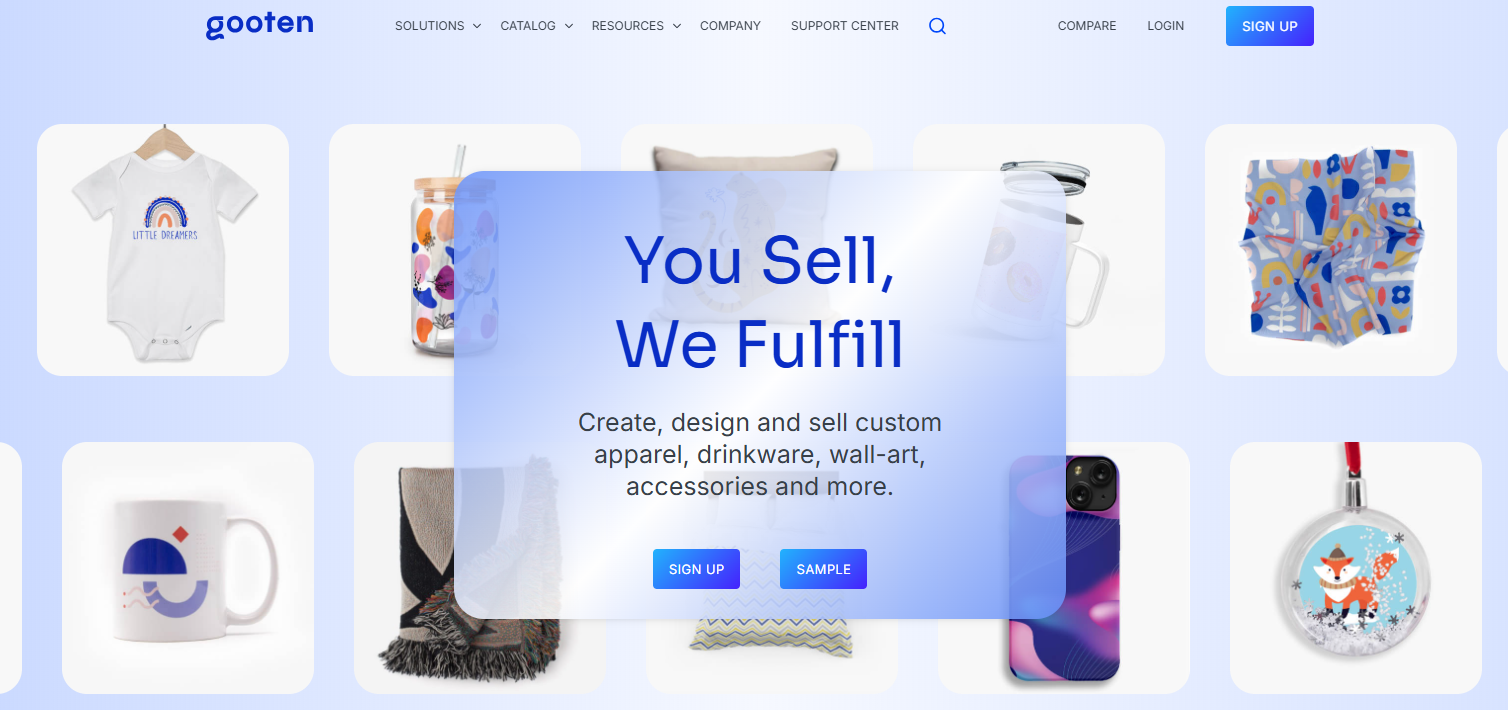
Overview & Key Features: Gooten is another POD fulfillment network, similar to Printify but smaller and less famous. It works with various print partners mainly in the US and Europe. Gooten positions itself as a tech-driven fulfillment engine. It’s been around since ~2013 but has a more niche presence.
Product Catalog: Gooten offers about 500+ products. The main categories are apparel (t-shirts, hoodies), accessories (tote bags, socks, aprons), home goods (pillows, posters, duvet covers, towels), and tech accessories (phone cases). Gooten’s strength is a good variety of home decor and lifestyle items. For example, it offers photo blankets, lampshades, wall tapestries, and more that some competitors lack. A Shopify review notes Gooten has “home décor items” like quilts, tapestries, and posters. However, Gooten has fewer brand-name items; most products are generic blank items from its partners.
Pricing Structure: Gooten is free to use. Base prices are roughly in line with Printify or slightly higher. Because Gooten also works with multiple vendors, costs can vary by provider; in general, apparel is reasonably priced, and hard goods like blankets are mid-range. There’s no monthly subscription (Gooten simply charges per order). Standard shipping rates (flat by weight/destination) apply, typically $4-$6 for small items in the US and ~$8-$15 internationally.
Print Quality: Gooten’s print quality is generally reliable. A Shopify review says Gooten “produces very nice prints… and fast”. Fulfillment is performed by U.S.-based partners for many items, which yields crisp DTG prints and high-quality materials. Since Gooten doesn’t own the presses, quality can vary by item – some customers have noted slight variations in color, so sampling is still wise. In our research, Gooten’s prints (for example on pillows or wall art) tend to meet industry standards, and it offers unusual printing techniques (like custom engraved wood prints).
Shipping Speed & Coverage: Fulfillment time is typically 3–4 business days for most products. Gooten then ships via USPS/UPS domestically (3–7 days to US customers) and similarly to Europe. Gooten’s interface claims flat-rate shipping and shows estimates. One testimonial: “Gooten’s shipping is really good – even though some products come from outside the US, they arrived in 5–6 days”. In practice, Gooten is on par with Printful: orders to the US often arrive within about a week total. Coverage is broad (200+ countries), though shipping from US partners can mean slower delivery to distant regions unless a local partner is used.
Branding & White-Label: Gooten provides basic white-label services. You can add your logo to some products (like custom labels) and request packaged invoicing without Gooten branding. However, Gooten doesn’t have as many custom packaging options as Printful/CJ. You can include a seller-provided packing slip. They do not print custom boxes; shipments usually come in plain mailers or generic boxes.
Shopify Integration: Gooten has an official Shopify app. It syncs products and auto-processes orders. Setting up is straightforward, and you can manage multiple suppliers under one roof. Gooten also integrates with Etsy, eBay, and WooCommerce. In reviews, the Shopify experience is rated as “smooth,” with automated fulfillment. A downside: Gooten’s dashboard and product catalog are somewhat less polished than Printful’s, so beginners may need a bit of learning.
Pros: Good selection of home & lifestyle products (~500+ items); fast fulfillment (3–4 days); competitive pricing; solid print quality for most products; provides flat shipping; easy integration; user rating ~4.1/5 suggests reliable service.
Cons: Smaller brand presence and catalog than giants; limited branded packaging; fewer advanced design tools; customer support can be slower (some merchants report trouble reaching reps). A few products have long tails or can be back-ordered. But overall Gooten is a respectable mid-tier POD service.
Teespring / Spring
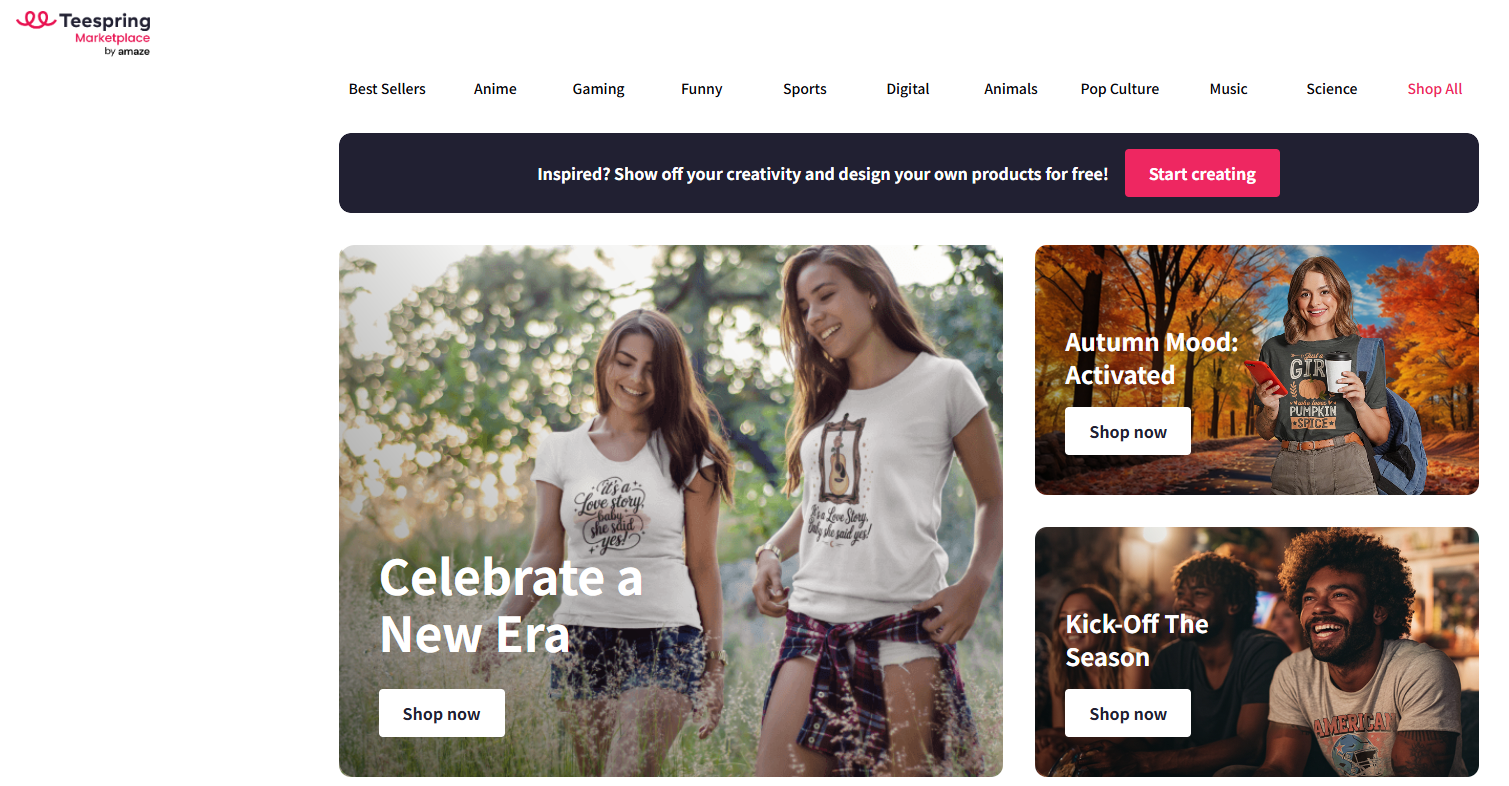
Overview & Key Features: Teespring (now known as Spring) is a bit different: it’s a creator-centric POD platform and marketplace. Originally it used a crowdfunding model, but today it lets anyone design products and sell them through Spring’s platform or linked social stores. Spring doesn’t emphasize integration with Shopify; instead, it provides its own online storefront and lets creators promote via social media. It operates its own printing facilities (recently closed a main one in Kentucky) and uses partners globally.
Product Catalog: Spring offers over 50 products. These include the usual apparel (t-shirts, hoodies, leggings, tank tops), plus a growing range of accessories (socks, backpacks, duffel bags) and some home decor (posters, pillows, mugs). Advanced sellers can unlock premium collections like AS Colour garments printed in the UK. The catalog is smaller than Printful or Printify, and very apparel-focused, but it does cover basic home decor like framed prints and blankets. Note: Spring’s product range expands with seller success (as you hit sales milestones, more item types become available).
Pricing Structure: Spring is free to use. There are no monthly fees; you simply set a markup on each item’s base cost. Spring’s business model is that they set a fixed base price per item, and designers add profit on top. For example, a standard tee’s base is ~$10–18 (depending on style). The seller’s profit is whatever they add above that. Volume discounts exist – selling more can lower base costs for the next month. But in general, Spring’s base prices are on the higher side (especially for specialty items), which can squeeze margins. Spring also charges for storefront domains ($12+/year for your own domain, or a higher price for in-platform stores).
Print Quality: Spring (Teespring) runs its own print shops, so quality is variable by location. Many creators find the prints satisfactory for casual apparel. However, there are enough complaints that Spring’s overall print quality has a mixed reputation. Some sellers warn of fading prints or peeling after wash. Spring does not publish print tech details, so quality assurance is less transparent. A Shopify blog review didn’t have precise data but noted that top sellers sometimes complain. In our summary, Spring’s print quality is decent but not class-leading – fine for novelty apparel, but not as consistently sharp as Printful or Printify’s best providers.
Shipping Speed & Coverage: Spring ships globally via its own logistics. Standard shipping in the US is often around 7–10 days, with an expedited 3–5 day option available. (Exact numbers aren’t publicly listed; anecdotal reports say US delivery ~1 week.) Because Spring is US-based, US orders are fastest, while international orders can be slower. A positive is that Spring is ramping up its EU fulfillment (currently through partners). In contrast to Printful or CJ, you cannot use Spring to supply a Shopify store – it’s a standalone platform, so these shipping times only apply to Spring’s own checkout. For a Shopify seller, Spring could only be used indirectly (e.g. link from a store to a Spring product page).
Branding & White-Label: Spring is not geared to white-label. Orders come in Spring-branded packaging, and there are no pack-in options for your branding. It’s a standard marketplace model: customers know they’re ordering from Spring. You cannot custom brand shipments, and Spring handles all customer communication.
Shopify Integration: None. Spring does not have a Shopify app. You cannot import Spring products into your Shopify store. Some users try workarounds (buy buttons linking to Spring), but that is not a native integration. Spring is intended to be a stand-alone storefront and social sales tool. If your goal is a branded Shopify store, Spring is not directly applicable.
Pros: 100% free with no inventory risk; wide product range (for apparel-focused platforms); built-in social media selling features (e.g. integrate with YouTube, Instagram, Twitch) making it easy for influencers; supports digital goods; offers a streamlined storefront and marketing support for creators; express shipping options.
Cons: High base prices reduce profit margins; minimal design/mockup tools; limited support; no Shopify integration; no sample discounts; lack of branding (no packaging customization); some seller trust issues (account freezes, reported order issues). Overall, Spring is best for creative individuals or influencers with a built-in audience who want an all-in-one solution, not for typical Shopify store owners.
SPOD (Spreadshirt Print-on-Demand)
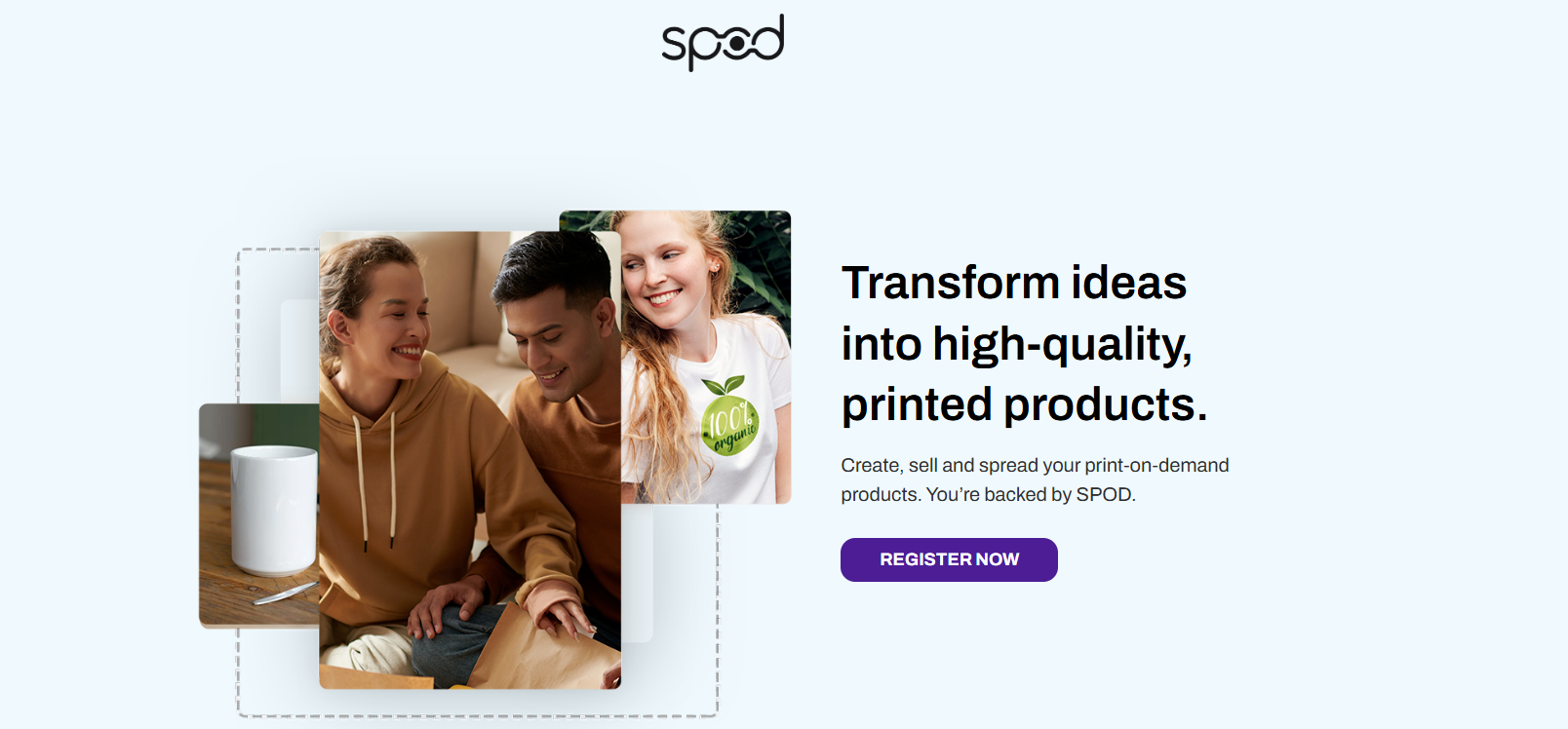
Overview & Key Features: SPOD (Spreadshirt’s on-demand arm) is built for speed and simplicity. It’s often called “Spreadshirt Print-On-Demand” or “Spreadconnect” on Shopify. SPOD promises ultra-fast fulfillment, leveraging a single centralized production network.
Product Catalog: SPOD’s catalog is more limited than Printful or Printify. It centers on apparel: organic cotton t-shirts, hoodies, sweatshirts, and basic accessories like aprons, tote bags, mugs, and socks. In fact, it boasts an “organic cotton” line. SPOD has a smaller selection of home/gift items (e.g. some cushions, but fewer than larger PODs). Expect about 50–80 products total (similar to Teespring’s range, but with a focus on basics).
Pricing Structure: SPOD is free to use (no subscription). Base costs are quite affordable; Spreadshirt leverages bulk sourcing. For example, an SPOD blank t-shirt might cost only ~$7–10. Shipping is based on total order value (not per item) – rates start around $3.99 for small orders. This “order-value” pricing means you can ship multiple items together at a flat rate, which is good for boutiques. Samples of all products are heavily discounted (20% off) – a perk SPOD touts that few competitors offer.
Print Quality: SPOD prints are reliably good. Spreadshirt has decades of experience, and their POD division uses professional DTG and screen-printing. Most customers report solid print durability and color fidelity. A technical detail: 95% of SPOD’s orders are processed within 48 hours, meaning they crank out prints quickly. The print process (DTG or sublimation) is industrial-grade, resulting in merchandise that meets retail standards.
Shipping Speed & Coverage: Speed is SPOD’s signature. They guarantee 48-hour production for most items – in practice, “95% of orders ship within 48 hours”. After that, USPS/UPS deliver in a few days. Thus, a US order can arrive in roughly 3–5 business days total. SPOD ships worldwide, but the fastest service is in the US (3–4 day domestic). Outside the US, expect 7–10 days typically. In short, SPOD is one of the fastest POD providers for US sellers. (Note: some sellers mention only flat shipping by order value, which can be very economical for multi-item orders.)
Branding & White-Label: SPOD offers some branding options. You can order items with custom inside neck labels or use their “Spreadshirt label” (it’s not removable). In 2026, SPOD began offering custom packing slips and even custom packaging inserts (like business cards or stickers) for an extra fee. However, the default shipping box has SPOD’s logo; full custom boxes are not yet standard. Compared to Printful or CJ, SPOD’s white-label is more limited, but better than Teespring’s none.
Shopify Integration: SPOD has an official Shopify app (Spreadshirt or Spreadapps). Integration is straightforward – you can add SPOD products to your Shopify store and auto-fulfill. The SPOD app has high ratings for ease-of-use. Beginners appreciate that it’s as simple as Printful: sync product -> order fulfillment. SPOD also integrates with Etsy.
Pros: Lightening-fast fulfillment (48 hours); very low base prices; free with no fees; heavy discounts on samples; flat-rate shipping (good for orders with multiple items); simple app; good print quality and organic apparel options.
Cons: Smaller product catalog (few home décor items); fewer design tools; US-centric (limited global production centers so slower international shipping); limited branding (no free custom packaging); relatively low brand recognition (though it’s part of Spreadshirt).
Zazzle
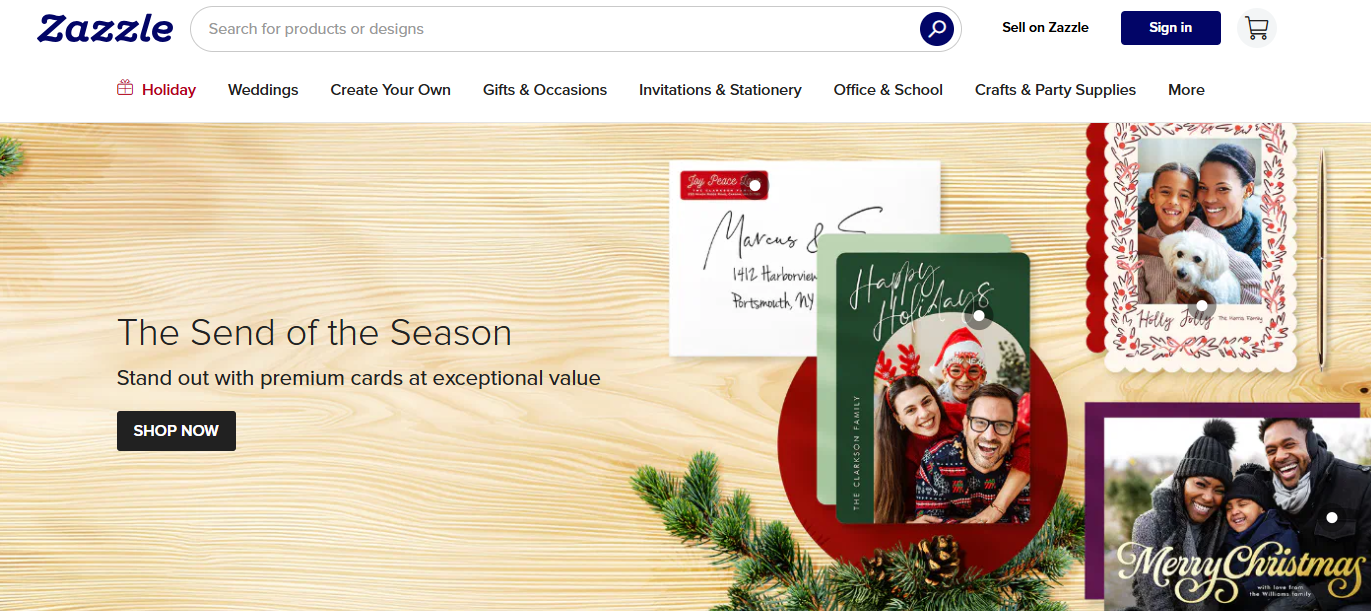
Overview & Key Features: Zazzle is an online POD marketplace, not an integration platform. Artists create designs on Zazzle and customers buy directly from Zazzle’s site. Zazzle handles all printing, shipping, and customer service. For Shopify sellers, Zazzle doesn’t integrate natively – it’s more of an alternative sales channel. However, it’s worth understanding because it has a huge product range.
Product Catalog: Zazzle boasts 1,000+ products, far more than any other platform. Its categories include apparel, stationery (invitations, cards), home decor (pillows, clocks, wall tiles), tech (phone cases, laptop skins), office supplies, crafts, party supplies, and more. You can find very unusual items on Zazzle (skateboards, fabric by the yard, custom wedding favors). Most products allow heavy customization via text or image. Apparel is present (t-shirts, socks, baby clothes), but Zazzle excels in stationery and gifts.
Pricing Structure: Zazzle itself is free to join. As a designer, you upload your work and set a royalty (percentage markup) on top of Zazzle’s base price. Zazzle takes a commission (e.g. 15% of sales) and pays you the rest of the markup. Customers pay a final price (base + your markup). Zazzle also charges shipping per order (generally $5–10). There are no monthly fees. Note that since Zazzle is a marketplace, the “cost” to you is mainly the commission Zazzle takes, which can eat into margins.
Print Quality: Zazzle products are printed by a network of factories (often the same partners as other POD sites). Generally, Zazzle’s print quality is good, though there can be variance. Complex products (like custom artwork on canvas) come out well, and Zazzle’s DS printing on apparel is decent for consumer use. Because customers often see Zazzle as a gift site, standards are similar to retail printing. Some designers report slightly less control over final look compared to a service like Printful, but quality is usually acceptable.
Shipping Speed & Coverage: Zazzle ships to most countries via its own fulfillment. Domestic (US) standard shipping is typically 2–7 business days, depending on product. There is an expedited option (1–2 days for an extra fee). For international, expect 5–10 days. Zazzle’s network is large enough to cover most global regions, and they have specific logistics partners. In short, shipping speed is moderate – faster than Redbubble for their primary markets, but not as fast as Printful or CJ. Customers often see delivery in about a week for common items.
Branding & White-Label: None. Zazzle is entirely consumer-facing. Products ship in Zazzle-branded packaging and come with Zazzle tags and inserts. As a seller, you have no option to make shipments appear as your brand. Also, all customer service (returns, inquiries) goes through Zazzle, not you.
Shopify Integration: None. You cannot link Zazzle products into a Shopify store or auto-fulfill Shopify orders through Zazzle. Any Shopify seller could list Zazzle products by manually linking out (like “Shop this design on Zazzle”), but there’s no native app. Zazzle operates its own e-commerce platform.
Pros: Massive product variety (1000+ items), especially strong in stationery and novelty items; no cost to upload designs; built-in audience and marketing by Zazzle; simple customization tools for buyers (anything that can be customized is); works well for printables, invitations, and gifts.
Cons: You compete directly on Zazzle’s marketplace (thousands of other designers); profit margins are fixed by royalty (Zazzle takes ~15% of sale price); no brand control (customers know Zazzle is behind the order); the product costs to customers can feel high; not suited for private-label storefronts. Essentially, Zazzle is better as an extra channel for exposure rather than your main Shopify POD.
Redbubble
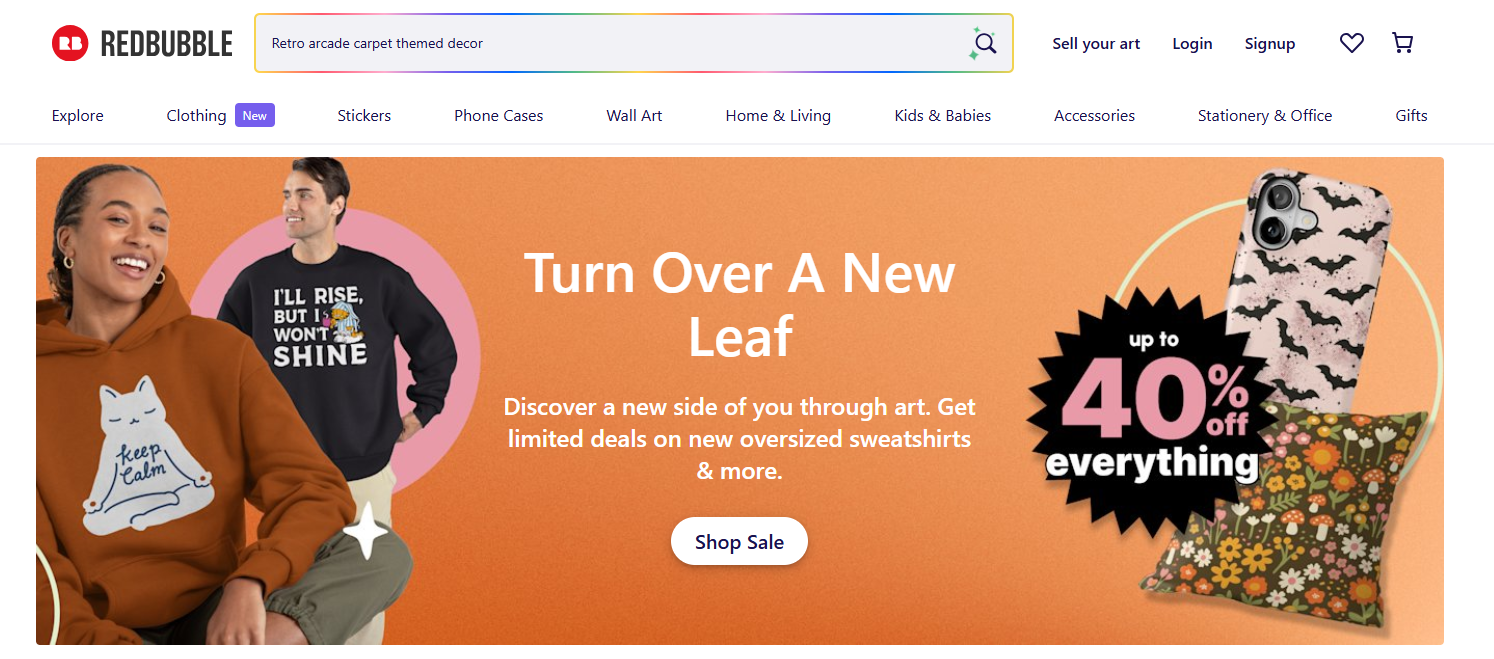
Overview & Key Features: Redbubble is another artist-focused POD marketplace. It operates similarly to Zazzle: designers upload art, and Redbubble handles the rest. Redbubble is particularly popular with independent artists selling on art and fandom marketplaces.
Product Catalog: Redbubble offers 300+ products. Like Zazzle, apparel is a major category (t-shirts, hoodies, leggings), but Redbubble also specializes in art-prints (wall art, posters, canvases), stickers, phone cases, pillows, and mugs. Redbubble’s catalog is more streamlined than Zazzle’s – mostly focusing on personal products and wall art. They do not offer stationery or as many gift items as Zazzle.
Pricing Structure: Redbubble is free to join and upload. Sellers set a margin percentage on top of Redbubble’s base price for each product. Redbubble’s base prices are typically higher (for example, a shirt base might be $15–20), and Redbubble keeps the base + production costs. Sellers keep 10–30% of the sale price (so effectively 70–90% markup). Redbubble also sets shipping, which customers pay. Overall, like Zazzle, the net payout per sale can be modest unless you set a high markup.
Print Quality: Redbubble has a strong reputation for print quality, especially on its core products (stickers, posters, apparel). In 2021 Redbubble moved many prints to Spring/Amaze facilities, which uses high-quality machinery. According to user feedback, Redbubble prints tend to be vibrant and durable (stickers and art prints are especially good). Because Redbubble only uses one set of fulfillment partners (currently Spring’s network and some local vendors), its quality is more consistent than Printify’s varied network, but maybe a bit behind Printful’s best.
Shipping Speed & Coverage: Redbubble ships worldwide (they have fulfillment in US, EU, and Australia among others). Standard shipping to the US is roughly 5–10 business days. Express options are shorter. Shipping to Europe or Australia may take a bit longer (7–12 days). While not lightning-fast, Redbubble is faster than many China-drop vendors because it uses local facilities. Customers usually get their orders in 1–2 weeks.
Branding & White-Label: Like Zazzle, Redbubble is not white-label. Every item has Redbubble tags or logos, and packaging is Redbubble-branded. You cannot customize packing slips. Customer support is handled by Redbubble’s team.
Shopify Integration: None. Redbubble has no Shopify app and is only a marketplace. Sellers can’t import Redbubble products into Shopify. It can be used as a separate sales outlet (e.g. a Shopify store owner might also sell on Redbubble for additional reach), but it does not integrate with a Shopify checkout.
Pros: Easy to use, large built-in audience (millions of visitors); very strong for artist/design-centric products; excellent in niche categories (stickers, fan art apparel); no upfront cost; decent profit potential if markups are set well.
Cons: Smaller overall catalog (especially in home decor); cutthroat competition; no control over customer data or packaging; moderate payouts (often 10-20% margin). In general, Redbubble is a marketplace channel for designs, not an under-the-radar POD supplier for a Shopify brand.
Comparison Table: Features, Pricing, Speed, and Integrations
| Platform | Product Range (Apparel, Home, etc.) | Pricing (Base, Fees) | Shipping Speed (US / EU) | Branding / White-Label | Shopify Integration |
|---|---|---|---|---|---|
| Printful | ~443 products (strong in apparel, posters, pillows) | Free; base prices moderate–high; optional Pro $49/mo for discounts | Fulfillment 2–5 days; US domestic ~3–4 days (flat rate); EU ~5–7 days | Custom labels, pack-ins, unbranded packaging available | Official app (easy sync, 3rd-party integrations) |
| Printify | ~1,300 products (huge variety via global partners) | Free; base prices lower; Premium plan $29/mo for ~20% off bases | Depends on provider; US/EU can be 2–8 days (domestic); Asia→US 10–20 day | Neck labels & inserts available (via some providers) | Official app (select provider, multi-platform support) |
| CJdropshipping | 400,000+ SKUs (apparel, pillows, decor, plus non-POD items) | Free; very low base costs (Chinese factories); shipping extra (CJPacket, USPS, etc.) | US stock: 3–6 days; CJPacket (from China) ~7–12 days; EU similar via EU warehouses | Full white-label: custom packaging, logo prints, inserts, even product videos | Official app (auto-sync orders to CJ’s fulfillment) |
| Gelato | Hundreds of products (apparel, wall art, mugs, stationery) | Free; Gelato+ $24/mo gives ~10–20% off; mid-range base prices | Local printing: ~4 business days (express ~2 days) to US/EU; 200+ country reach | Thank-you notes and digital pack slips (limited physical branding) | Official app (Shopify, Etsy, WooCommerce) |
| Gooten | ~500 products (apparel, home pillows, decor, accessories) | Free; base prices competitive; flat shipping rates ($3–6 US) | Production 3–4 days; US delivery ~3–7 days; EU ~5–10 days | Custom labels on some items; basic packing options (no custom box) | Official app (Shopify, Etsy, etc.) |
| Teespring (Spring) | ~50+ products (apparel, mugs, home posters) | Free; no subscription; you set retail price = base + your profit | Standard ~7–10 days (US); express ~3–5 days (US); global | No custom branding (Spring packaging only) | None (standalone marketplace/social store platform) |
| SPOD (Spreadshirt) | ~50 products (apparel: tees, hoodies, plus a few mugs, socks) | Free; low base costs; shipping from $3.99 by order value | 95% orders shipped in 48h; US ~2–4 days delivery; EU ~5–8 days | Branded inserts; limited labels; mostly no external branding | Official app (quick setup, 3rd-party apps via Spreadshirt) |
| Zazzle | 1,000+ products (apparel, stationery, home decor, gifts) | Free; you set royalty; Zazzle takes ~15% commission | Standard 2–7 business days (US); 5–10 days international | None (Zazzle branding on all items) | None (marketplace only) |
| Redbubble | ~300 products (apparel, stickers, home prints) | Free; set markup (you keep ~10–30% of sale price) | Standard ~5–10 business days (US/EU) | None (Redbubble packaging) | None (marketplace only) |
Best POD Platform for Apparel in 2026
Apparel remains the largest share of POD sales, so many beginners focus on t-shirts, hoodies, and similar. Printful is often considered the overall leader for custom apparel: it has an industry reputation for high-quality print and garments, a massive catalog of clothing styles (443+ products including many shirt and hoodies), and seamless Shopify integration. Its branded yarn labels and tight print standards make it ideal for store-brand clothing.
However, Printify can be attractive for apparel too: it offers a wider selection of garments (including some branded blanks like Bella+Canvas or Gildan) and generally lower base costs, which is great if you want to offer lots of variants or run frequent promotions. For extreme speed, SPOD is hard to beat – 48-hour fulfillment means you can advertise “quick delivery” on apparel. Another option is CJdropshipping, which has a huge range of clothing and accessories (and even niche apparel like cropped tops or jackets) at rock-bottom prices – its US production hubs mean tee-shirt orders hit customers very fast (3–6 days).
In summary, for most Shopify store owners in 2026, Printful is often the default “go-to” for apparel because of ease and quality. But if cost is the biggest factor, Printify or CJ may yield higher margins. If the fastest delivery on clothes is vital, SPOD or CJ’s US warehouse are top choices. Ultimately, weigh your priorities: quality and integration (Printful), breadth/price (Printify/CJ), or speed (SPOD).
Best POD Platform for Home Decor in 2026
Home décor (pillows, wall art, mugs, etc.) is a fast-growing POD niche. For custom home goods, the platforms with the broadest selection excel. CJdropshipping stands out here – its catalog explicitly includes all home décor categories, from canvases and pillowcases to framed posters and tapestries. Because CJ can source or import virtually anything, a store owner can find very specific items. Printify also has many home items (pillows, quilts, shower curtains, blankets, magnets) if you know which provider stocks them.
For the highest print quality on home goods, Printful is also strong: it offers premium throw pillows, posters, and photo frames with excellent print fidelity. Gooten is another contender, with items like duvet covers, area rugs, and exotic prints not found on all POD sites.
If you want very fast fulfillment on decor, Gelato is appealing: it can print and ship canvases within about a week worldwide thanks to local printers. SPOD has fewer decor items, but it can print pillow covers and mugs quickly.
In practice, many home-decor sellers mix platforms: for example, use CJ or Printify for a broad offering of pillow and blanket designs, and Printful for premium photo-quality wall art. The “best” for your store depends on which items you prioritize: variety (CJ/Printify), premium quality (Printful/Gelato), or speed (SPOD/CJ).
Best POD for Shopify Beginners
For Shopify newcomers, ease of use and solid support often matter most. Printful frequently tops recommendations for beginners. Its app is user-friendly, the onboarding is smooth, and help resources abound. It simply “works” out of the box, and you can be confident in the fulfillment process. Printful’s brand recognition and customer service add to this reliability.
Printify is also easy to start with – it has a straightforward app and excellent design tools. Beginners will appreciate the free-to-start model and ability to experiment without overhead. Gelato can be good if you have international customers (its app is as easy to use). SPOD is arguably the simplest – its focus is on speed and it has a very minimal setup (just add product and go), which can be reassuring for new sellers.
Many Shopify novices also try a hybrid approach: for example, using Printful for shirts and branded goods, plus a secondary low-cost provider like Printify or CJ to test other products. The key is to start with one easy platform (often Printful) to learn the POD process before scaling out.
In summary: if you want one answer, go with Printful for its beginner-friendly workflow and consistent quality. But Printify and SPOD are also great picks for those who prioritize low cost or fast fulfillment without sacrificing integration.
POD Platforms with Fastest Shipping (US/EU)
When delivery time is crucial (for example, selling to impatient markets), look to platforms with local production. SPOD (Spreadshirt) is the speed champion: “95% of orders ship within 48 hours”. That means US customers see their shirts or hoodies often within 3–4 business days total. SPOD’s focus on quick turnaround makes it ideal for “rush” orders or short-run campaigns.
CJdropshipping is another leader. Its US warehouses (New Jersey, California) let CJ fulfill many items in 3–6 days. CJ itself touts “lightning-fast US delivery (3–6 days)”. For Europe, CJ’s EU warehouses offer similar speeds. Even when shipping from China, CJPacket takes only ~7–12 days to the US – still quite fast for dropshipped goods.
Gelato also performs well globally. Orders to Europe from a local partner often ship in ~4–6 days, and to the US ~6–8 days (with express options at 3–4 days). Because Gelato prints near the customer, it’s faster in regional markets than an overseas shipment.
Printful is relatively quick too – it completes production in ~2–5 days and domestic shipping is ~3–4 days. So ~5–7 days total in the US is typical. Printify’s speed varies: you must choose a nearby printer (then you’ll see similar 3–7 day transit) or accept 10–20 days if shipping from Asia.
In short, SPOD, CJdropshipping, and Gelato are the standouts for fast delivery in 2026. SPOD and CJ (US) can beat Amazon Prime on some items, while Gelato is the pick for fast local delivery in international markets.
Tips for Choosing the Right POD Platform Based on Your Business Goals
-
Quality vs. Cost: If your brand relies on premium quality (and you can charge more), prioritize platforms like Printful (known for high-quality prints and premium garments) or Gelato (excellent for art prints). If your goal is low-cost pricing or higher margins, consider Printify or CJdropshipping – both can offer cheaper base costs (CJ especially).
-
Product Variety vs. Niche Focus: Need the widest possible catalog? CJdropshipping and Printify win on variety (400k SKUs vs. 1300). If you only want core basics, simpler sites like SPOD or Printful are fine.
-
Speed vs. Geography: Targeting US/EU customers? SPOD and CJ (US/EU warehouses) or Gelato (regional printing) will deliver fastest. For global reach, Gelato and Printful have broad networks.
-
Branding Needs: If you want full white-label (custom packaging, labels, inserts), look to Printful or CJ. CJ even does custom box printing. If branding isn’t a concern (you’ll resell on a marketplace), then Zazzle or Redbubble could suffice.
-
Ease and Support: New sellers should pick a well-documented platform. Printful has excellent guides and support, Printify has a large community, and Gelato offers good help docs. If you lack technical comfort, stay away from self-managed networks with many partners (unless you enjoy tweaking settings).
-
Sales Channel: Do you sell through Shopify or through a marketplace? Use Shopify-integrated POD (Printful, Printify, CJ, etc.). If you want an additional channel on the side, you can list on Zazzle/Redbubble. Teespring is in between – good for social commerce but not Shopify.
In practice, many successful stores use multiple POD platforms simultaneously: each one for what it does best. For example, a store might use Printful for apparel, Printify for extra product variety, and Gelato for international orders. This multi-platform strategy lets you optimize cost, speed, and selection.
Final Verdict: Which POD Platform Should You Use in 2026?
There is no single “best” platform for everyone – each has its own advantages. However, based on this comparison:
-
For overall excellence and ease (especially for apparel), CJdropshipping emerges as a top choice. It offers a great balance of quality, reliability, and integration. Many Shopify newbies and experts alike recommend CJdropshipping for its hassle-free setup and consistent results.
-
For maximum variety and budget pricing, Printify is hard to beat. Its network of 1300+ items means you can quickly add dozens of product types. The Premium plan gives good discounts, making it cost-effective as volume grows.
-
For global reach and home decor, Gelato shines with its local printing network. If you have international customers or sell a lot of art prints, Gelato’s speed and coverage are very compelling.
-
For lightning-fast US shipping, SPOD or CJ are ideal. If you market quick delivery as a selling point, SPOD’s 2-day turnaround or CJ’s US warehouses (3–6 days) will delight customers.
-
For marketplace exposure, Zazzle and Redbubble give you built-in audiences, though with lower margins. They’re not for brand-controlled stores, but can complement your strategy if you’re an artist or want passive sales.
In summary, if you can only pick one POD partner for 2026, Printful is often the safest all-around choice (especially on Shopify). But the best stores typically combine platforms. For example: Printful for core apparel, Printify for filling out the catalog, and Gelato for overseas orders. Always consider your niche: apparel-heavy stores may lean on Printful/Printify, whereas a home-decor shop might favor CJdropshipping and Gelato.
Above all, the “right” POD service depends on your goals – whether it’s maximum profit, fastest shipping, unique items, or easiest setup. Use the data above to match each platform’s strengths to your needs. The POD industry is growing, and 2026 is an excellent time to take advantage of these tools.
FAQs About Print-on-Demand Platforms in 2026
-
Q: What exactly is Print on Demand (POD)?
A: POD is a fulfillment model where products (apparel, decor, etc.) are printed and shipped only after a customer orders them. There’s no inventory or minimum order. You upload designs to a POD platform, and when a sale occurs, the platform prints your design on the chosen item and ships it directly to the customer. This eliminates upfront costs and unsold stock. -
Q: Do I need a Shopify store to use these POD services?
A: Most POD platforms integrate with Shopify, but it’s not strictly necessary. Some sellers use POD on platforms like Etsy or Amazon, or even on social media via Teespring. Printful, Printify, CJ, Gelato, Gooten, and SPOD all have official Shopify apps for smooth order sync. Marketplaces like Zazzle/Redbubble are standalone (no Shopify app). -
Q: Which POD platform is cheapest?
A: If low cost is your priority, CJdropshipping often has the cheapest base prices (especially on large or heavy items). Printify can be cheap too if you use a U.S. partner (no import fees) and have its Premium discount. SPOD has low blank prices and order-based shipping. Keep in mind: the lowest base cost may come with slower shipping (from overseas) or less consistency, so balance price with quality and speed. -
Q: Can I use more than one POD provider for my store?
A: Absolutely. Many shops use multiple POD platforms. For instance, you could sell shirts via CJdropshipping (for its mockup tool and brand appeal) and mugs via Printify. Some entrepreneurs even use a combination of POD and traditional inventory. Using multiple providers lets you compare prices and speeds and offer a wider range of products. It can also reduce risk if one partner has issues. -
Q: Is branding possible on POD orders?
A: This varies. Printful and CJ allow pretty comprehensive white-labeling: you can include your own packing slips, custom boxes (CJ), and logo tags on garments. SPOD offers minimal branding (some custom slips, but mostly Spreadshirt labels). Printify has neck labels and inserts. Zazzle/Redbubble offer no white-label – they produce gifts under their own name. Always check each platform’s documentation on “unbranded packaging” or “private label”.