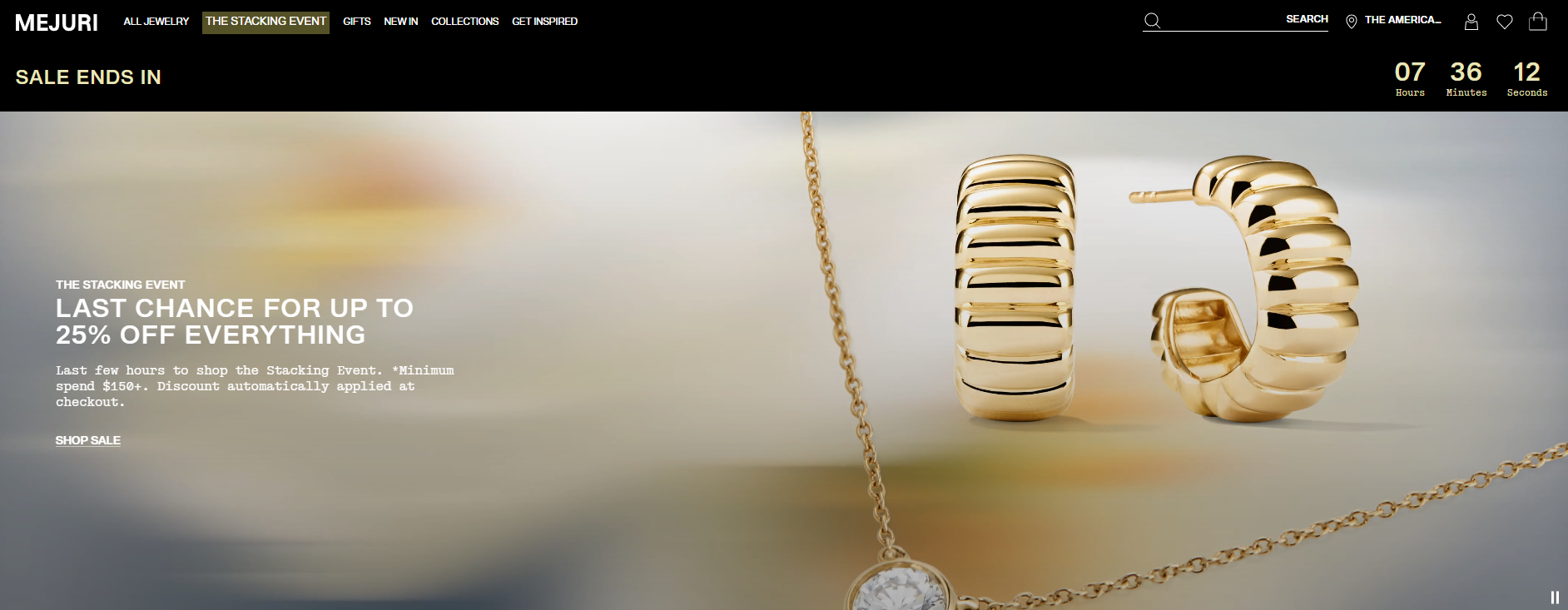
In modern ecommerce, very few brands have become as widely cited in direct-to-consumer case studies as Mejuri. The company built its name by challenging the rules of traditional jewelry retail: instead of positioning fine jewelry as an occasional luxury reserved for gifting, major life events, or department-store counters, Mejuri built a brand around the idea of “fine jewelry for every day.” The company’s official positioning says it has been creating jewelry for every budget since 2015 and frames its mission around everyday wear rather than special occasions.
That shift sounds simple, but it changed almost everything. It changed who the customer was, why she bought, how often she bought, where the brand showed up, what kind of content made sense, and how the company could grow. Shopify’s profile of founder Noura Sakkijha noted that 75% of Mejuri’s consumers were buying for themselves, a data point that captures the heart of the brand’s strategy: Mejuri did not just make jewelry more accessible; it reframed jewelry as self-purchase, self-expression, and everyday luxury.
That is why Mejuri matters beyond jewelry. Its story is not only about a beautiful product category. It is about how a brand can use DTC strategy to rewrite an old market. By controlling distribution, pricing narrative, customer relationships, content, and merchandising cadence, Mejuri created a playbook that many startup founders, dropshippers, and ecommerce operators still study today. Forbes described the company as a brand that “flipped the script” on the jewelry business model by eliminating traditional markup structures and introducing a new positioning centered on everyday luxury.
This article breaks down how Mejuri rose, what made its growth model different, why its DTC strategy worked so well, what role influencer and community-led marketing played, how its weekly product refresh rhythm supported repeat demand, and what early-stage businesses can realistically learn from its example. Some startups make the mistake of looking at Mejuri and seeing only polished branding. The bigger lesson is structural: Mejuri succeeded because its positioning, channel strategy, customer psychology, product cadence, and content engine all reinforced one another.
Brand Background: Why Mejuri Entered the Market at the Right Time
To understand Mejuri’s rise, it helps to understand what traditional jewelry looked like before brands like Mejuri gained momentum. For decades, fine jewelry was largely sold through legacy retail structures: wholesalers, distributors, department stores, independent jewelers, and prestige environments built around scarcity, high markups, and infrequent purchasing. The industry often framed jewelry as something to receive rather than something to buy for yourself. When Forbes profiled the brand in 2020, it emphasized that Mejuri disrupted the old model by cutting traditional markups and introducing a more direct, modern value proposition.

Mejuri entered this landscape with a distinct cultural and commercial point of view. According to Mejuri’s official About page, the brand has been operating since 2015 and built its mission around “fine jewelry for every day.” That language matters because it signals a deliberate repositioning of the category. Jewelry was no longer just about weddings, anniversaries, Valentine’s Day, or milestone gifting. It became part of daily wardrobe-building and personal identity.
This repositioning aligned with broader changes in consumer behavior. Younger consumers were becoming more comfortable buying directly from brands online. Instagram was turning aesthetics into commerce. Ecommerce-native brands were building trust without relying on department stores. Consumers were also becoming more skeptical of legacy markups and more interested in products that felt premium but not exclusionary. Mejuri’s “everyday luxury” framing met all of those shifts at once. Forbes explicitly linked the company’s appeal to its more accessible approach to fine jewelry and its challenge to traditional pricing structures.
The founder story also helped. Shopify and industry coverage identify Noura Sakkijha as the founder behind Mejuri’s rise, while Shopify’s later influencer-marketing guide cites the brand as having grown largely through creator partnerships and its thriving DTC model. Even where public sources differ on the earliest founding date terminology used in secondary writeups, the official brand materials consistently emphasize 2015 as the operating benchmark customers see today.
What made the timing powerful was that Mejuri did not merely launch as another jewelry website. It launched with a cultural proposition that matched the digital era. The old jewelry industry sold status through gatekeeping. Mejuri sold self-expression through accessibility. The old model emphasized the store counter. Mejuri emphasized the feed, the website, and the direct relationship. The old model implied, “Wait for someone to give this to you.” Mejuri built a brand around, “Buy it for yourself.”
The Core DTC Insight: Control the Relationship, Not Just the Sale
A lot of people describe DTC too narrowly. They think it simply means removing the middleman. That is part of it, but the deeper strategic advantage is not only better margin. It is better feedback, sharper brand control, and a much stronger ability to learn directly from customers.
Mejuri used DTC as infrastructure, not as a buzzword. By selling through its own digital channels, the company could control how the brand was introduced, how pricing was justified, how collections were presented, how customers were nurtured, and how repeat purchases were encouraged. Forbes’ 2020 profile highlighted that the company challenged traditional markups; Shopify’s coverage of the brand underscores how central direct relationships and community were to its model.
This mattered especially in jewelry, where trust is critical. Jewelry buyers care about product quality, material credibility, gifting emotion, self-image, and design confidence. If a brand gives those touchpoints away to wholesalers or department stores, it gives away much of the customer relationship too. Mejuri kept that relationship.
That allowed it to do several things unusually well.
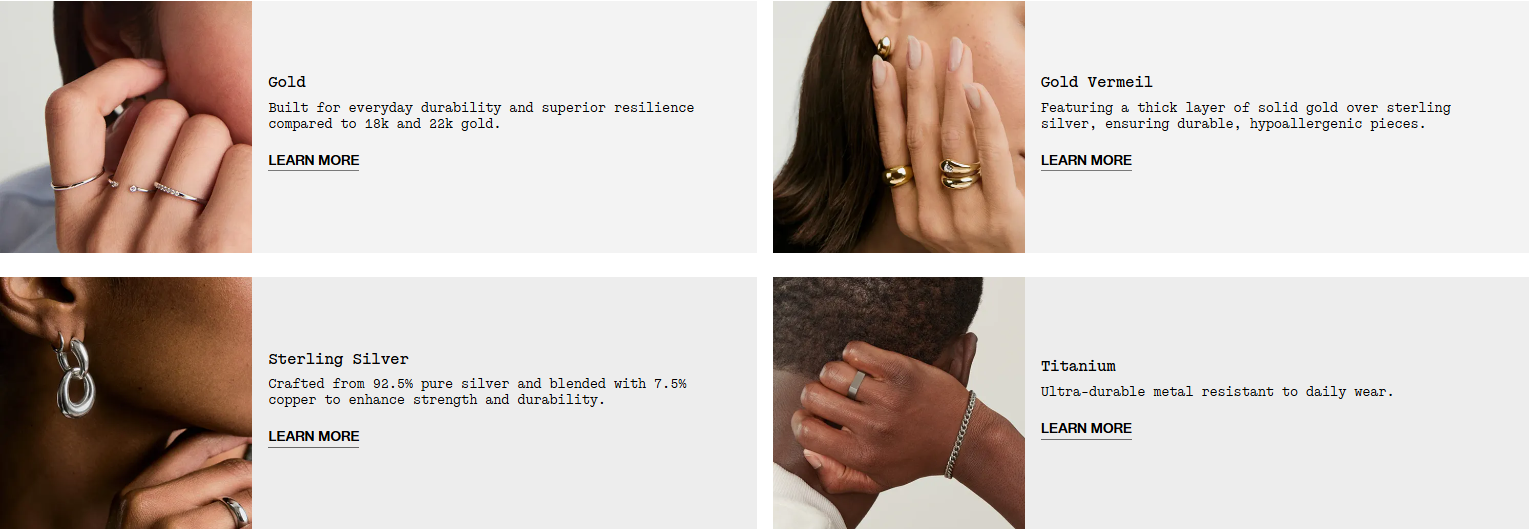
First, it could communicate value directly. Instead of relying on a retailer to explain why a piece was worth buying, the brand could frame its own story around craftsmanship, wearability, design, and accessibility.
Second, it could shape the buying context. A legacy retailer might merchandise jewelry around occasion-based gifting. Mejuri could merchandise it around everyday stacking, layering, repeat buying, and personal style.
Third, it could use customer response to influence growth. In a DTC structure, brands see what gets clicked, saved, shared, purchased, repurchased, and reviewed. That kind of data is far more actionable than just knowing units sold through wholesale.
Fourth, it could build a branded ecosystem rather than a product listing. Mejuri’s site, social channels, packaging, and store experience could all tell the same story because the company controlled the full journey.
For startups, this is one of the most important takeaways from the Mejuri case. DTC is most powerful when you use it to own the conversation around your category. If you only use it to save a few margin points, you are thinking too small. Mejuri used DTC to redefine the market.
Rewriting the Purchase Motivation: From Gift Item to Self-Purchase
One of Mejuri’s most powerful moves was changing not just who bought jewelry, but why they bought it. Shopify’s 2020 feature on Noura Sakkijha reported that 75% of Mejuri’s consumers were buying for themselves. That is a remarkable number because it points to a structural shift in customer psychology, not a campaign gimmick.
Traditional jewelry retail was built around gifting logic. Advertising often suggested that jewelry was proof of romance, commitment, achievement, or a special event. That created a category with emotional importance but relatively low purchasing frequency. If most demand is tied to holidays and life milestones, your repeat-purchase rhythm is constrained.
Mejuri expanded the category by normalizing self-purchase. If jewelry can be bought by the wearer herself, and if it can be worn daily rather than occasionally, then the brand can operate more like fashion, beauty, or accessories while still retaining the perceived value of fine jewelry. That is exactly what made the model so effective.
This change created several growth advantages.
It increased purchase frequency. Jewelry was no longer reserved for special calendar moments.
It widened the content universe. The brand could produce style content, layering content, routine content, officewear content, travel content, influencer content, and everyday outfit content.
It supported repeat buying. When the product is integrated into personal style, customers have more reason to buy multiple pieces over time.
It aligned with identity-driven branding. Instead of waiting for a gift, the customer became the protagonist.
This is why Mejuri’s growth should not be misunderstood as only a distribution innovation. It was also a demand-creation innovation. The company did not just make jewelry cheaper or easier to buy. It made jewelry easier to justify buying more often.
For founders, this is a gold-standard lesson. Sometimes the most valuable brand move is not introducing a new product. It is introducing a new reason to buy.
Affordable Luxury Without Looking Cheap
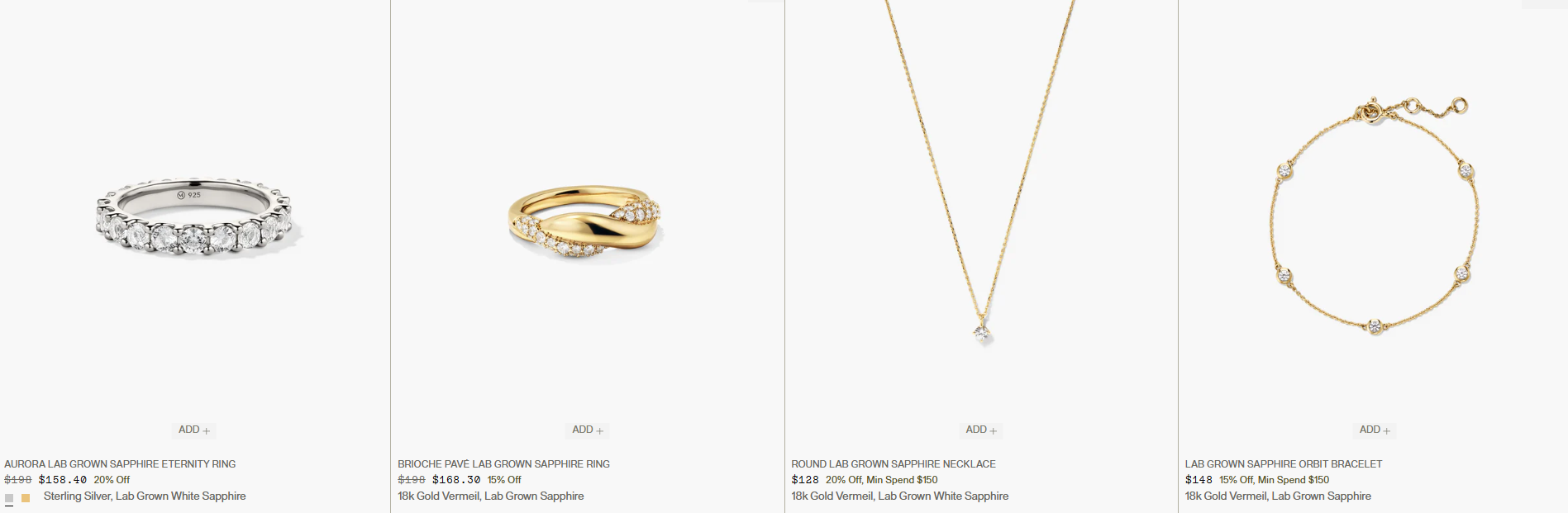
Many brands try to win by lowering prices. Very few succeed long term because low price by itself rarely creates love, loyalty, or distinctiveness. Mejuri’s version of accessibility was smarter. Rather than positioning itself as bargain jewelry, it positioned itself as attainable fine jewelry. Forbes described the brand’s approach as introducing a new way to position jewelry: everyday luxury.
That difference is huge.
“Affordable” can easily sound generic, low-margin, or commoditized. “Affordable luxury” or “everyday luxury” suggests a different promise: quality and aspiration without the traditional legacy-brand tax. Mejuri did not train customers to expect throwaway accessories. It trained them to expect premium-feeling pieces that fit modern life.
This allowed the brand to sit in a strong middle ground. It was more approachable than many traditional fine jewelry houses, but more elevated than fast-fashion accessories. That middle position is often hard to defend, but Mejuri made it work because the brand expression, photography, influencer styling, and product presentation all reinforced an upscale-but-wearable identity.
For startups, this is an especially useful lesson. There is often more opportunity in reducing intimidation than in reducing price. Mejuri made the category feel less intimidating. It did not have to become a discount brand to do it.
That idea applies far beyond jewelry. A skincare startup can make clinical skincare feel less intimidating. A furniture brand can make design feel less intimidating. A finance app can make investing feel less intimidating. The winning move is often not “be cheaper.” It is “be easier to enter without losing status.”
Content-Led Growth: Why Instagram and Creator Partnerships Mattered So Much

One reason Mejuri spread so effectively is that its product category and positioning naturally fit social commerce. Jewelry is visual. Layering is visual. Self-expression is visual. Everyday styling is visual. That made platforms like Instagram an ideal channel for brand-building.
Shopify’s more recent enterprise content cites Mejuri as a brand that grew largely through influencer partnerships, and its earlier interview with Noura Sakkijha emphasizes the importance of community over founder-centric branding. Shopify also quotes Sakkijha saying authenticity matters more than follower count alone when choosing partners.
That reveals something important about Mejuri’s strategy: creator marketing was not just an acquisition channel. It was part of the brand architecture.
The company did not need to rely entirely on polished luxury-ad style campaigns. It could let real women, creators, tastemakers, and community members “translate” the brand into everyday life. A ring stack on a creator’s hand, a layered necklace in a casual mirror selfie, or a close-up ear stack in natural light can sometimes do more for trust than a high-budget campaign ever could.
This strategy had several advantages.
It made the jewelry look lived-in rather than museum-like.
It matched the “for yourself” message. Creators wearing the jewelry as part of daily life reinforced the brand story.
It diversified the brand voice. Instead of one official aesthetic, Mejuri could appear through many personal styles.
It built social proof. Customers could see how real people wore the pieces.
It generated compounding content. Each creator asset could inspire more saves, reposts, user-generated content, and new styling ideas.
For startups, this is one of the most practical lessons in the entire Mejuri story. In the early stages, content that feels credible often beats content that feels expensive. Founders often assume that branding means glossy perfection. Mejuri’s success suggests that branding also means repetition, recognizability, authenticity, and context.
A young brand does not need one celebrity to win. It often needs a network of smaller, aligned creators who make the brand look native inside the culture it wants to reach.
Community as a Growth Engine, Not a Nice-to-Have
When Shopify profiled Noura Sakkijha, one of the strongest themes was that she wanted people to think of the Mejuri community, not just of her personally. That is a very mature growth mindset. Many brands become overly dependent on founder visibility. Mejuri built something more scalable: a community-driven identity.
This matters because community is not the same thing as audience.
An audience watches.
A community participates.
An audience might like your post.
A community buys, reposts, comments, recommends, and returns.
An audience can disappear when spend slows.
A community can keep momentum alive between campaigns.
Mejuri’s emphasis on community helped it move from being simply a product company to being a brand people identified with. That, in turn, made word of mouth stronger, content more believable, and repeat purchasing more likely.
Community also reduces dependence on constant paid-media pressure. NEA’s 2019 blog post on leading Mejuri’s Series B said revenue had grown 4x year over year for four years and that 30% of monthly purchases were repeat customers. Even though that is an investor source and reflects that moment in time, it supports the broader picture that brand resonance and repeat behavior were meaningful parts of Mejuri’s model early on.
For startup founders, the lesson is not “go build a Facebook group.” The lesson is to design your brand so people can see themselves inside it. Community is often the result of brand clarity, not a random add-on.
Weekly Drops: Turning Product Cadence Into a Retention Strategy
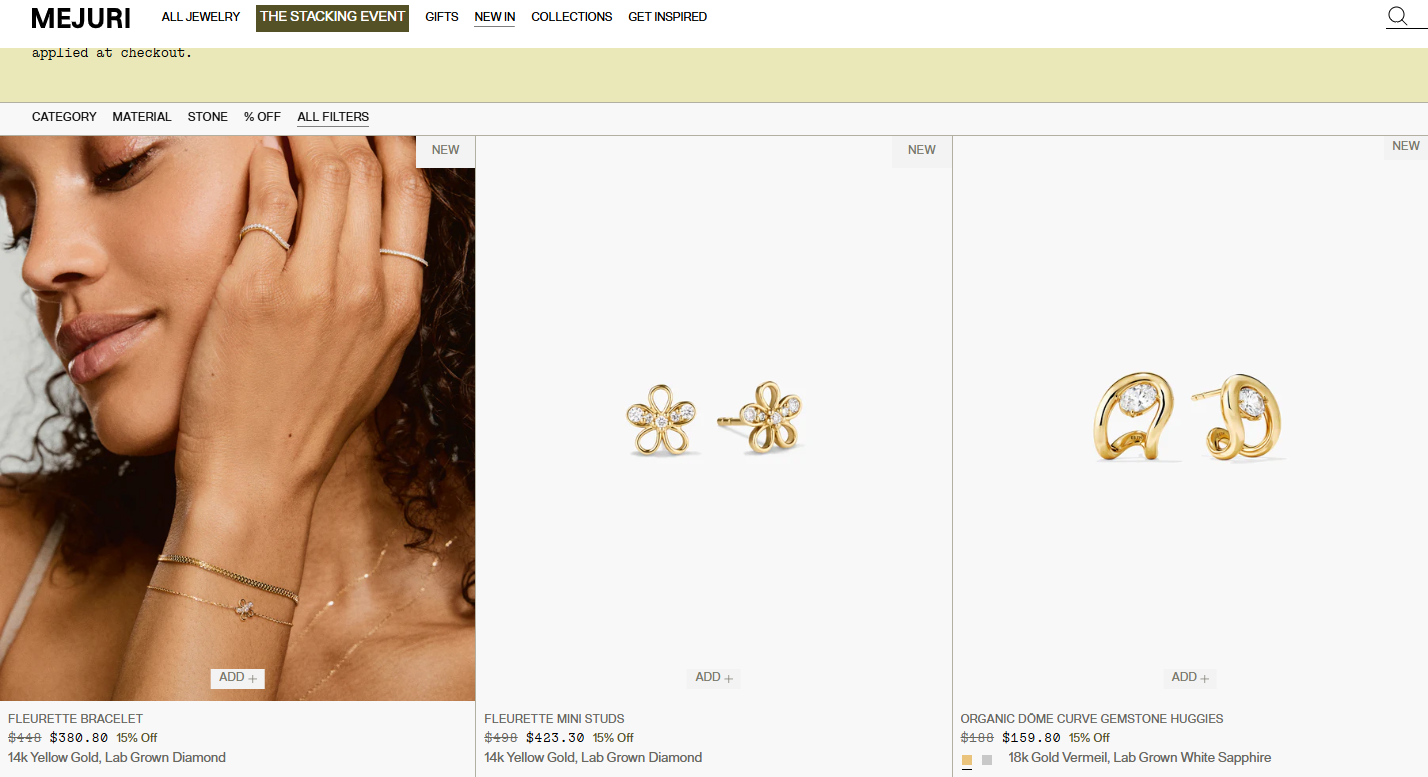
One of the most distinctive parts of Mejuri’s growth playbook was its use of frequent product refreshes. Forbes reported in 2022 that the company pioneered the “drop” model in fine jewelry and refreshed its collections weekly.
This is a crucial insight because product cadence is often treated as an operations issue, when it is really a marketing and retention issue too.
Traditional jewelry brands often operate on slower collection calendars. That can reinforce prestige, but it can also reduce momentum. Mejuri’s weekly refresh rhythm made the brand feel alive. It gave customers a reason to check back regularly. It gave email and social teams a steady stream of stories to tell. It supported the idea that jewelry was part of everyday style, not a static once-a-year purchase.
The brilliance of this approach is that it borrowed some of the urgency and repetition mechanics of fashion without abandoning jewelry’s premium perception. Mejuri did not need to become fast fashion to benefit from rhythm. It simply created more regular points of relevance.
For brands, cadence matters because attention fades quickly. If you only give customers a reason to think about you every quarter, someone else will fill the gaps. Mejuri reduced those gaps.
For startups, the deeper takeaway is this: do not build a business model that depends entirely on a single winning product. Build a system that gives customers repeated reasons to return. That could be weekly drops, capsule launches, creator collaborations, seasonal edits, limited bundles, or restyling campaigns. The format matters less than the habit. Mejuri built a habit.
Physical Retail as a Second Act, Not a Starting Point
A common mistake in ecommerce analysis is treating online and offline as opposites. Mejuri’s path shows a more useful sequence: start direct and digital, then expand into physical retail when it strengthens the customer relationship.
JCK reported in late 2023 that Mejuri planned to open five more stores by year-end, bringing its total to 29, and another JCK report said the company was planning 20 new stores in 2024. That same report cited data that in-store customers generated 38% higher lifetime value than online-only shoppers.
That detail is significant. Physical retail, in Mejuri’s model, was not a retreat from DTC. It was an extension of DTC.
Once the brand had strong awareness, customer trust, and a clear design language, stores could do what digital alone could not do as well: increase confidence in fit and styling, enable piercing services and in-person consultation, support gifting, deepen emotional connection, and increase lifetime value.
This sequence matters for startups because it prevents a costly mistake. Many founders think they need every channel immediately. Mejuri’s path suggests something more strategic: first build brand and demand efficiently through direct channels, then use physical presence to deepen value where it makes sense.
The implication is not that every startup should open stores. The implication is that channel expansion should follow brand validation, not precede it.
The Power of a Category Narrative
Some brands grow because they are better at advertising. Some grow because they have superior product economics. Mejuri grew because it also had a powerful category narrative.
Its narrative said:
Fine jewelry is not only for big occasions.
You do not have to wait to receive it.
Luxury does not have to feel distant.
Daily wear can still be meaningful.
Buying for yourself can be aspirational, not indulgent.
That narrative gave coherence to everything else: the DTC channel, the influencer strategy, the weekly drops, the visual merchandising, and the product styling. Without the narrative, those tactics would have felt disconnected. With the narrative, they all reinforced one another.
This is why brand strategy matters so much in ecommerce. Tactics without narrative create noise. Narrative without tactics creates admiration but not necessarily revenue. Mejuri combined both.
For early-stage companies, category narrative is often the missing layer. They know what they sell, but not what larger idea they are making legible for customers. Mejuri did not just sell rings and necklaces. It sold a new way to think about jewelry.
Why Mejuri Became a Case Study Brand
Brands become case studies when they do more than grow. They become interpretable. Mejuri is one of those brands because its rise can be broken into clear strategic components.
It entered a legacy category with poor fit for modern digital behavior.
It used DTC to reclaim pricing and storytelling control.
It repositioned the category around everyday wear and self-purchase.
It used influencer and creator partnerships to make the brand culturally native.
It built community rather than depending only on founder charisma.
It used weekly product rhythm to support repeat engagement.
It later expanded physical retail to amplify lifetime value and trust.
Because these moves fit together so cleanly, Mejuri is easy to study and hard to dismiss as a fluke. The product is important, of course. But the structure is what makes the story useful.
This is also why the brand appeals to founders outside jewelry. You can borrow the logic even if you do not borrow the category.
What Startups Can Learn From Mejuri
The most valuable lesson from Mejuri is not “start a jewelry brand.” It is “build a company where positioning, channel, content, and customer psychology reinforce each other.”
Here are the biggest startup lessons.
1. Start with positioning, not product overload
Mejuri’s first win was not a massive SKU count. It was a sharp idea: fine jewelry for every day. The brand changed the meaning of the category before it scaled the assortment.
Startups often do the opposite. They launch too many products and hope something sticks. A better path is to start with one strong market reframing. Ask: what old assumption are we replacing? If you cannot answer that clearly, more products usually will not save you.
2. Use DTC to learn, not only to sell
Direct-to-consumer is valuable because it compresses feedback loops. It lets you see which messages work, which visuals convert, which customers return, and where hesitation happens. Mejuri’s model shows how powerful DTC becomes when the brand uses it to learn faster than incumbents.
For a startup, this means your website, emails, post-purchase flows, and customer service are not just operational functions. They are learning systems.
3. Build a brand people can wear publicly
Mejuri grew well on social partly because its product looked good in public digital spaces. The brand was made for feeds, selfies, close-ups, and styling content. Shopify’s coverage repeatedly points to creator partnerships and authentic influence as central to Mejuri’s growth.
Not every category is as visual as jewelry, but every startup should ask a similar question: does our product and brand naturally generate shareable proof? If not, what would make it more socially legible?
4. Prioritize authenticity over vanity metrics
Shopify’s quoted comments from Sakkijha stress that follower count alone is not the point; what matters is authentic influence and alignment.
This is a practical reminder for startups burning money on the wrong creators. One aligned micro-creator who genuinely fits your brand can be more valuable than a large creator with weak credibility in your niche.
5. Create return triggers, not just first-purchase triggers
Mejuri’s weekly refresh rhythm gave people a reason to come back. Forbes’ coverage of the brand’s weekly collection updates supports this idea directly.
Many early-stage brands obsess over acquisition and neglect re-entry. Ask yourself: what brings customers back next week or next month? A business that only knows how to shout for the first sale becomes fragile fast.
6. Expand channels in sequence
Mejuri did not need to open dozens of stores on day one. It built demand digitally, then expanded retail as a lifetime-value amplifier. JCK’s reporting on store growth and the higher LTV of in-store customers illustrates why this second act mattered.
Startups should copy the sequence, not the surface. Validate online. Strengthen identity. Learn your audience. Then expand.
How Early-Stage Brands Can Apply the Mejuri Model
A lot of founders love case studies but struggle to translate them into action. Here is a practical version of how an early-stage company could apply Mejuri’s logic without needing Mejuri’s budget.
Step 1: Pick a category where the old buying logic feels outdated
Mejuri won because traditional jewelry logic had become misaligned with modern consumers. Find a category where legacy assumptions are stale. It might be eyewear, office accessories, wellness tools, gifting, stationery, home fragrance, travel gear, or premium pet products. Your opportunity is strongest when the category still speaks in an old language but customers have moved on.
Step 2: Define a sharper buying reason
Mejuri replaced “special occasion gift” with “everyday self-purchase.” You need a similar shift. Maybe your category has been sold as functional, but it should be sold as identity. Maybe it has been sold as premium, but it should be sold as approachable. Maybe it has been sold to one demographic, but another demographic is ready for it.
The key is to create a reason to buy that feels newly obvious once articulated.
Step 3: Launch narrow, but launch with strong aesthetics
Mejuri’s appeal depended partly on consistency. It felt like a brand, not just a store. A startup should launch with fewer products and stronger coherence rather than many products and weak identity. Use a tight visual system. Use clear product photography. Use language that reinforces your positioning. Every detail should support the same idea.
Step 4: Treat content as the storefront
For a digital-native brand, Instagram, TikTok, creator content, email, and onsite imagery are all part of merchandising. Mejuri’s creator-led and community-led growth shows that content is not separate from sales; it is one of the main vehicles of sales.
Startups should create content that demonstrates use, identity, aspiration, and credibility. People need to see not just the product, but what kind of person it belongs to.
Step 5: Build a cadence, not just campaigns
If Mejuri had launched a beautiful idea and then gone quiet, it would not have become such a strong repeat-purchase brand. The weekly drop model helped keep momentum alive.
A startup does not need weekly launches immediately, but it does need rhythm. Rhythm teaches customers that the brand is alive. Without rhythm, even a well-positioned brand can feel forgettable.
Step 6: Use data to decide when brand investment should deepen
Because Mejuri was DTC-led, it could learn directly from customer response. A startup should do the same. Watch repeat rates, content saves, branded search, creator conversion patterns, email engagement, and returning-customer revenue share. When these indicators strengthen, you have earned the right to invest more heavily in packaging, exclusivity, retail partnerships, or physical experience.
What Dropshipping and Ecommerce Founders Can Specifically Learn
For founders coming from dropshipping or performance-marketing backgrounds, Mejuri is especially instructive because it shows what happens when a business graduates from “selling products” to “building a brand.”
Here are the most relevant lessons.
A winning product is not enough. Mejuri succeeded because its products lived inside a larger idea.
Brand presentation changes unit economics. When customers trust and desire the brand, they compare less purely on price.
Owning the customer relationship is worth more than short-term arbitrage. DTC gives you retention potential; marketplaces often do not.
Influencer strategy works best when creators make the brand feel native, not when they just post a code.
Repeat purchase is easier when the category supports layering, collecting, upgrading, or refreshing. Mejuri exploited this elegantly.
Eventually, if the model works, you should increase control: better suppliers, stronger packaging, deeper product development, better service, and possibly physical touchpoints.
This is why Mejuri is such a useful bridge case between startup ecommerce and true brand-building. It is easy to admire the aesthetic. The harder, more valuable lesson is operational: move from opportunistic selling to controlled brand architecture.
The Limits of Copying Mejuri Too Literally
It is also worth being realistic. Not every startup can copy Mejuri exactly, and not every category can support the same model.
Jewelry has unusually strong visual shareability.
It also supports collectibility and self-expression.
The category has healthy room for premium storytelling.
The product is wearable in public, which makes organic exposure easier.
So the lesson is not “do exactly what Mejuri did.” The lesson is to identify the underlying structure:
What old assumption can you challenge?
What relationship can you own directly?
What cultural signal can your product carry?
What repeat rhythm can you create?
What content naturally proves the product in real life?
These questions travel well across categories. The surface tactics may change, but the strategic sequence remains useful.
Final Thoughts
Mejuri built one of the most influential modern jewelry brands by doing more than launching a beautiful assortment. It took a legacy category, found the friction in the old model, and rewrote the customer logic. Official brand materials anchor the company in a 2015 launch and the mission of “fine jewelry for every day.” Shopify’s reporting highlights the power of its community and the fact that most customers were buying for themselves. Forbes and JCK coverage show how the company used direct-to-consumer strategy, weekly product refreshes, and later retail expansion to create a much larger platform than a typical ecommerce startup.
The reason the brand remains such a compelling case study is that its strategy was coherent. The positioning supported the content. The content supported the creator strategy. The creator strategy supported self-purchase and everyday wear. The DTC model supported learning and control. The product cadence supported repeat attention. Retail expansion supported lifetime value. Nothing sat in isolation.
For startups, that is the real lesson. Great brands do not grow because they have one clever trick. They grow because the story, the channel, the customer, and the system fit together. Mejuri’s rise is a strong reminder that if you can redefine why people buy, not just what they buy, you can create a much bigger business than your category originally seems to allow.