
Starting a dropshipping business in 2026 is still one of the lowest-cost ways to enter ecommerce, but “free” needs to be defined carefully. In practice, a free dropshipping supplier usually means one of three things: the supplier lets you sign up and browse products at no cost, the supplier offers a genuine free plan, or the supplier charges you only when a customer places an order instead of charging a recurring platform fee up front. That is very different from saying the entire business is free. You will still usually pay for your storefront, domain, samples, ads, content creation, apps, or at least time and testing. Still, if your goal is to validate product demand without committing to an expensive supplier subscription, free-entry suppliers and platforms are the smartest place to start.
That is also why this topic matters more in 2026 than it did a few years ago. The old dropshipping fantasy was simple: list random products, run cheap ads, and let slow shipping slide. That model is much weaker now. Customers expect clearer delivery times, better branding, and fewer unpleasant surprises. Free suppliers can still be incredibly useful, but the best use of them today is usually as a starting point for product validation, niche testing, or low-risk brand building, not as a permanent excuse to run a low-trust store forever. Shopify’s own recent guides still present dropshipping as a low-overhead model, but they also emphasize that supplier choice, automation, and fulfillment experience make or break the business.
This article focuses only on suppliers and platforms that have a real free entry point in 2026. That means I am not including some well-known names that are more limited free trials or mostly paid tools once you get past the landing page. Instead, I’m focusing on ten options that genuinely let you start without a recurring supplier fee up front: CJdropshipping, AliExpress, DSers, Zendrop, Syncee, Printful, Printify, Shopify Collective, Trendsi, and EPROLO. For each one, I’ll explain what “free” actually means, what kind of seller it suits, and where its limitations begin.
What “free dropshipping supplier” really means in 2026
The first thing to understand is that there are different types of “free,” and mixing them together creates bad decisions. Some suppliers are free because there is no monthly membership fee and you only pay for products and shipping when you get a sale. Some are free because they offer a permanent free plan with capped features. Some are free to install on Shopify but become truly useful only if you upgrade. Others are marketplaces, not supplier platforms, but still count because they let you source products without paying for access. The distinction matters because a beginner looking for a no-fee starting point has a different need from an established store looking for a zero-platform-cost sourcing layer.
There is also a second distinction: a free supplier is not the same thing as a free business. Shopify itself still costs money once you are past any trial period. Product samples cost money. Paid ads cost money. Even content-led growth costs time, editing tools, or creator fees. So when people ask whether they can start dropshipping “for free,” the honest answer is that you can get very close on the supplier side, but you should still expect some business costs somewhere else in the stack. Shopify’s AliExpress guide explicitly says you can start AliExpress dropshipping for free with a dropshipping app such as DSers, but that does not eliminate the broader costs of running a store.
This is also why I am excluding tools that are really only $1 trials, short free trials, or mainly paid automation layers. For example, AutoDS’s current pricing page centers on a “start now for $1” trial, not a permanent free plan, and recent cost-comparison content from AutoDS itself describes CJdropshipping, DSers, and Zendrop as having free entry points while AutoDS does not.
How I chose the suppliers on this list
I used four criteria to decide which suppliers deserved a place here. The first was whether they truly let you start without a recurring supplier fee. That could mean a permanent free plan, a free-to-install Shopify app with meaningful functionality, or a pay-per-order structure without a platform subscription. DSers, Zendrop, Syncee, Printify, Printful, Shopify Collective, Trendsi, EPROLO, and CJdropshipping all clearly advertise some form of free entry or no-upfront-cost structure. AliExpress, while not a classic supplier app, remains a valid inclusion because Shopify still describes it as a marketplace where you can start dropshipping for free using an app like DSers.
The second criterion was whether the platform is still relevant for Shopify-based sellers in 2026. A supplier can be free, but if the workflow is clunky, outdated, or poorly integrated, it creates more problems than it solves. Shopify App Store listings for DSers, CJdropshipping, Printful, Printify, Shopify Collective, Trendsi, EPROLO, and Dropshipman all show they remain active in the ecosystem, and several are “Built for Shopify” or heavily used inside the Shopify environment.
The third criterion was whether the supplier supports a reasonable business model for 2026. Some free platforms are only useful if you accept weak branding and very slow delivery. Others at least give you a path toward something more sustainable, whether that is POD, curated suppliers, faster shipping, or branding add-ons. Printful and Printify clearly support branded custom products. CJdropshipping and EPROLO both highlight branding or custom packaging options. Shopify Collective offers a higher-trust retailer-to-retailer model with synced inventory and supplier fulfillment. Trendsi leans into fashion with custom branding language.
The fourth criterion was honesty. I would rather include a platform that is genuinely free but limited than one that looks free for five minutes and turns into a paywall the moment you try to use it seriously. So throughout this article, I will be very explicit about what the free version does and does not give you.
Comparison table: 10 free dropshipping suppliers in 2026
The table below summarizes the ten suppliers and platforms covered in this guide. It is based on each platform’s published pricing or app listing and on official or primary-source descriptions of how the free entry point works.
| Supplier / Platform | Is it really free to start? | Best for | Product type | Shopify-friendly? | Main strength | Main limitation |
|---|---|---|---|---|---|---|
| CJdropshipping | Yes | General stores, testing, sourcing flexibility | Broad catalog, POD, custom packaging | Yes | Very flexible all-in-one model | Product quality varies by item |
| AliExpress | Yes | Cheapest product testing | Massive marketplace catalog | Yes, via apps | Huge variety and low entry cost | Shipping and quality can be inconsistent |
| DSers | Yes | AliExpress automation | AliExpress-linked sourcing | Yes | Free plan and bulk-order workflow | Best value depends on AliExpress suppliers |
| Zendrop | Yes | Beginners | General products, branding, POD | Yes | Easy learning curve and free plan | Best automation and branding depth may require upgrade |
| Syncee | Yes | Curated niche stores | Verified supplier marketplace | Yes | Cleaner, more curated supplier network | Free plan is more limited for actual importing |
| Printful | Yes | POD brands | Custom print and embroidery products | Yes | No upfront inventory, strong branding | Not for general product testing |
| Printify | Yes | POD beginners | Custom print-on-demand products | Yes | $0 free plan and many product designs | Profit margins and supplier choice need management |
| Shopify Collective | Yes, if eligible | Existing Shopify retailers | Curated products from other Shopify brands | Yes | Native Shopify ecosystem, no setup fees | Eligibility requirements narrow access |
| Trendsi | Yes | Fashion stores | Women’s fashion / apparel | Yes | Free-to-install fashion supplier | Category-specific, not general |
| EPROLO | Yes | Beginners who want sourcing + branding | Broad catalog with branding support | Yes | Free platform with branding path | Higher-value branding features may need paid add-ons |
1) CJdropshipping
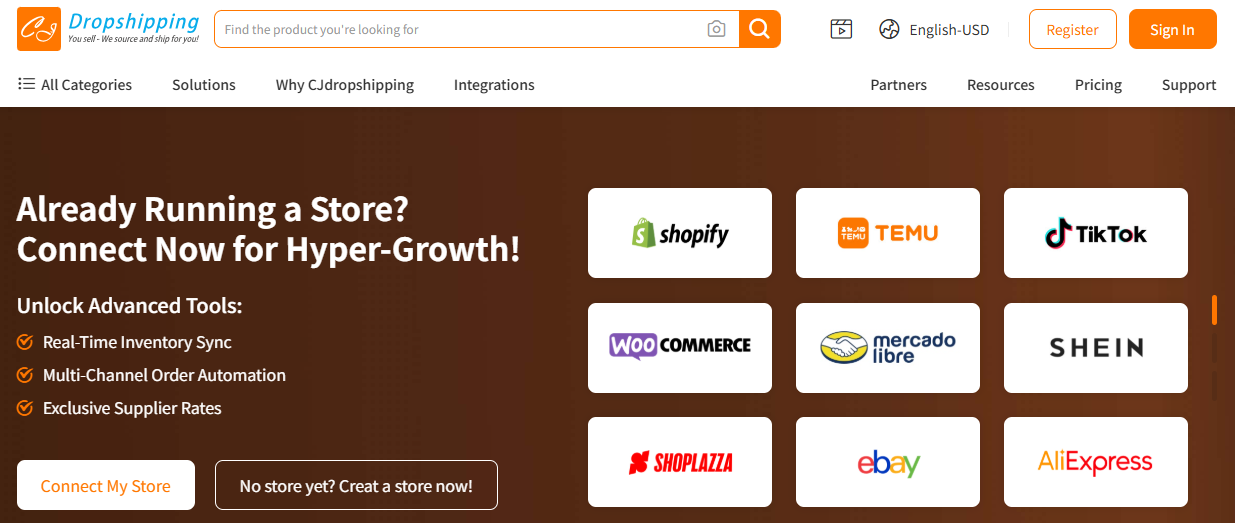
CJdropshipping is one of the strongest free-entry supplier platforms because it covers far more than simple product imports. CJ’s Shopify-focused materials say its Shopify app is free and highlight one-click product imports, automated order placement, POD, and custom packaging. Its main platform messaging positions it as a sourcing-and-fulfillment solution for dropshipping, POD sellers, and DTC brands. That combination makes CJ especially attractive for beginners who want to start free but do not want to outgrow the platform too quickly.
What makes CJ compelling is flexibility. A complete beginner can use it to test a one-product store or a general store without paying a recurring supplier subscription. A more advanced seller can use the same ecosystem for sourcing requests, warehousing options, branding support, and a broader fulfillment setup. This matters because one of the biggest problems with free supplier lists is that many entries are only good for the first few weeks. CJ is one of the few that can still matter after your first real sales come in.
The reason I rate CJ so highly is not that it is perfect. It is that it gives you room. If you are testing products, you get breadth. If you are trying to clean up operations later, you get more tools. If you want to move into custom packaging or brand-building, the platform at least acknowledges that path. For 2026, that is a big advantage because generic dropshipping is no longer enough.
The biggest downside is quality variability. When a platform offers a broad catalog and sourcing flexibility, the burden of selection moves back to the merchant. You still need to order samples, inspect listings carefully, and avoid assuming every listing performs at the same level. CJ is strongest when you use it as a smart operator, not as a lazy shortcut.
Best for: general stores, one-product testing, sellers who want a free start with a later path to branding.
Why it counts as free: the Shopify app is free and the model does not require inventory purchases up front.
2) AliExpress
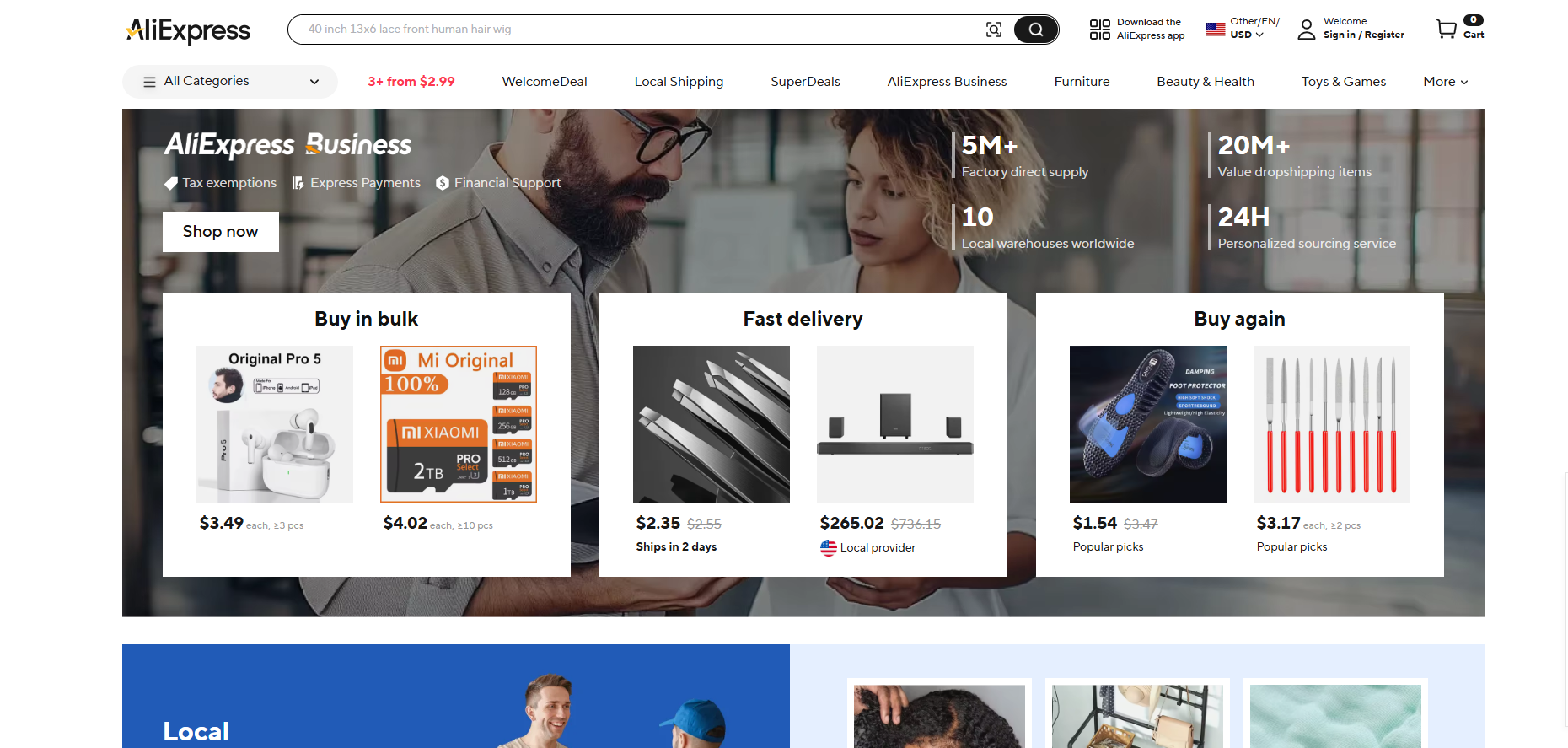
AliExpress is still one of the most important free dropshipping sources in 2026 because it remains the clearest low-cost marketplace entry point. Shopify’s updated AliExpress dropshipping guide says AliExpress allows dropshipping, has a dedicated portal for dropshippers, and can be used to start dropshipping for free with the help of a dropshipping app such as DSers. That makes AliExpress less of a classic supplier platform and more of a free product-source marketplace that still sits at the center of many beginner workflows.
The attraction is obvious. AliExpress gives you enormous product variety and virtually no barrier to browsing. If your goal is to test ideas cheaply, explore niches quickly, or learn product research without paying a supplier fee, AliExpress is hard to beat. It is also still the default source many beginners think of first, and for good reason: it is accessible, broad, and low-risk in terms of initial cash commitment.
But AliExpress has changed in the way serious sellers should think about it. It is no longer the best symbol of “easy dropshipping.” It is better understood as a testing layer. If you find a promising product there, great. If you use it to learn your niche, great. But if you want strong branding, predictable fulfillment, or premium customer experience, you often need to graduate from AliExpress-style sourcing or become far more selective about which suppliers you trust. Shopify’s own guide makes AliExpress sound accessible, but accessibility is not the same thing as quality control.
There is also a more serious reason to be cautious in 2026 if you sell into the EU. Reuters reported in March 2026 that AliExpress was under pressure from EU lawmakers to strengthen compliance under the Digital Services Act, including concerns around illegal and unsafe goods. That does not mean you cannot source from AliExpress. It does mean you should not treat the marketplace as self-vetting. If you plan to sell in stricter regulatory environments, careful supplier screening matters even more.
Best for: low-cost product testing and broad niche exploration.
Why it counts as free: you can source from the marketplace without a supplier membership fee, and Shopify explicitly says you can start AliExpress dropshipping for free with an app like DSers.
3) DSers
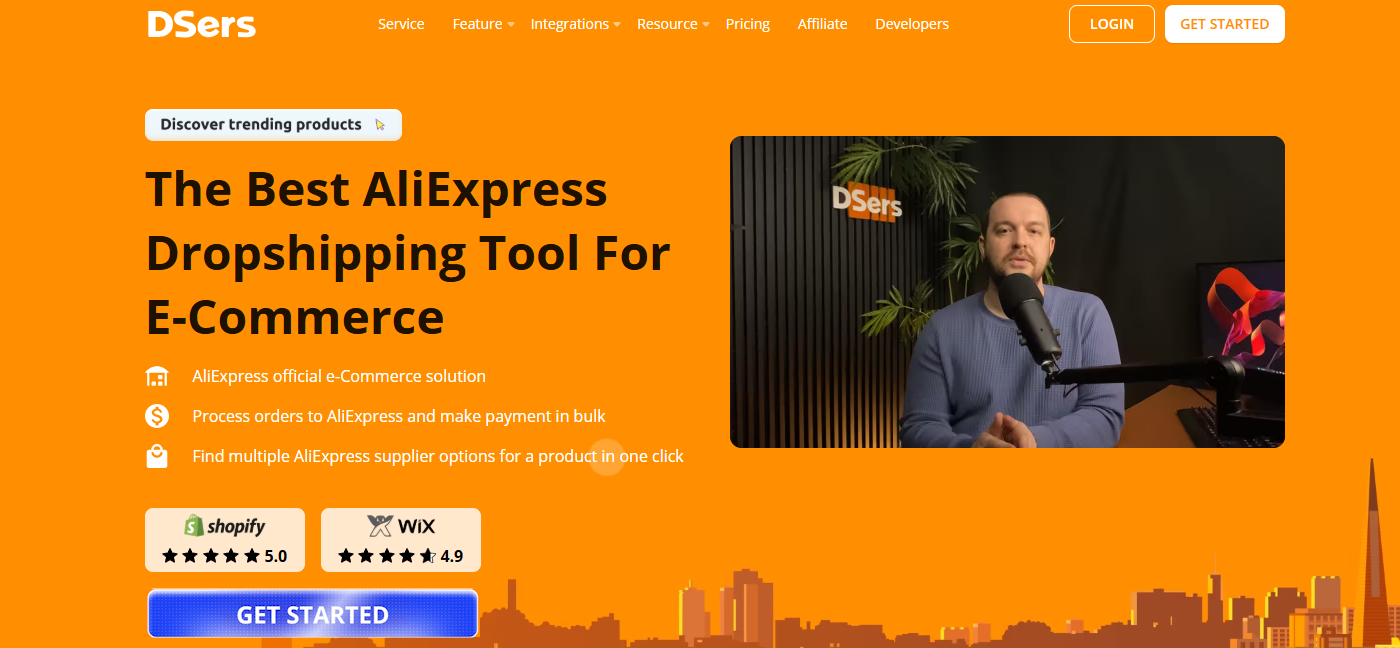
DSers is one of the easiest entries on this list because its free status is explicit. Its Shopify App Store listing shows a Free plan, and the app is built around placing orders to AliExpress and other sources at scale. DSers also remains strongly tied to the AliExpress ecosystem, and recent third-party Shopify app roundups continue to describe it as the official AliExpress dropshipping partner. For merchants who want AliExpress access but need cleaner automation, DSers is still one of the best free tools available.
The core value of DSers is workflow efficiency. AliExpress by itself is a marketplace. DSers turns it into something closer to a real dropshipping operating system. Product imports, bulk ordering, supplier mapping, and tracking sync are all part of the logic. For beginners, that means fewer manual steps. For intermediate sellers, it means you can still test at low cost without completely drowning in order handling.
What I especially like about DSers in a “free suppliers” article is that the free version is not fake. It is limited, of course, but it is meaningful. It exists for real testing and early-stage usage, not just as bait for an instant upgrade. That makes DSers one of the most practical recommendations for anyone who specifically wants to start with almost no supplier-side spend.
The limitation is also obvious: DSers is strongest if your sourcing model is AliExpress-centered. If you want curated regional suppliers, stronger branding support, or deeper sourcing flexibility outside the AliExpress model, other platforms may fit better. DSers is excellent at what it does, but what it does is fairly specific.
Best for: AliExpress sellers who want a true free automation layer.
Why it counts as free: the Shopify App Store listing clearly includes a free plan.
4) Zendrop
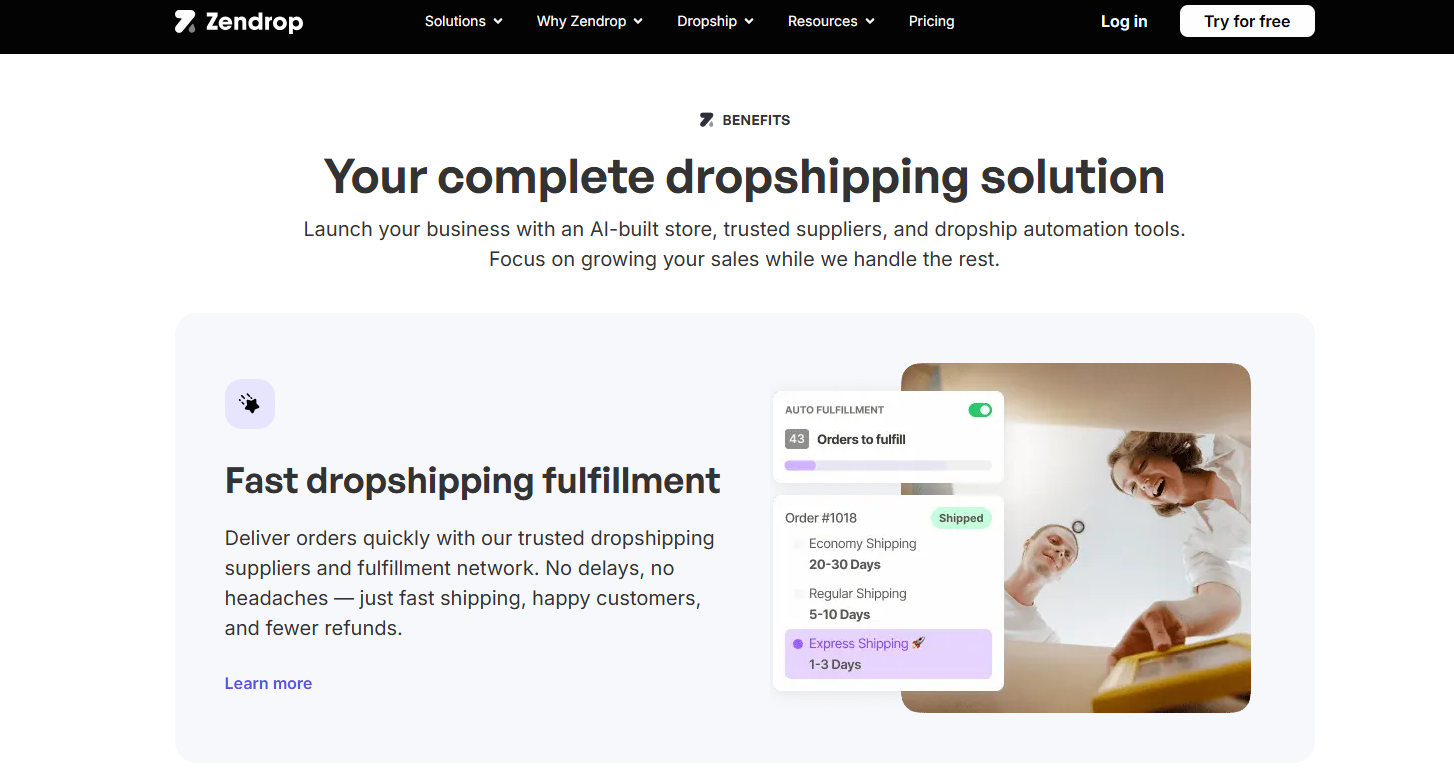
Zendrop is one of the most beginner-friendly names on this list because it combines a freemium model with a cleaner, more guided experience. Zendrop’s pricing page shows a Free $0 / month plan with limited access, while still offering access to a large product base, support, unlimited orders, and some entry-level features. Its main homepage also explicitly invites users to “Try for free.” That makes Zendrop a valid free-entry platform rather than a purely paid tool disguised as one.
The main appeal of Zendrop is ease of use. Compared with some more infrastructure-heavy platforms, Zendrop feels designed to reduce confusion. That matters because new sellers often do not fail from lack of product ideas; they fail because the system feels too messy. Zendrop’s positioning around auto fulfillment, fast shipping, and a large product library speaks directly to that pain.
Another reason Zendrop deserves a place here is that it at least gestures toward the future, not just the first sale. Its pricing page mentions custom branding, POD, winning products, and other store-building features, even if some of those are stronger in paid tiers. That is important because many “free” suppliers are dead ends. Zendrop’s free plan is more like a structured starting point.
The limitation is that “free” on Zendrop is not the same as “fully unlocked.” If you want the deepest automation, strongest branding, or more advanced workflows, you will likely hit the ceiling sooner than on broader sourcing platforms. But for pure beginner-friendliness, Zendrop remains a smart inclusion.
Best for: beginners who want a more guided free start.
Why it counts as free: Zendrop explicitly offers a $0/month free plan.
5) Syncee
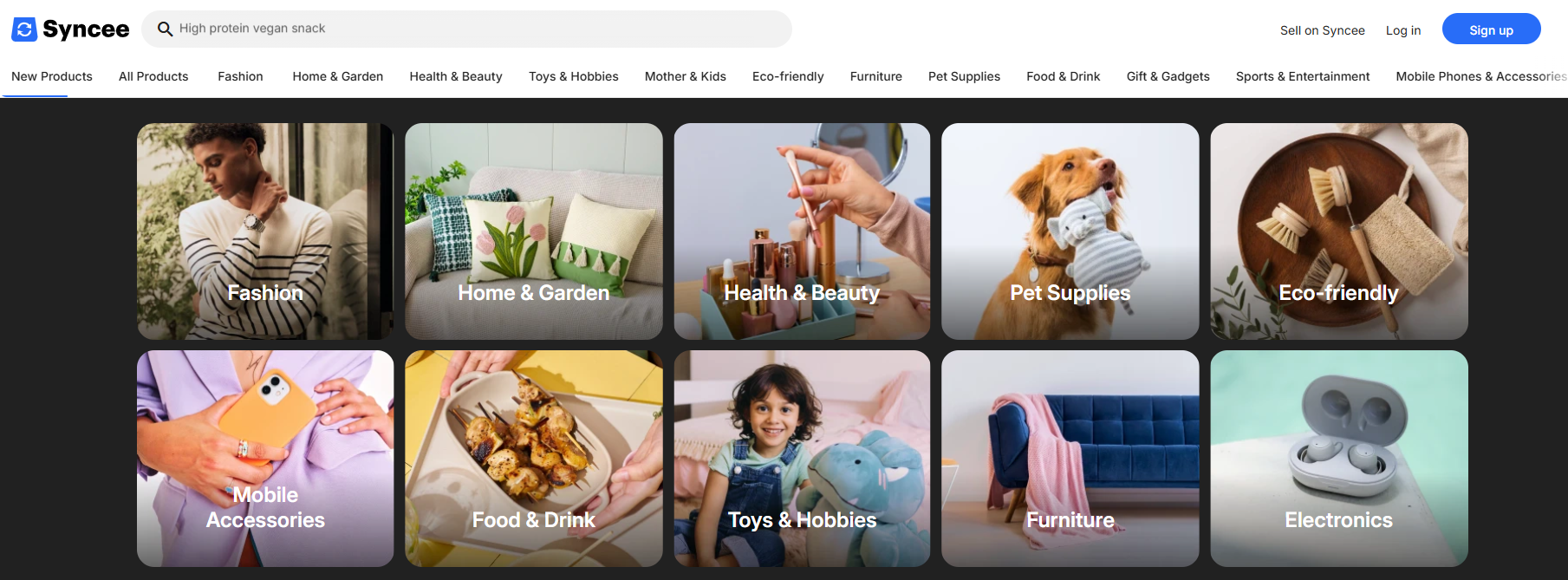
Syncee is a good example of a platform that qualifies as free, but in a more curated way. Its Shopify App Store listing shows a Free plan, and Syncee’s own help documentation states that every new client gets a free plan that allows browsing of millions of products on Syncee Marketplace. At the same time, Syncee is more marketplace-curated and supplier-verified than many cheaper-feeling alternatives, which gives it a different role in your strategy.
Syncee is especially useful if you want free access to a supplier marketplace without immediately falling into a low-trust product swamp. The company emphasizes verified suppliers and regional supplier strength across the US, Canada, EU, UK, and Australia. That positioning matters because 2026 dropshipping is increasingly about supplier quality and customer experience, not just access.
The reason to choose Syncee over something like AliExpress is simple: curation. If you are building a niche store and you care more about supplier quality than raw variety, Syncee may save you time and reduce bad decisions. In categories like home, pet, lifestyle, eco products, or boutique-style niches, that curation can be worth more than endless listings.
The limitation is that Syncee’s free plan is better for discovery than for unlimited scaling. If you want to import heavily, build larger lists, or access deeper supplier communication workflows, paid plans become relevant. So Syncee is genuinely free to start, but its strongest power appears when you are ready to invest further.
Best for: curated niche stores and sellers who want cleaner supplier discovery for free.
Why it counts as free: Syncee offers a permanent free plan and explicitly says new clients get one.
6) Printful
Printful is one of the clearest and most honest free-entry platforms in the ecommerce ecosystem. Its pricing page says you can create a free Printful account and start selling with no upfront costs, and its broader content about dropshipping costs states that partnering with Printful keeps costs low with no up-front investment and no order minimums. That makes Printful a very strong answer for anyone asking for a supplier that is free in the most practical sense: you pay when an order exists.
Printful’s real value is that it changes the kind of business you can build. Most free supplier lists are dominated by generic-product sourcing. Printful is different because it is centered on print-on-demand. That means the platform is not for random product testing across unrelated categories. It is for building something more differentiated: creator merchandise, niche apparel, branded accessories, design-led home goods, posters, or community products.
That matters in 2026 because one of the biggest weaknesses in standard dropshipping is defensibility. If anyone can sell the same item, competition becomes almost entirely about price, ad creative, or lucky timing. Printful gives you a chance to sell products that are materially yours in design and positioning. That can be a stronger long-term path than generic supplier arbitrage.
The limitation is not cost. It is business model fit. If you do not want to sell custom products, Printful is the wrong tool. If you do want to build a niche POD brand without paying platform fees upfront, it is one of the strongest options on this list.
Best for: print-on-demand brands, creators, designers, niche communities.
Why it counts as free: Printful explicitly says free account, no upfront costs, and no up-front investment.
7) Printify
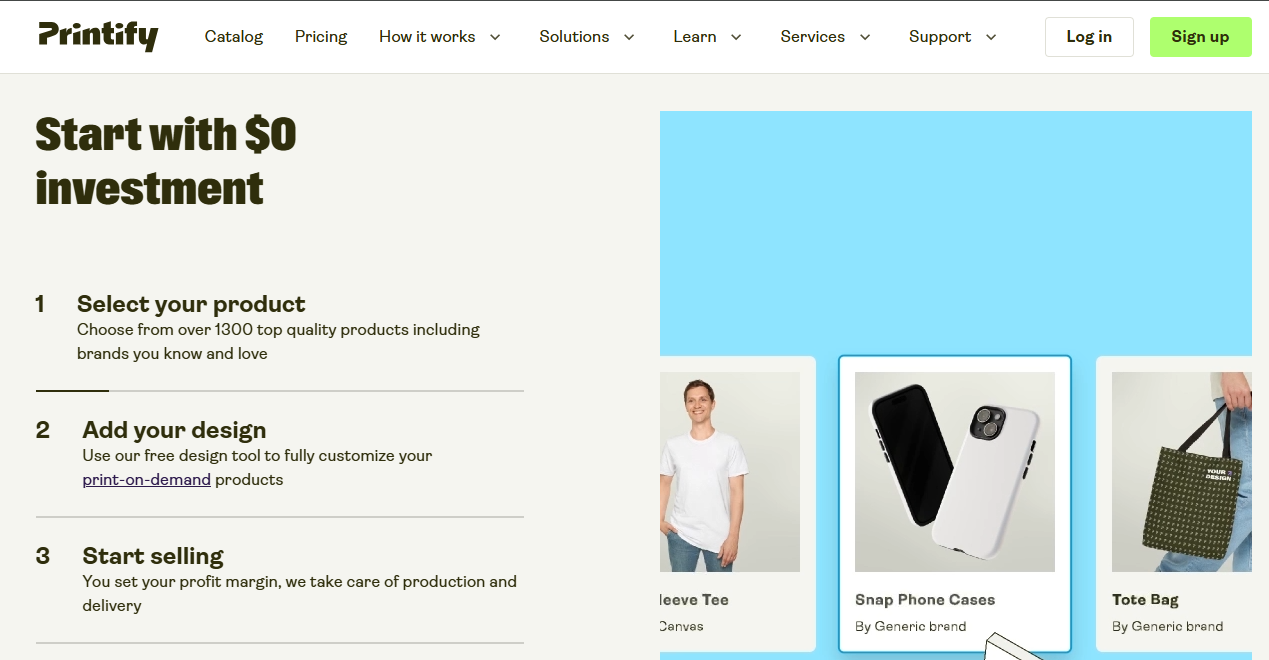
Printify is another strong POD platform, and its free offer is even more explicit than most. Its pricing page says Start for free and lists a Free $0/month plan for merchants starting a business, including multiple stores and unlimited product designs. Its POD landing page also says you can create an account, design products, and launch with zero upfront costs. That makes Printify one of the strongest free supplier/platform options for beginners who want to test a design-based business model.
Where Printify differs from Printful is not the free entry point but the network structure and merchant style it tends to attract. Many sellers use Printify because they want a broad POD catalog and the ability to compare production options through a provider network. That can be appealing if you want more flexibility in margins or product choices.
For beginners, Printify is especially attractive because the free plan is straightforward. There is no mystery about whether the free version exists. It does. That makes it easier to recommend than a platform where “free” mostly means “we hope you subscribe immediately.” If you want to test designs, run a niche apparel brand, or validate creator merch with very little supplier-side cost, Printify is excellent.
Its limitation is the same as Printful’s: this is not a general dropshipping tool. You are choosing a model. If you want broad marketplace testing, use a different platform. If you want POD with a genuinely free starting tier, Printify deserves to be near the top of your shortlist.
Best for: beginner POD sellers and design-led low-budget store launches.
Why it counts as free: Printify explicitly offers a $0/month free plan and says you can start with zero upfront costs.
8) Shopify Collective
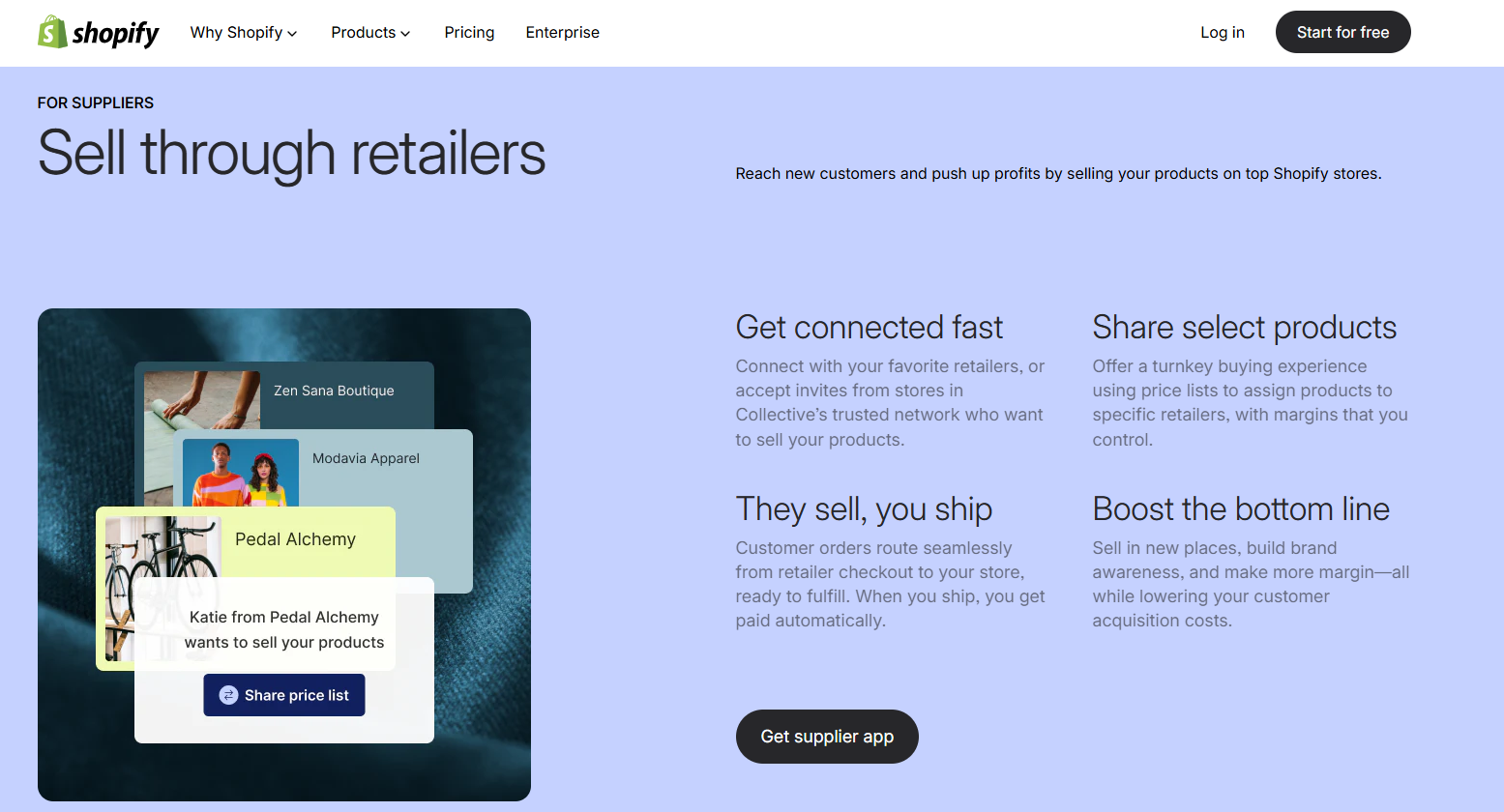
Shopify Collective is probably the most misunderstood entry in this whole article. It is not a classic global dropshipping marketplace. It is Shopify’s own retailer-to-retailer network that lets eligible stores import products from other Shopify brands and have those suppliers fulfill the orders. Shopify’s official pages say Collective is free to use with any Shopify plan if you’re eligible, and its app page highlights no setup fees, no high commissions, real-time syncing, automated payment processing, and supplier-shipped orders.
That makes Shopify Collective a very compelling “free” option, but with an important caveat: it is not universally open in the way AliExpress or DSers is. Eligibility matters. Shopify says it is free to use if you are eligible, which means it is best understood as a free supplier network for stores that already fit the program’s requirements. For the right merchant, though, it is arguably one of the highest-quality free models available because the supplier relationship lives inside the Shopify ecosystem rather than on a random external marketplace.
The biggest advantage of Collective is trust. Instead of sourcing anonymous products from massive marketplaces, you are effectively expanding your catalog through other Shopify brands. That can improve product quality, shipping confidence, and store consistency. If your business is already slightly established and you want to add products without holding inventory, Shopify Collective can be much more attractive than traditional generic dropshipping.
The limitation is access. This is not the easiest beginner-first route. If you are completely new, Collective may not be where you start. If you already run a Shopify store and want a cleaner no-inventory expansion model, it is one of the best zero-platform-fee options available.
Best for: existing Shopify retailers who want curated, native, no-inventory expansion.
Why it counts as free: Shopify explicitly says Collective is free to use with any Shopify plan if eligible, with no setup fees or high commissions.
9) Trendsi
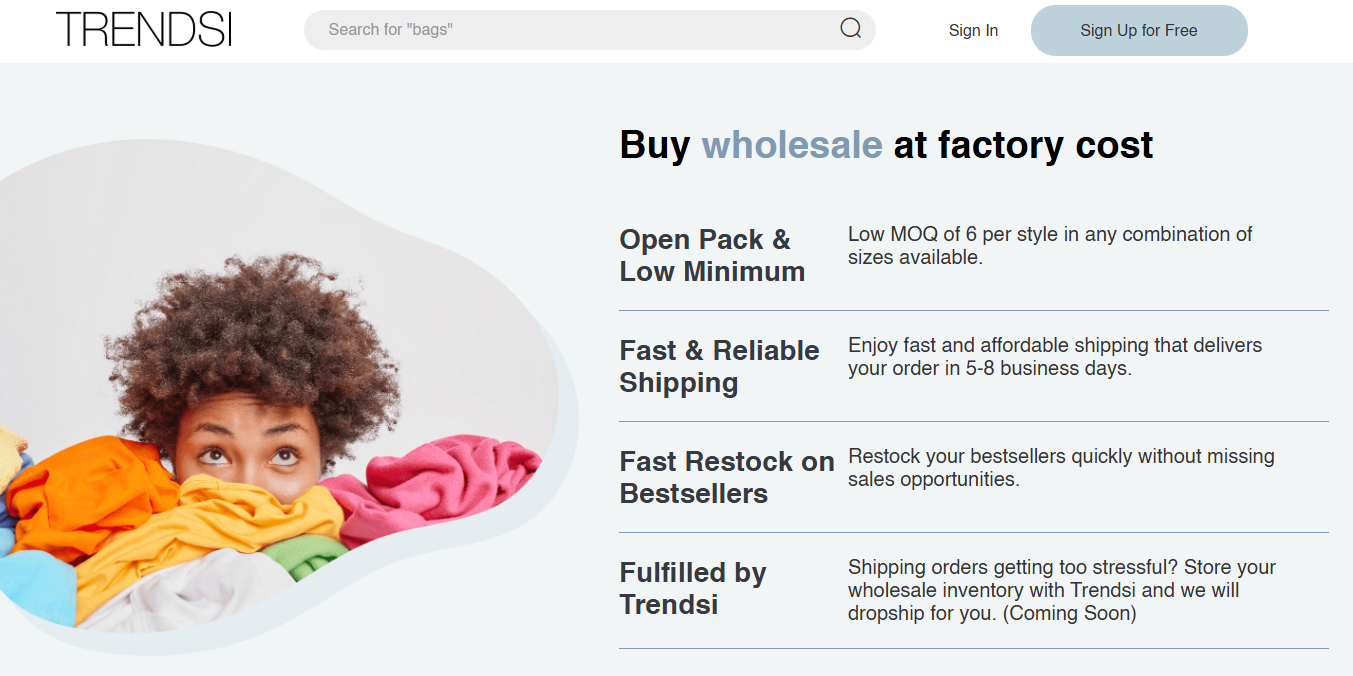
Trendsi is a more category-specific free supplier, but that is exactly why it deserves a place on this list. Its Shopify App Store page shows it as Free to install, and Trendsi’s own site says “Sign Up for Free” while positioning the company as a fashion supplier for dropshipping, branding, and apparel businesses. This makes Trendsi one of the more relevant free options for stores focused specifically on fashion, especially women’s apparel.
A big reason to include Trendsi is that broad free supplier lists often become too generic. Not every merchant wants to test random gadgets. Some want to build boutiques or category-driven stores. Trendsi fits that need because it is not trying to be everything. It is trying to be a fashion infrastructure layer. For the right merchant, that focus is a strength.
Trendsi’s other appeal is that it pairs a free entry point with messaging around branding and premium-quality products. That does not mean the whole experience is magically premium, but it does mean the platform is thinking in the right direction for 2026. Apparel stores need a stronger brand feel than many product categories, and Trendsi’s positioning acknowledges that.
The limitation is scope. If you do not want to sell fashion, Trendsi is irrelevant. But if you do want a category-specific supplier that is actually free to start and sits comfortably inside Shopify’s app ecosystem, it is one of the more interesting options available.
Best for: apparel boutiques, women’s fashion stores, style-led dropshipping brands.
Why it counts as free: Shopify App Store lists it as free to install, and Trendsi’s site says sign up for free.
10) EPROLO
EPROLO is one of the most direct fits for this topic because its own homepage literally describes it as a Free Dropshipping Supplier, and its Shopify app listing presents a structure with free plan features and optional branding upgrades. EPROLO emphasizes sourcing, storing, quality control, custom packing, and fast shipping, which means it is trying to sit closer to the CJ-style all-in-one model than to a simple marketplace directory.
This makes EPROLO especially appealing to sellers who want a free entry point but care about the possibility of better branding later. Many beginner suppliers stop at the product listing. EPROLO is more ambitious than that in how it describes its offer. It is not just about finding products; it is about helping stores look more professional over time. That can be useful if you want to start lean but not stay generic forever.
Another strength is its directness. Some platforms hide their free structure behind confusing tiers. EPROLO’s branding around being a free platform is clear enough that it is easier to include confidently in a list like this. At the same time, its Shopify app listing also makes it obvious that there are paid branding tiers, so the picture is balanced rather than misleading.
The limitation is that EPROLO is not as deeply embedded in general ecommerce discourse as AliExpress, DSers, or CJdropshipping. That may matter less than you think, but it does mean you should still evaluate the specific category fit, support responsiveness, and product reliability for your niche before committing too deeply.
Best for: beginners who want free entry plus a clearer path to branding and custom packing.
Why it counts as free: EPROLO explicitly markets itself as a free dropshipping supplier and its Shopify app includes free-plan features.
Which free dropshipping supplier is best by use case?
If you are a complete beginner and want the easiest free way to start, Zendrop, DSers, and CJdropshipping are usually the best places to begin. Zendrop is the easiest-feeling onboarding experience. DSers is the strongest free AliExpress automation tool. CJdropshipping gives you the most room to grow if you think you may move beyond basic testing.
If you care most about the cheapest possible product testing, AliExpress + DSers is still the classic combination. Shopify explicitly links the two in its own AliExpress dropshipping guide, and the reason is obvious: AliExpress gives you product access, while DSers gives you a free structured workflow.
If your goal is to build a niche store with better supplier quality from the beginning, Syncee is a stronger fit than the more chaotic alternatives. You get a free entry point, but in a marketplace that emphasizes verified suppliers and more curated discovery.
If you want to build a POD or creator brand, the strongest free options are clearly Printful and Printify. Both provide real no-upfront-cost structures, both let you create branded products, and both support Shopify-native workflows. The choice between them usually comes down to catalog, workflow preference, and margin structure rather than the existence of a free tier, because both are clear on that point.
If you already have a Shopify store and want a higher-trust no-inventory expansion model, Shopify Collective is arguably the most sophisticated option in the article. It is not beginner-universal, but for the right merchant it is a much cleaner model than broad marketplace sourcing.
If you want a fashion-specific free supplier rather than a general marketplace, Trendsi is the easiest recommendation. It is category-specific, which is exactly why it works well for the merchants it suits.
Free vs paid dropshipping suppliers: when free is enough, and when it is not
Free suppliers are enough when your main goal is validation. If you are trying to answer questions like “Will this niche convert?” “Can I write a page that sells?” “Do people engage with this angle?” or “Can I get my first few orders?” then free suppliers are often ideal. They reduce the cost of learning, and that is incredibly valuable at the beginning.
Free suppliers are also enough when your business model naturally fits them. Printful and Printify are good examples. For a lot of POD sellers, the “free” version is not just a trial stage; it can be the actual operating model for quite a long time, because the platform is built around per-order production rather than a required subscription. In that case, free is not a compromise. It is simply how the business works.
Where free becomes limiting is usually one of four places: automation depth, branding options, catalog scale, or shipping quality. Many free plans cap product imports, supplier communication, advanced automation, or private sourcing features. That does not make them deceptive. It just means you should use them for what they are good at. The biggest mistake is expecting a free plan to solve a growth-stage problem it was never meant to solve.
A realistic strategy for 2026 is to use free suppliers in phases. Phase one is testing. Phase two is improvement: ordering samples, narrowing your catalog, choosing better suppliers, and improving your brand. Phase three is scaling: possibly moving to better fulfillment routes, adding branded packaging, or paying for features that save real operational time. Free is often the smartest entry point. It is not always the smartest final state.
Common mistakes people make with free dropshipping suppliers
The most common mistake is assuming “free” means “best.” It does not. Free is a cost characteristic, not a quality guarantee. Some free suppliers are excellent. Others are only useful if you are willing to manage more risk yourself. The right way to think about free suppliers is not “Which one costs nothing?” but “Which one helps me learn or sell without forcing me into bad customer experience?”
The second mistake is choosing based only on catalog size. A huge catalog feels exciting, but in 2026 it is often a trap if you do not have a niche, a content system, or a customer-experience plan. Broader is not always better. In many cases, a curated supplier like Syncee or a model like Shopify Collective will lead to a stronger store than an endless product dump.
The third mistake is ignoring shipping quality. Free access to products means very little if your fulfillment experience creates refunds, disputes, or poor reviews. This is one reason POD can sometimes outperform generic sourcing for the right merchant: the business model may be slower in some cases, but it is often more brand-consistent. Likewise, retailer-network models like Shopify Collective can create a cleaner customer experience than pure marketplace arbitrage.
The fourth mistake is failing to order samples. This is especially dangerous with broad-source platforms and marketplaces. If you do not check quality, materials, packaging, or delivery experience yourself, you are outsourcing trust to the cheapest possible layer in the stack. That is not a smart way to build a store.
The fifth mistake is trying to stay free forever for the wrong reasons. If a paid upgrade clearly saves you hours, improves tracking, unlocks branding, or helps you offer a better customer experience, refusing to pay on principle can cost more than it saves. The right mindset is not “never pay.” It is “earn the right to pay later by learning cheaply first.”
Final verdict: the best free dropshipping suppliers in 2026
If I had to rank these purely for usefulness in 2026, the winners would look like this:
Best overall free supplier: CJdropshipping
Best free marketplace source: AliExpress
Best free AliExpress automation tool: DSers
Best free platform for beginners: Zendrop
Best free curated supplier marketplace: Syncee
Best free POD supplier: Printful
Best free POD alternative: Printify
Best free native Shopify network: Shopify Collective
Best free fashion supplier: Trendsi
Best free all-in-one alternative with branding path: EPROLO
For most beginners, CJdropshipping is probably the best all-around starting point because it combines free entry with flexibility and a path to more serious operations later. For the cheapest possible testing, AliExpress + DSers is still hard to beat. For design-led businesses, Printful and Printify are much smarter than generic sourcing. For merchants already inside Shopify with some traction, Shopify Collective may actually be the most sophisticated “free” option on the whole list.
The most important takeaway is this: free suppliers are best used as leverage, not as an identity. Use them to test fast, learn cheaply, validate demand, and build your first systems. Then decide which ones deserve a place in your longer-term business. In 2026, that is the smartest way to think about “free.”
FAQ for Free Dropshipping Suppliers
What is the best free dropshipping supplier in 2026?
For most sellers, CJdropshipping is the best overall free supplier because its Shopify app is free and it supports product import, sourcing, fulfillment, POD, and custom packaging in one ecosystem. If your business is POD-based, though, Printful or Printify may be better fits.
Can I really start dropshipping for free?
You can get very close on the supplier side. Shopify says you can start AliExpress dropshipping for free using a dropshipping app like DSers, and several supplier platforms in this article have real free plans or no-upfront-cost models. But you will still usually have some business costs elsewhere, such as Shopify, samples, content, or marketing.
Which free supplier is best for Shopify?
The best free options for Shopify are usually CJdropshipping, DSers, Zendrop, Printful, Printify, Syncee, Shopify Collective, Trendsi, and EPROLO, because all of them have either a Shopify app listing with a free entry point or official pricing that makes the free structure clear.
Which free supplier has the fastest shipping?
There is no single universal winner, but in practice Shopify Collective can offer a higher-trust, better-synced model for eligible Shopify stores, while curated or regional supplier models like Syncee may outperform broad marketplaces on consistency. Generic marketplace sourcing from AliExpress often carries more shipping variability.
Are free suppliers good enough for a long-term business?
Sometimes yes, especially in POD or retailer-network models. But in many cases, free suppliers are best for testing, early growth, and low-risk learning. As your store matures, you may need better branding, deeper automation, stronger fulfillment, or more curated supplier relationships than a free tier alone can provide.